
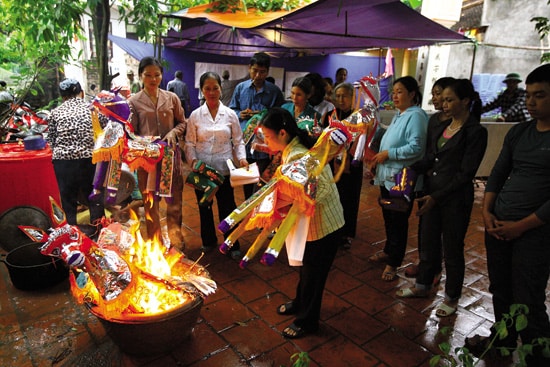
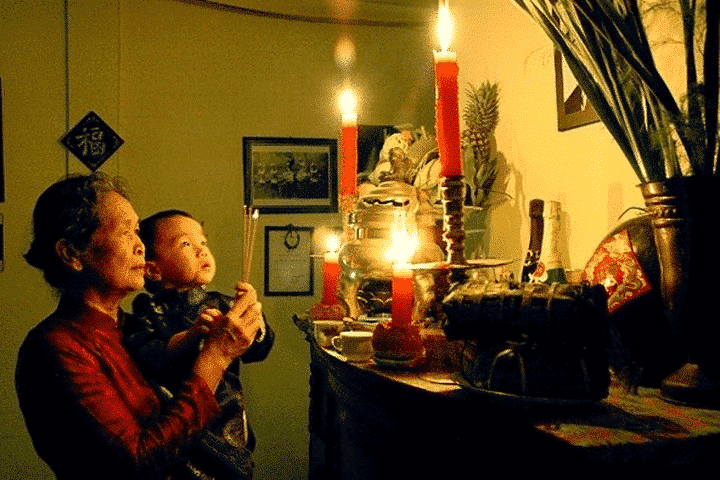
If you are riding through Vietnam in the weeks leading up to Tet, you will smell it before you see it. The scent of incense and burning paper drifts through the streets of Hanoi, clinging to the damp winter air. Turn a corner, and you might find yourself dodging a small bonfire on the sidewalk, where a family is methodically feeding stacks of $100 bills, gold bars, and even paper iPhones into the flames.
To the uninitiated traveler, this looks like madness—or arson. To the locals, it is a necessary transaction. This is the tradition of Vang Ma (Spirit Money), the currency of the afterlife.
While fascinating to watch, this tradition creates unique challenges for motorcyclists. From blinding ash to street-corner fires, here is everything you need to know to navigate the smoke safely.
Planning a trip during the holidays? This article is part of our Tet series. For a full breakdown of routes, traffic, and survival tips, check out The Ultimate Guide to Riding Vietnam During Tet.
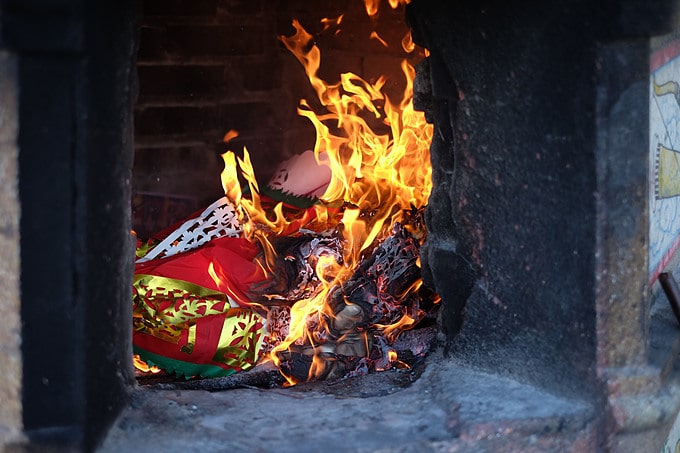
It is not just money. While the most common item you will see is the “Hell Bank Note” (often printed to look like USD or VND but with astronomically high denominations), the offerings have evolved with the times.
Vietnamese people believe that their ancestors in the afterlife have the same needs as the living. As a result, the paper industry produces distinct “ghost” versions of modern luxuries. Walk down Hang Ma Street in Hanoi, and you will see paper villas, luxury cars, latest-model iPhones, iPads, and even paper passports.
The logic is simple: if you want your ancestors to be comfortable and powerful in the next life, you must send them the tools to succeed. Fire is the mechanism of transfer.
The origins of this tradition are a mix of solemn duty and ancient marketing genius. The most popular legend dates back to Cai Lun, the Chinese inventor of paper.
As the story goes, Cai Lun struggled to sell his invention because most of the population was illiterate. To boost sales, he devised a cunning plan with his wife. He faked his own death, and during the wake, his wife burned piles of paper as an offering. Suddenly, Cai Lun’s coffin opened, and he sat up, “resurrected” by the power of the paper offerings which had bribed the King of Hell to release him.
The crowd was stunned, sales of paper skyrocketed, and a tradition was born. Whether the story is true or a myth, the practice is now deeply retrenched in Vietnamese culture as a way to show filial piety.
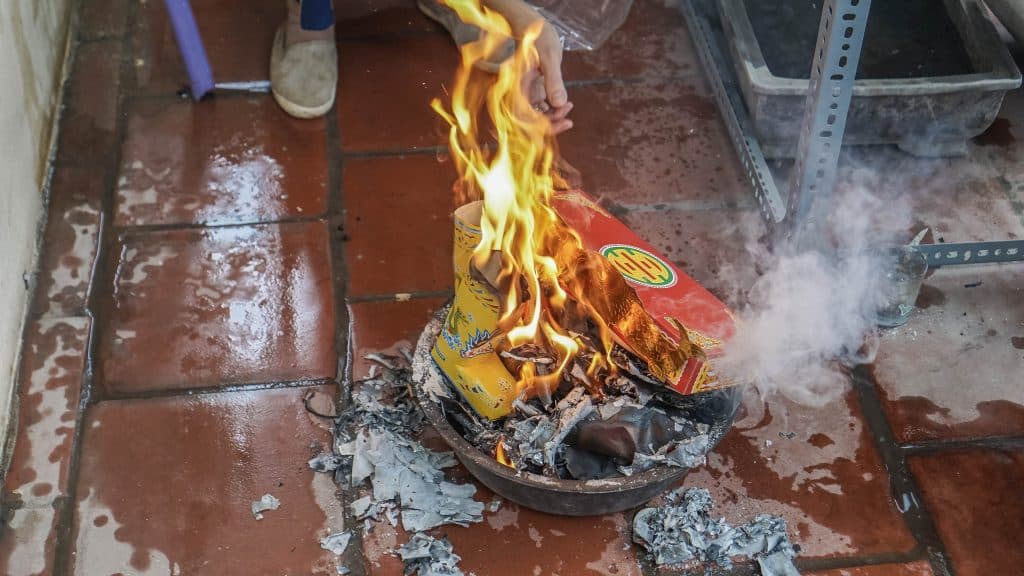
You will see small fires year-round, specifically on the 1st and 15th of every Lunar month (the new moon and full moon). These are regular “top-ups” for the ancestral bank accounts.
However, the burning reaches a fever pitch during two specific times:
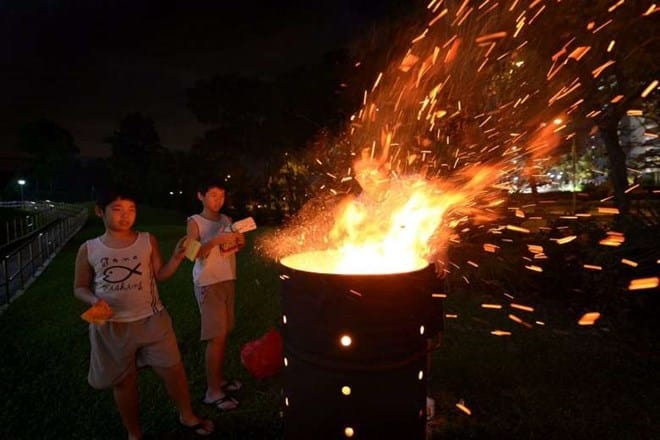
For a pedestrian, this tradition is atmospheric. For a motorbike rider, it is a hazard.
During the week before Tet, the streets of Hanoi and Ho Chi Minh City are lined with small, unattended fires.
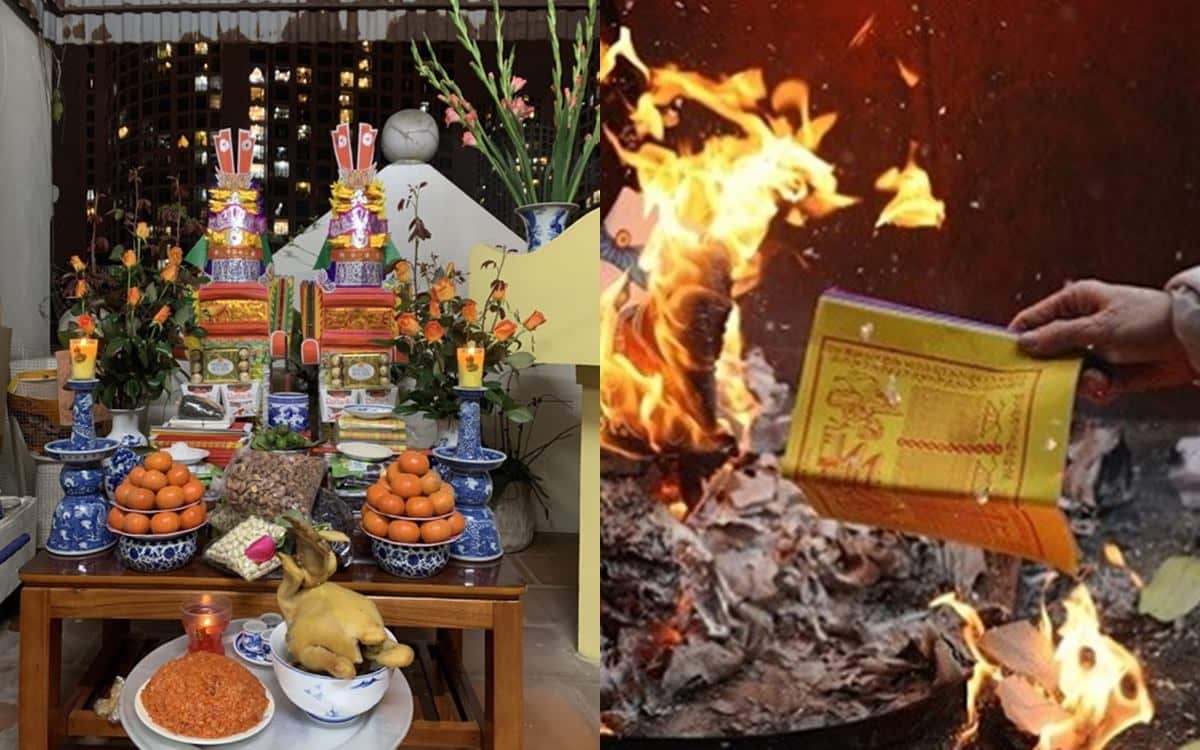
It is impossible to ignore the environmental cost. The paper is often dyed with metallic paints and coated in plastic, releasing harmful compounds when burned. In the damp “Nom” weather of the North, this smoke hangs low over the city, contributing to the poor air quality in February.
The government has tried to urge citizens to burn less, but tradition is stubborn. For now, the “Ghost Cities” of Tet are quiet, but they are often hazy.
Want to experience the empty streets despite the smoke? Check out our guide to The Ghost Cities of Vietnam.
Yes and no. You should try to avoid them out of respect (and safety), as these are offerings to spirits. However, locals understand that the streets are crowded. If you accidentally ride over a pile of cold ash, you won’t be cursed, but try to steer clear of active fires.
Yes, you can. Vendors will happily sell it to you. However, burning it requires a metal bin or a specific spot on the sidewalk. It is best done if you are invited by a local host to join their family ritual. Doing it alone on a street corner might look confusing to locals.
Safety and logistics. Burning huge piles of paper inside a small “tube house” is a fire hazard. The sidewalk is the communal living room of Vietnam, and the crossroads are believed to be where the barrier to the spirit world is thinnest.
It won’t ruin the ride, but it will affect the air quality. If you are sensitive to smoke, consider wearing a mask (even a cloth one helps) when riding in dense urban areas like Hanoi’s Old Quarter during the days leading up to Tet.
Absolutely not. It is often printed on rough bamboo paper and is clearly marked as “Hell Bank Notes.” Do not try to pay for your bowl of Pho with it!
Don’t let the smoke scare you off. Tet is the most incredible time to see Vietnam, provided you are prepared.
Book your bike today at Rentabike Vietnam.
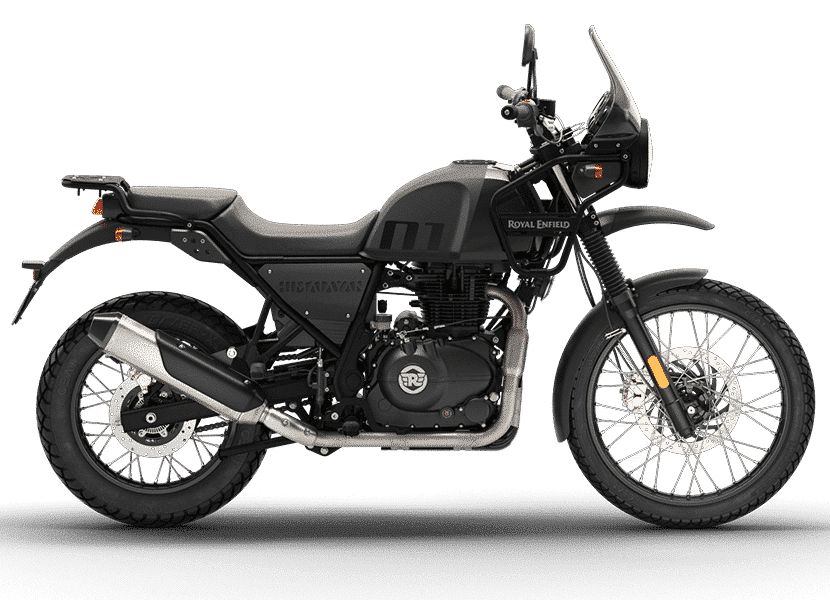
Engine Type
air-cooled, single cylinder, SOHC
Displacement
411 cc
Bore X Stroke
78 mm x 86 mm
Ignition
TCI
Fuel System
fuel injection
Compression Ratio
9.5:1
Starter
electric
Gearbox
5-speed
Front Suspension
telescopic forks; stanchion diameter 41 mm
Rear Suspension
linkage-type monoshock
Front Brakes
single disc brake, diameter 300 mm, 2-piston floating caliper
Rear Brakes
single disc brake, diameter 240 mm, single-piston floating caliper
Front Tyres
90/90 – 21
Rear Tyres
120/90 – 17
Wheelbase
1465 mm
Seat Height
800 mm
Ground Clearance
220 mm
Kerb Weight
199 kg
Fuel Capacity
15 litres
Dimensions
2190 mm (L) x 840 mm (W) x 1360 mm (H)
Daily
Total
Rider (CRF 300)
$220
Pillion
$120
Damage Waiver
$20
Private Room
$40
Support Vehicle*
$150
* All prices given are in USD and apply per rider except for the support vehicle. The support vehicle is free for groups of 7 or more, otherwise the cost is shared across the group.
Daily
Total
Rider (XR 150)
Rider (CRF 300)
Rider (CB 500X)
Rider (Himalayan 400)
$220
Rider (GS 1250)
Pillion
$120
Damage Waiver
$20
Private Room
$40
Support Vehicle*
$150
* All prices given are in USD and apply per rider except for the support vehicle. The support vehicle is free for groups of 7 or more, otherwise the cost is shared across the group.
Daily
Total
Jeep (1 PAX)
$210
Jeep (2 PAX)
$120
Jeep (3 PAX)
$90
Jeep (4+ PAX)
$80
Rider (Easy Rider)
$115
Rider (Self-Drive)
$105
Private Room
$15
* Our jeep tour prices operate on a sliding scale. The larger your group, the less each person pays—each member of your group will pay the lowest daily rate shown. For example, if you have a group of 4 or more, you will each only pay $80/day. All prices are given in USD.
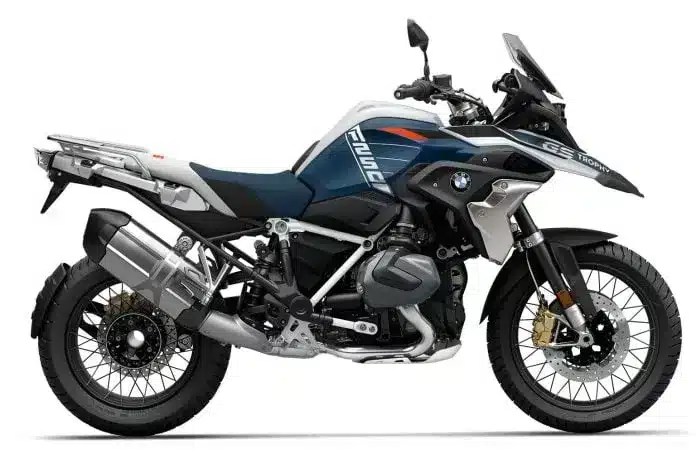
Engine Type
air-liquid cooled, twin cylinder, DOHC, boxer engine
Displacement
1255 cc
Bore X Stroke
102.5 mm x 76 mm
Ignition
FI
Fuel System
fuel injection
Compression Ratio
12.5:1
Starter
electric
Gearbox
6-speed
Front Suspension
BMW Motorrad Telelever; stanchion diameter 37 mm
Rear Suspension
single-sided swing arm with BMW Motorrad Paralever
Front Brakes
dual disc brake, floating brake discs, diameter 305 mm, 4-piston radial calipers
Rear Brakes
single disc brake, diameter 276 mm, double-piston floating caliper
Front Tyres
120/70 R19
Rear Tyres
170/60 R17
Wheelbase
1514 mm
Seat Height
850 mm
Ground Clearance
790 mm
Kerb Weight
249 kg
Fuel Capacity
20 litres
Dimensions
2207 mm (L) x 952.5mm (W) x 1430 mm (H)
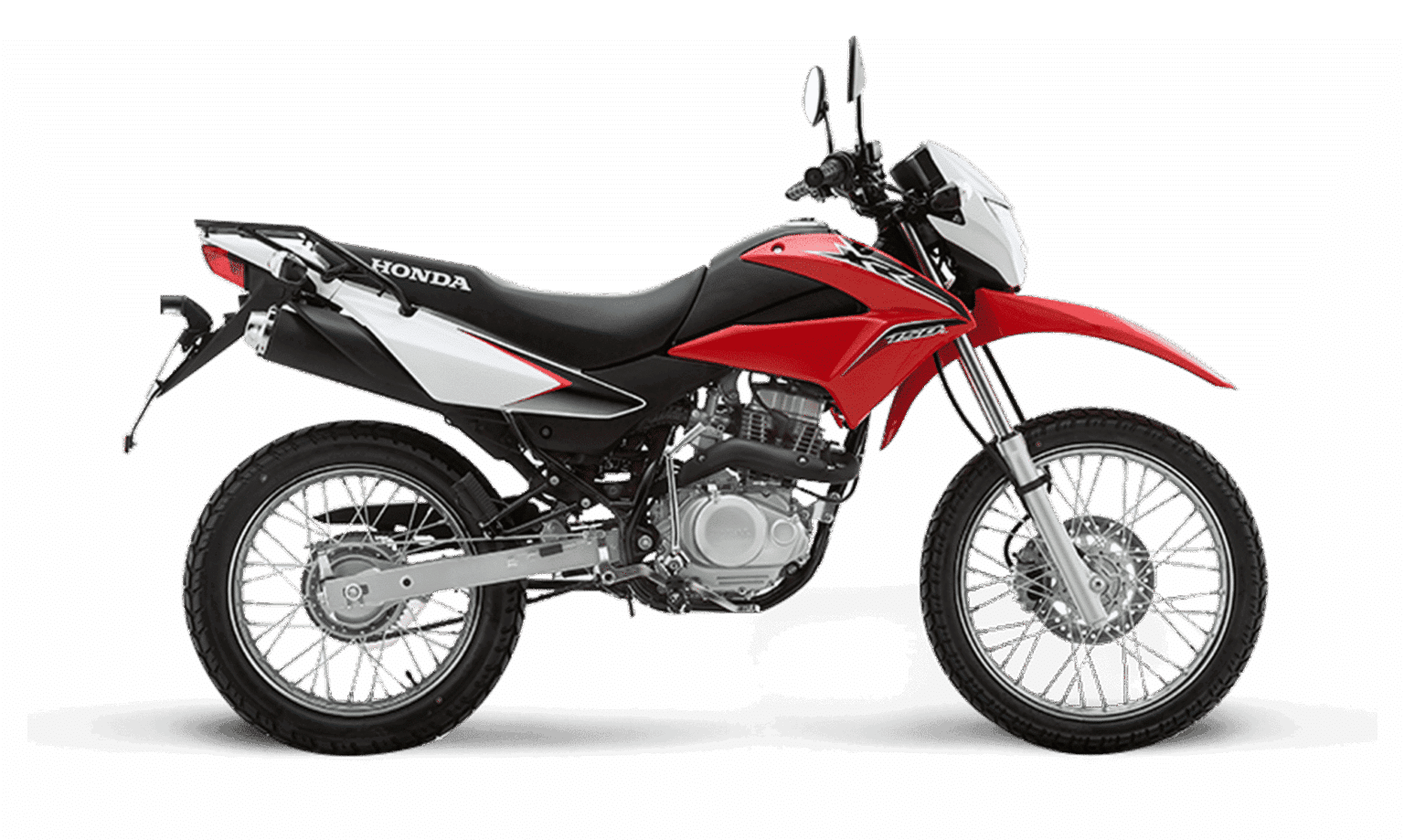
Engine Type
air cooled, OHC, single cylinder
Displacement
149 cc
Bore X Stroke
57.3 mm x 57.8 mm
Ignition
CDI
Fuel System
20 mm piston valve carburettor
Compression Ratio
9.5:1
Starter
electric with kick starter backup
Gearbox
5-speed
Front Suspension
telescopic fork, 180 mm axle travel
Rear Suspension
single shock swing arm, 150 mm axle travel
Front Brakes
dual piston caliper, 240 mm disc
Rear Brakes
mechanical drum
Front Tyres
90/90 19
Rear Tyres
110/90 17
Wheelbase
1362 mm
Seat Height
825 mm
Ground Clearance
243 mm
Kerb Weight
129 kg
Fuel Capacity
12 litres
Dimensions
2091 mm (L) x 811 mm (W) x 1125 mm (H)
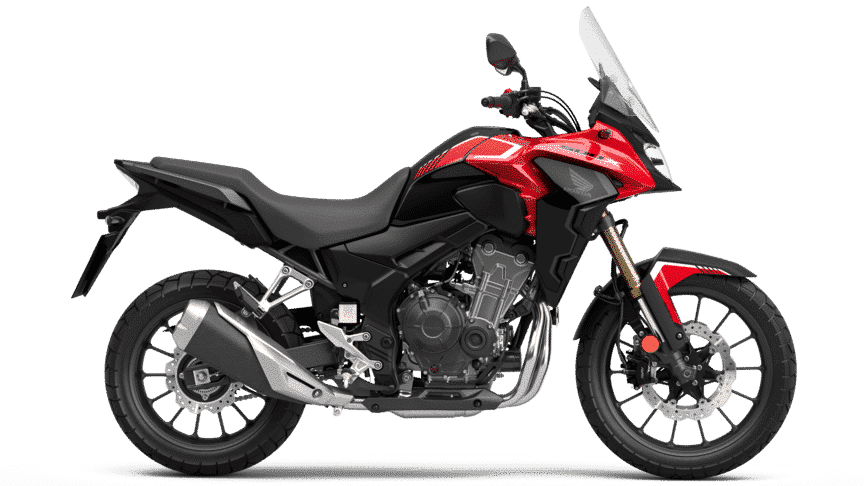
Engine Type
liquid cooled parallel-twin four stroke
Displacement
470 cc
Bore X Stroke
67 mm x 66.8 mm
Ignition
PGMI – FI
Fuel System
fuel injection
Compression Ratio
10.7:1
Starter
electric
Gearbox
6-speed
Front Suspension
41 mm SFF-BP USD Forks
Rear Suspension
Prolink Mono with 5 stage pre load adjuster
Front Brakes
dual 296 mm discs with 4 piston calipers; ABS
Rear Brakes
240 mm disc; ABS
Front Tyres
110/80R19M/C (59H)
Rear Tyres
160/60R17M/C
Wheelbase
1445 mm
Seat Height
830 mm
Ground Clearance
180 mm
Kerb Weight
199 kg
Fuel Capacity
17.7 litres
Dimensions
2,155 mm (L) x 830 mm (W) x 1,410 mm (H)
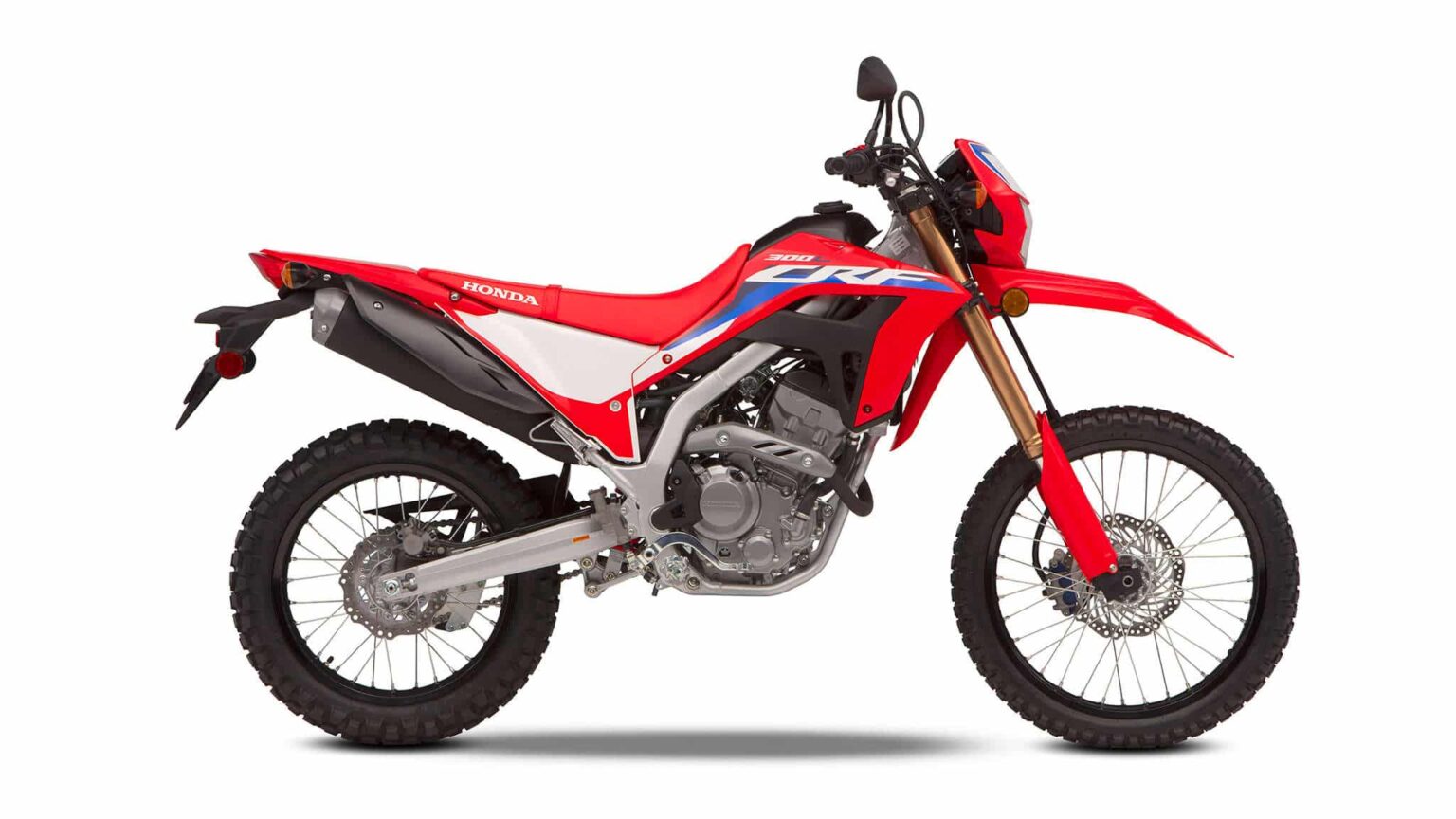
Engine Type
single cylinder, DOHC, liquid cooled
Displacement
286 cc
Bore X Stroke
76 mm x 63 mm
Ignition
Full Transistor Digital
Fuel System
PGM-FI electronic fuel injection
Compression Ratio
10.7:1
Starter
electric
Gearbox
5-speed
Front Suspension
43 mm telescopic upside down
Rear Suspension
Prolink Mono with 5 stage pre load adjuster
Front Brakes
Rear Brakes
220 mm disc, single piston caliper
Front Tyres
80/100 21
Rear Tyres
120/80 18
Wheelbase
1455 mm
Seat Height
880 mm
Ground Clearance
285 mm
Kerb Weight
142 kg
Fuel Capacity
7.8 litres
Dimensions
2230 mm (L) x 820 mm (W) x 1200 mm (H)