
“One mistake.”
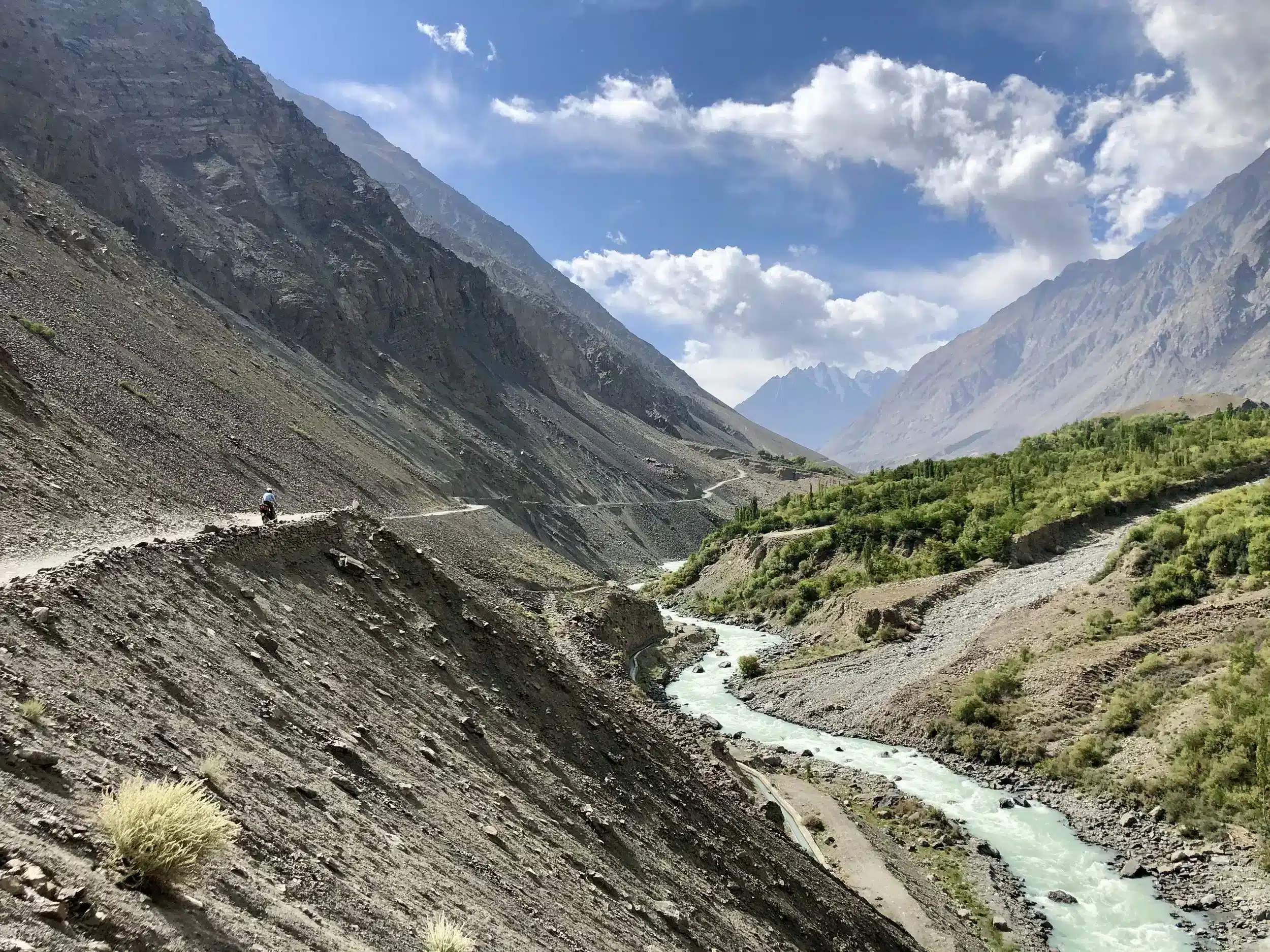
That’s the only thought looping through my mind. I am stopped on a terrifyingly narrow section of road in Northern Pakistan. To my left is jagged rock wall overhanging my helmet. To my right, absolutely nothing but a sheer, vertical drop of 300 meters into a muddy river below.
There are no guardrails. There is no ambulance coming. There is no cell signal.
If you make a mistake here, you don’t just crash. You disappear. It’s just you, the bike, and 53 kilometers of the most unforgiving gravel on earth.
People call the Shimshal Valley road the most dangerous in the world. Today, we’re going to find out if they’re right.
To understand why anyone would ride this road, you have to understand where we are. We are deep in Northern Pakistan, just a few miles from the Chinese border in the Hunza region.
The Turnoff
If you are riding the Karakoram Highway (KKH), it looks relatively smooth, paved, and safe. But if you look closely at the massive mountainside, you’ll see a tiny, dusty scratch cut into the rock. That is the turnoff to Shimshal.
Only Three Days Walk
For decades, the people of Shimshal village were completely cut off from the rest of the world. They lived in isolation amidst 7,000-meter peaks. If they wanted to buy basics like salt, or sell a yak for income, they had to walk for three days across treacherous glaciers to reach the nearest road.
Built By Hand
The villagers didn’t wait for the government to save them. For 20 years, the locals built this road themselves. They used pickaxes, dynamite, and bare hands. This road is not an engineering marvel designed by computers; it is an act of sheer human will carved into the mountainside. And now, I’m attempting to ride a motorbike up it.
The first 10 kilometers of the ride aren’t just physically demanding; they are psychological warfare.
The Cut-In
The road is often literally carved inside the cliff face, creating a half-tunnel effect. It’s dark because the overhanging rock blocks the sun, and the path is maybe 8 feet wide at best. The drop off the edge is instant.
The Rule of Target Fixation
In motorcycling, there is a golden rule: Target Fixation. You go where you look.
If you look at that jagged cliff wall on your left, you will hit the wall. If you stare down at that 300-meter drop on your right… well, you don’t want to do that. The secret here isn’t speed; it’s absolute calm and precise vision.
The True Kings of the Road
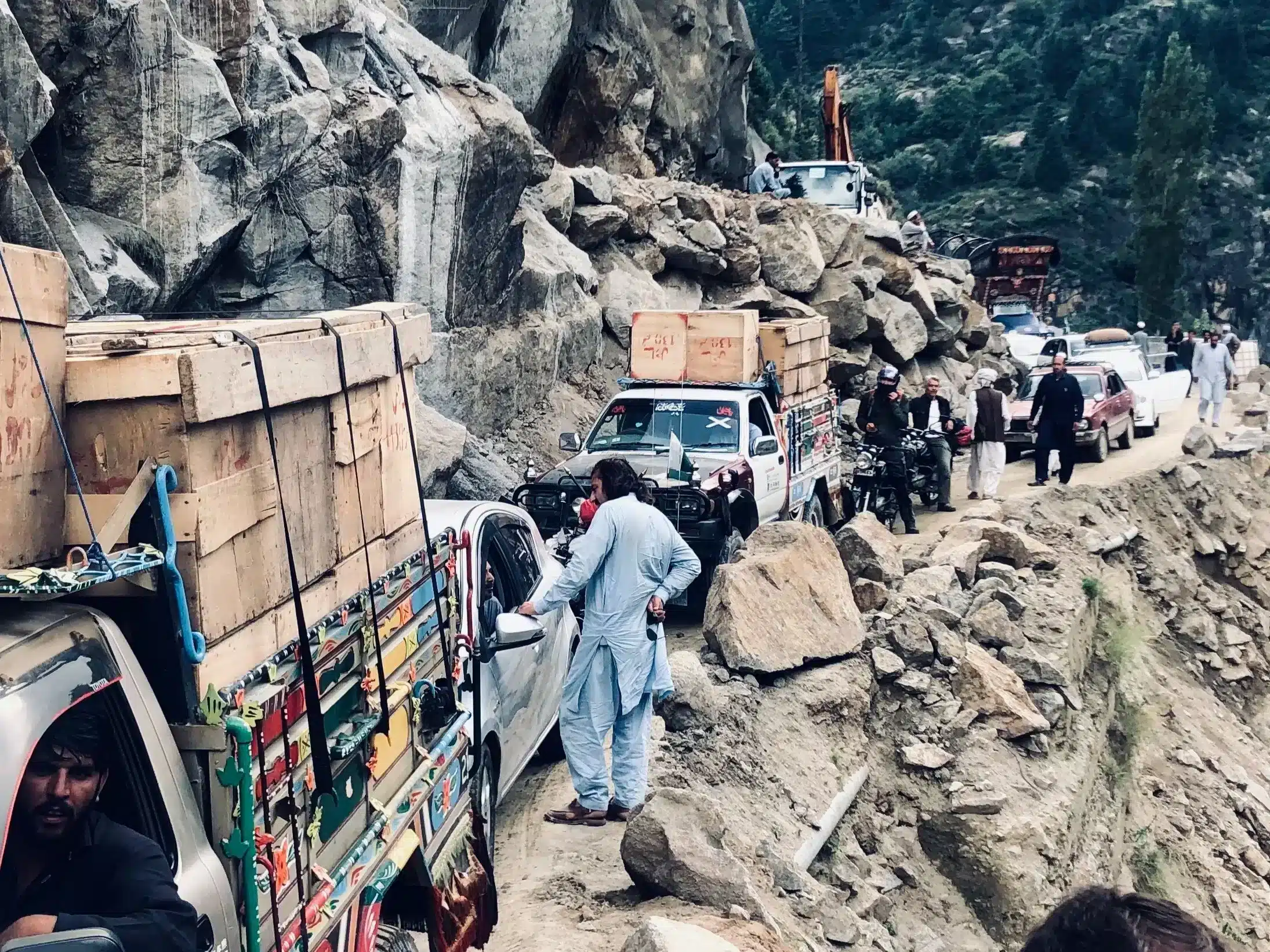
Just when you think you have a rhythm, reality checks in. A local Willys Jeep will come tearing around a blind corner, honking loudly.
These Shimshal Jeep drivers are the kings of this road. They have the right of way, always. If you hear a horn, you freeze. You pull over with inches to spare over the abyss and you let them pass. You do not argue with a two-ton jeep on a one-lane ledge.
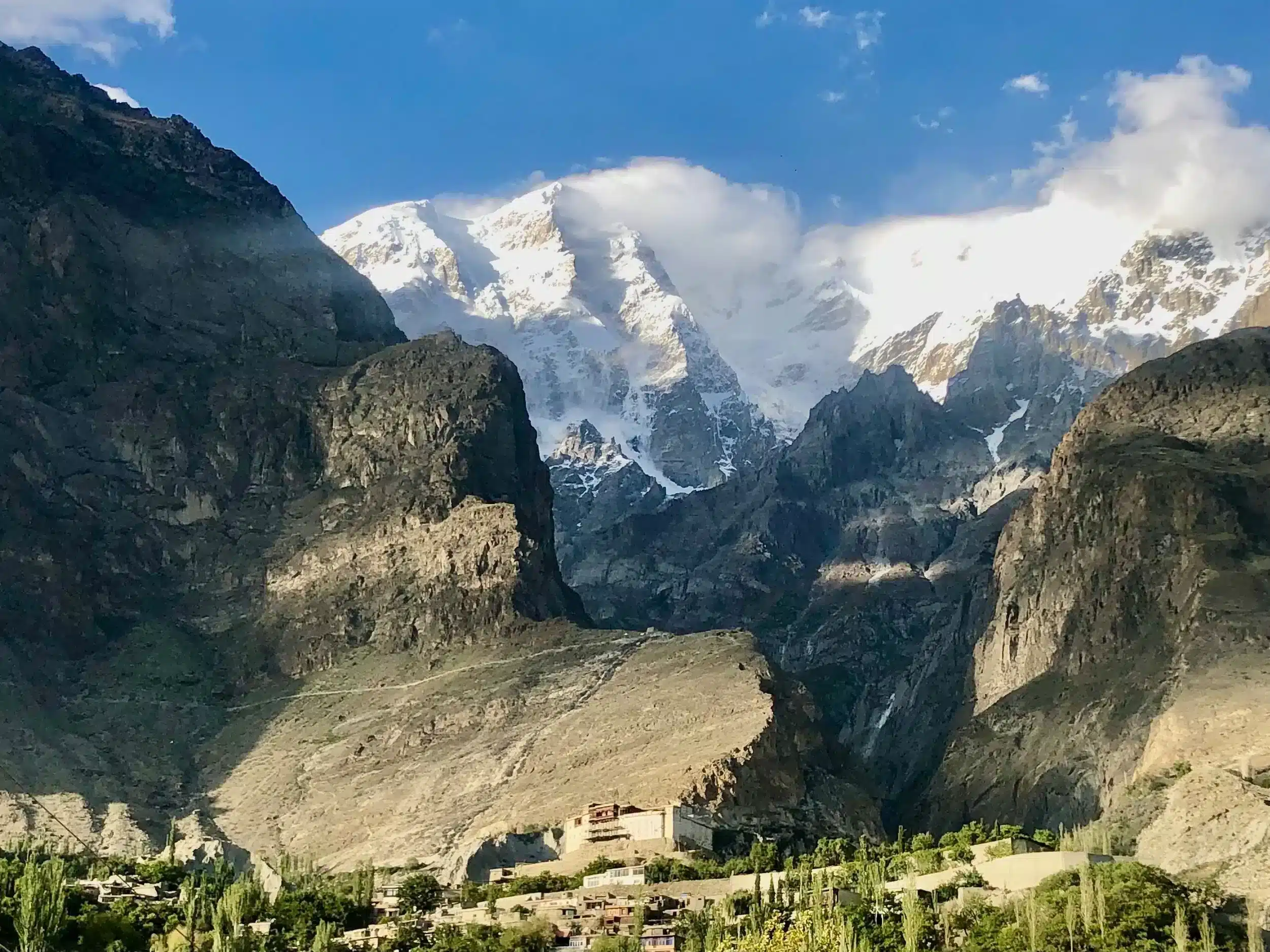
As if the cliffs weren’t enough, the environment itself is constantly changing.
Glacial Melt Crossings
The road frequently descends to river level, crossing glacial streams that flow right over the track. The problem is the timing. As the sun rises, the glaciers above melt faster, and the water levels rise throughout the day.
Entering these crossings, you have no idea how deep the murky water is or what boulders are hidden beneath the surface. You stand on the pegs, keep the revs high, and power through as the bike bucks on hidden rocks. Wet boots are a small price to pay for making it across.
The Scree Slopes
Then there are the dry sections. The road stops being solid rock and turns into piles of loose slate and shale—scree slopes.
This is highly technical riding. The shale moves under your tires like marbles. You cannot brake hard, and you cannot accelerate fast. You have to “float” over it, maintaining crucial momentum. If you stop on these slopes, you may never get the traction to get going again.
After three hours of white-knuckle adrenaline, dodging jeeps, and fighting loose gravel, the landscape suddenly shifts.
The World Opens Up
The claustrophobic gorge that has surrounded you for 50 kilometers suddenly opens up. The shadows recede, and a massive, wide valley appears, bathed in golden sunlight. You see green fields, stone houses, and stunning peaks covered in snow.
The Valley of Mountaineers
This is Shimshal village, sitting at 3,100 meters above sea level. It is known as the valley of mountaineers; some of the toughest high-altitude climbers in history were born in these mud-brick houses.
As you ride slowly through the village, exhausted, kids run out to high-five you and when you finally turn off the engine the silence is profound.
If you fancy taking this ride and you need a Shimshal Road Route Guide, then our Friends at Black Gravel Tours have just what you need. Take a look.
So, is this the most dangerous road in the world?
Maybe. There are certainly roads with higher death tolls due to higher traffic volumes. But for pure, unadulterated risk per kilometer, it’s up there.
Yet, standing in that valley, looking at the scenery that few people on earth ever get to witness, I realized the danger is just the price of admission to paradise.
Don’t Go Unprepared
Riding Northern Pakistan changes you. It tests your skills, your nerve, and your equipment. But I cannot stress this enough: you cannot just show up here and guess.
You need to know exactly which bike to rent (one that can handle the abuse), what tools are non-negotiable, and the precise location of the route.
I don’t want you to come here unprepared. To help you ride this safely, I’ve put together a complete ‘Northern Pakistan Moto-Touring Toolkit.’ It includes my itinerary, contact info for reliable jeep drivers and mechanics, and the gear list that kept me alive on this road.
It’s a free PDF. Download it, put it on your phone, and use it to plan the adventure of a lifetime.
[CLICK HERE TO DOWNLOAD THE FREE MOTO-TOURING TOOLKIT]
The Shimshal road is wild, but it’s just a side trip. The real journey starts on the main Karakoram Highway. Stay tuned for the next video, where I’ll show you why this region beats riding the Alps every single time.
It’s subjective. Other roads like Bolivia’s “Death Road” have historically higher fatality rates due to traffic volume. However, Shimshal’s combination of zero safety barriers, extreme narrowness, unstable surfaces (shale), and active glacial crossings makes it incredibly high-risk, especially for motorcyclists.
You do not want a heavy, large-displacement adventure bike here. A lighter, smaller displacement dual-sport or enduro bike (like a 250cc – 400cc) is ideal. You need something lightweight enough to manhandle through mud and shale, and narrow enough to squeeze past jeeps on tight ledges.
It is highly recommended. While navigation is straightforward (there’s only one road), a local guide provides a crucial safety net. They know the jeep schedules, they know how to read the river crossing depths, and they have the language skills to get help if something goes wrong in a region with no cell service.
Do not judge travel time by distance. Those 53 kilometers will take anywhere from 2.5 to 4 hours, depending on your skill level, weather conditions, and how many times you have to stop for oncoming jeeps or difficult water crossings. It is a slow, grueling ride.
The window is short. Late spring to early autumn (roughly June to September) is best. In winter, the road is often impassable due to snow. Even in summer, heavy rains can trigger landslides that block the road for days. Always check local conditions in Hunza before setting out.
Maybe. There are certainly roads with higher death tolls due to higher traffic volumes. But for pure, unadulterated risk per kilometer, it’s up there.
Yet, standing in that valley, looking at the scenery that few people on earth ever get to witness, I realized the danger is just the price of admission to paradise.
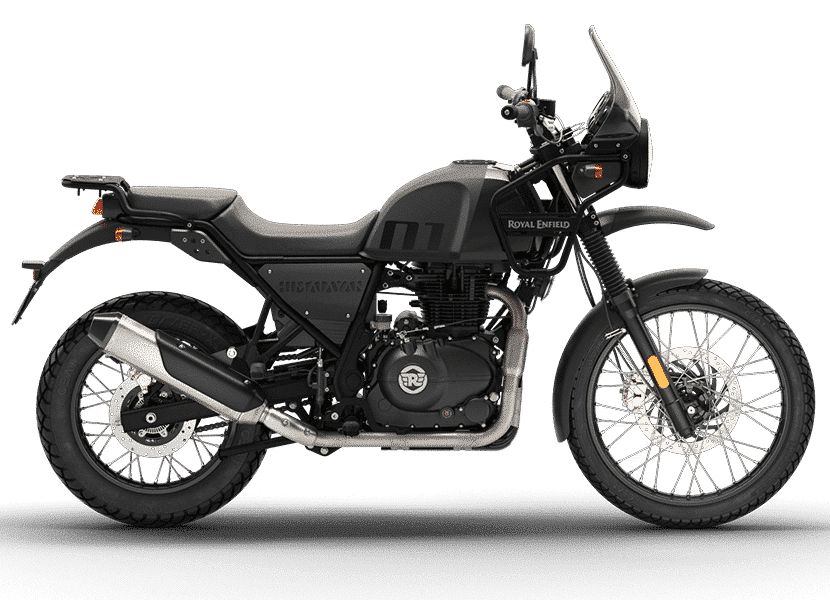
Engine Type
air-cooled, single cylinder, SOHC
Displacement
411 cc
Bore X Stroke
78 mm x 86 mm
Ignition
TCI
Fuel System
fuel injection
Compression Ratio
9.5:1
Starter
electric
Gearbox
5-speed
Front Suspension
telescopic forks; stanchion diameter 41 mm
Rear Suspension
linkage-type monoshock
Front Brakes
single disc brake, diameter 300 mm, 2-piston floating caliper
Rear Brakes
single disc brake, diameter 240 mm, single-piston floating caliper
Front Tyres
90/90 – 21
Rear Tyres
120/90 – 17
Wheelbase
1465 mm
Seat Height
800 mm
Ground Clearance
220 mm
Kerb Weight
199 kg
Fuel Capacity
15 litres
Dimensions
2190 mm (L) x 840 mm (W) x 1360 mm (H)
Daily
Total
Rider (CRF 300)
$220
Pillion
$120
Damage Waiver
$20
Private Room
$40
Support Vehicle*
$150
* All prices given are in USD and apply per rider except for the support vehicle. The support vehicle is free for groups of 7 or more, otherwise the cost is shared across the group.
Daily
Total
Rider (XR 150)
Rider (CRF 300)
Rider (CB 500X)
Rider (Himalayan 400)
$220
Rider (GS 1250)
Pillion
$120
Damage Waiver
$20
Private Room
$40
Support Vehicle*
$150
* All prices given are in USD and apply per rider except for the support vehicle. The support vehicle is free for groups of 7 or more, otherwise the cost is shared across the group.
Daily
Total
Jeep (1 PAX)
$210
Jeep (2 PAX)
$120
Jeep (3 PAX)
$90
Jeep (4+ PAX)
$80
Rider (Easy Rider)
$115
Rider (Self-Drive)
$105
Private Room
$15
* Our jeep tour prices operate on a sliding scale. The larger your group, the less each person pays—each member of your group will pay the lowest daily rate shown. For example, if you have a group of 4 or more, you will each only pay $80/day. All prices are given in USD.
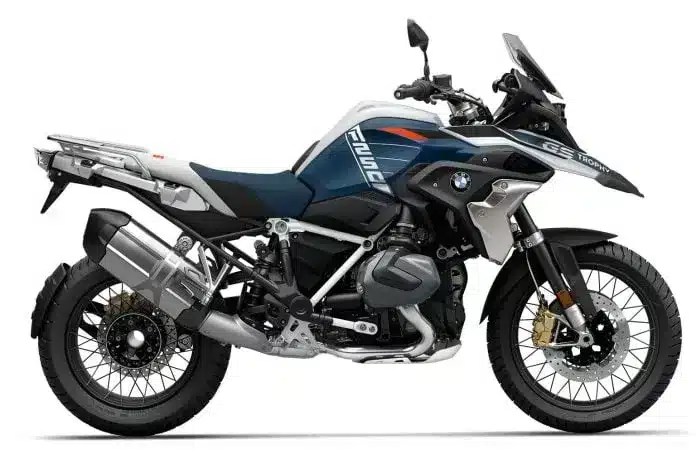
Engine Type
air-liquid cooled, twin cylinder, DOHC, boxer engine
Displacement
1255 cc
Bore X Stroke
102.5 mm x 76 mm
Ignition
FI
Fuel System
fuel injection
Compression Ratio
12.5:1
Starter
electric
Gearbox
6-speed
Front Suspension
BMW Motorrad Telelever; stanchion diameter 37 mm
Rear Suspension
single-sided swing arm with BMW Motorrad Paralever
Front Brakes
dual disc brake, floating brake discs, diameter 305 mm, 4-piston radial calipers
Rear Brakes
single disc brake, diameter 276 mm, double-piston floating caliper
Front Tyres
120/70 R19
Rear Tyres
170/60 R17
Wheelbase
1514 mm
Seat Height
850 mm
Ground Clearance
790 mm
Kerb Weight
249 kg
Fuel Capacity
20 litres
Dimensions
2207 mm (L) x 952.5mm (W) x 1430 mm (H)
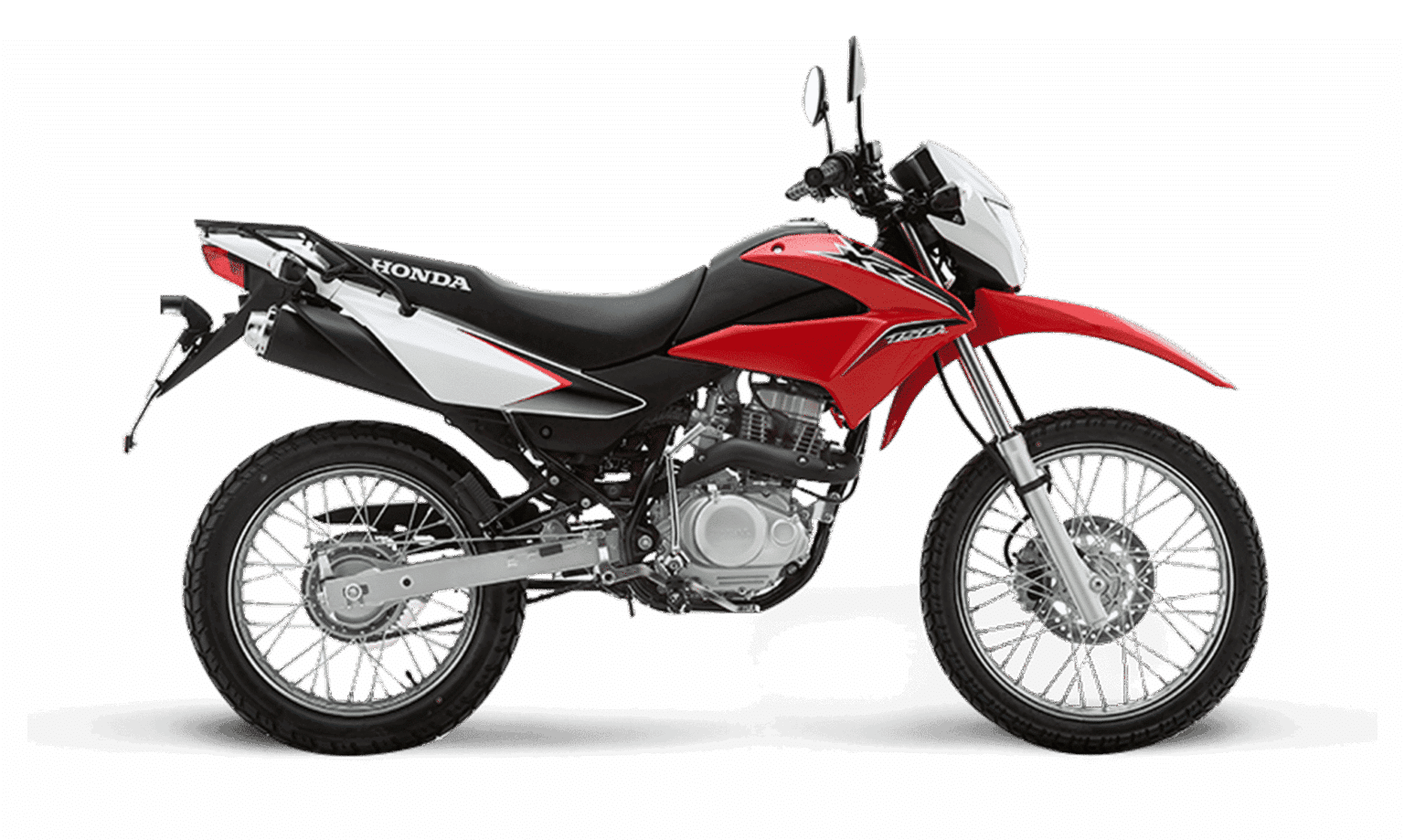
Engine Type
air cooled, OHC, single cylinder
Displacement
149 cc
Bore X Stroke
57.3 mm x 57.8 mm
Ignition
CDI
Fuel System
20 mm piston valve carburettor
Compression Ratio
9.5:1
Starter
electric with kick starter backup
Gearbox
5-speed
Front Suspension
telescopic fork, 180 mm axle travel
Rear Suspension
single shock swing arm, 150 mm axle travel
Front Brakes
dual piston caliper, 240 mm disc
Rear Brakes
mechanical drum
Front Tyres
90/90 19
Rear Tyres
110/90 17
Wheelbase
1362 mm
Seat Height
825 mm
Ground Clearance
243 mm
Kerb Weight
129 kg
Fuel Capacity
12 litres
Dimensions
2091 mm (L) x 811 mm (W) x 1125 mm (H)
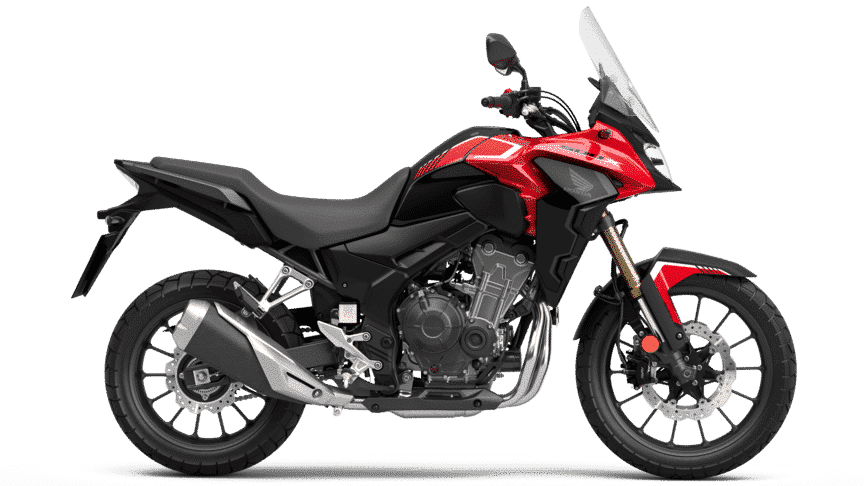
Engine Type
liquid cooled parallel-twin four stroke
Displacement
470 cc
Bore X Stroke
67 mm x 66.8 mm
Ignition
PGMI – FI
Fuel System
fuel injection
Compression Ratio
10.7:1
Starter
electric
Gearbox
6-speed
Front Suspension
41 mm SFF-BP USD Forks
Rear Suspension
Prolink Mono with 5 stage pre load adjuster
Front Brakes
dual 296 mm discs with 4 piston calipers; ABS
Rear Brakes
240 mm disc; ABS
Front Tyres
110/80R19M/C (59H)
Rear Tyres
160/60R17M/C
Wheelbase
1445 mm
Seat Height
830 mm
Ground Clearance
180 mm
Kerb Weight
199 kg
Fuel Capacity
17.7 litres
Dimensions
2,155 mm (L) x 830 mm (W) x 1,410 mm (H)
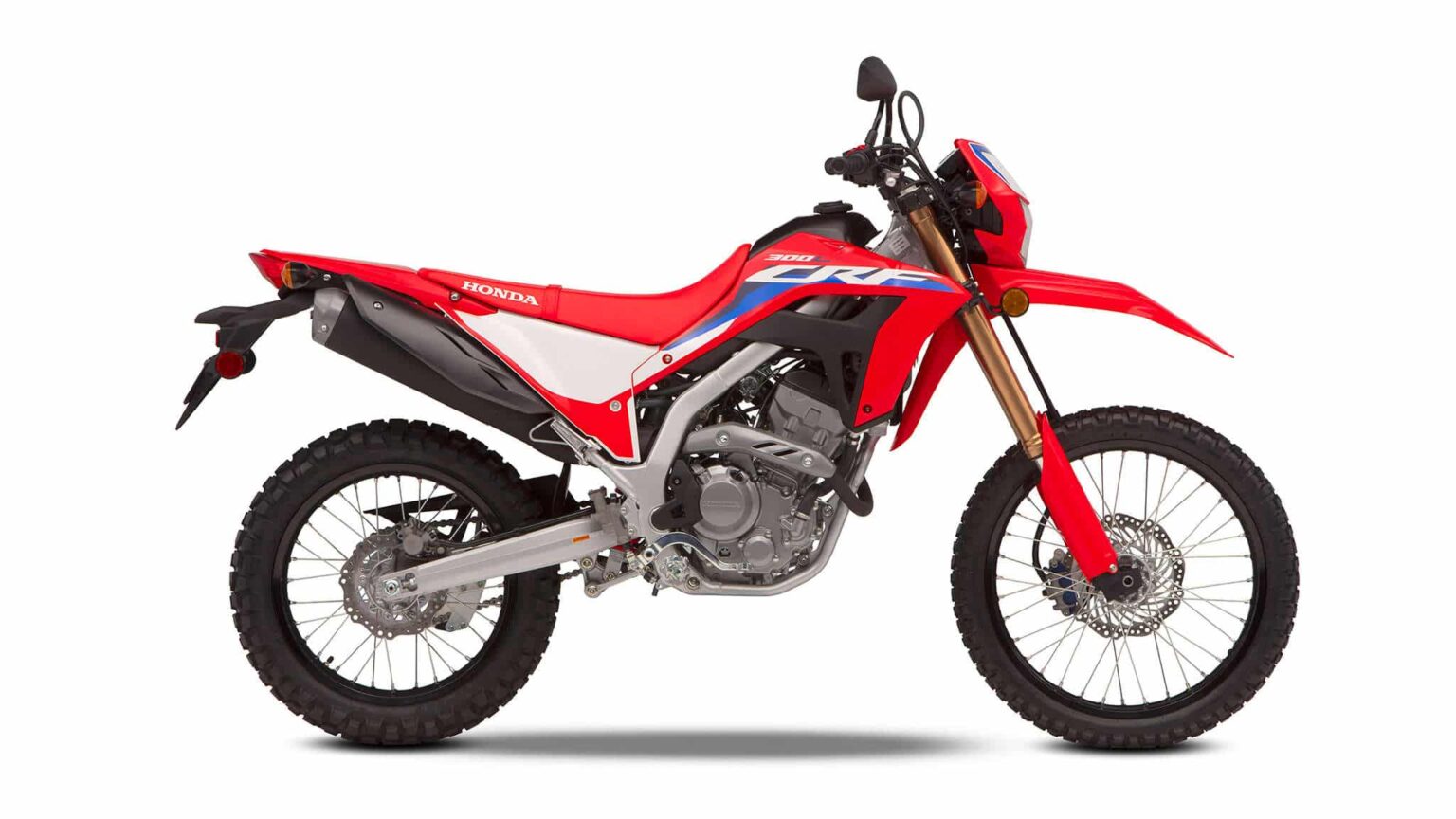
Engine Type
single cylinder, DOHC, liquid cooled
Displacement
286 cc
Bore X Stroke
76 mm x 63 mm
Ignition
Full Transistor Digital
Fuel System
PGM-FI electronic fuel injection
Compression Ratio
10.7:1
Starter
electric
Gearbox
5-speed
Front Suspension
43 mm telescopic upside down
Rear Suspension
Prolink Mono with 5 stage pre load adjuster
Front Brakes
Rear Brakes
220 mm disc, single piston caliper
Front Tyres
80/100 21
Rear Tyres
120/80 18
Wheelbase
1455 mm
Seat Height
880 mm
Ground Clearance
285 mm
Kerb Weight
142 kg
Fuel Capacity
7.8 litres
Dimensions
2230 mm (L) x 820 mm (W) x 1200 mm (H)