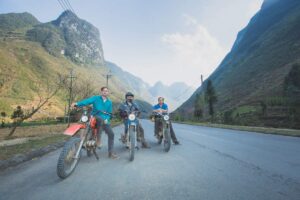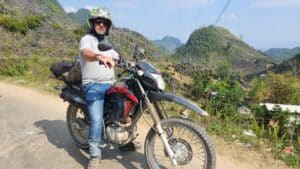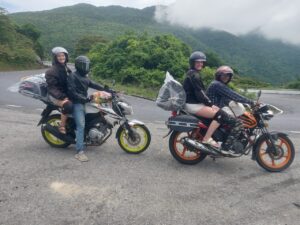


There is nothing quite like the freedom of rolling on the throttle and carving your way through the limestone karsts of Northern Vietnam. But before you kick the stand up and merge into the organized chaos of local traffic, there is one unsexy but critical detail you need to nail down: Motorbike Insurance.
After a quarter-century of navigating these roads and outfitting riders at Rentabike Vietnam, the number one point of confusion we see revolves around what is legal, what is covered, and what happens when rubber meets the road, literally.
The truth is, motorbike insurance in Vietnam operates completely differently than it does in the West. If you assume your standard travel insurance or home country license has you fully covered, you might be setting yourself up for a massive financial hit.
This hub is your roadmap. Below, we break down the pillars of Vietnam motorbike insurance. Click through to our comprehensive guides on each topic to ensure your ride is as safe as it is unforgettable.
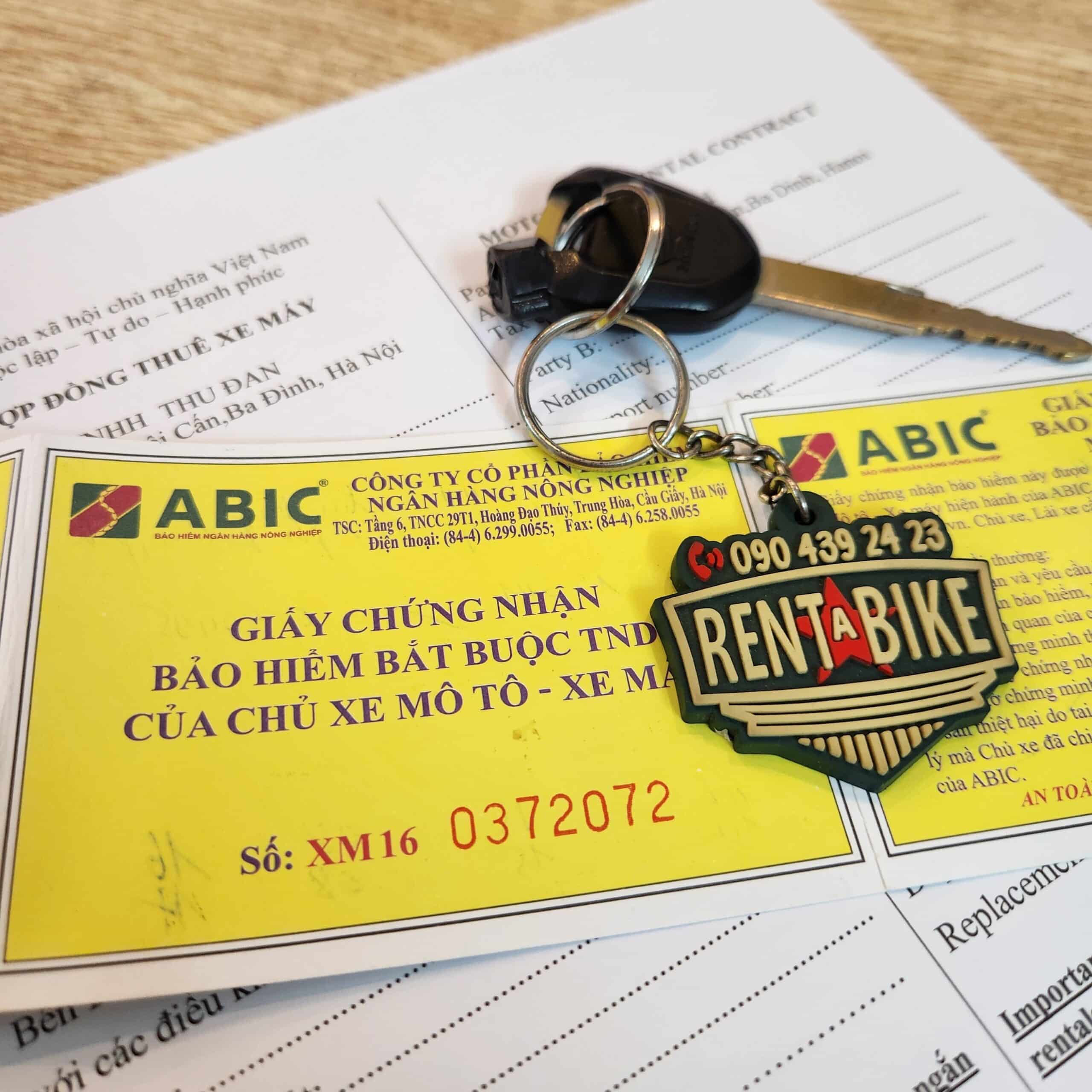
If you get pulled over by the traffic police, this is the piece of paper they are looking for. By law, every motorbike on the road—from a 50cc scooter to a high-capacity adventure bike—must carry Compulsory Civil Liability Insurance.
Read the Full Guide: Everything You Need to Know About Vietnam’s Mandatory CTPL Insurance (Link to Spoke 1)
This is where the vast majority of travelers get caught out. Most premium travel insurance providers (like World Nomads or Allianz) offer coverage for motorcycle touring, but there is a massive legal catch in the fine print: You must be riding legally in the country you are visiting.
[Read the Full Guide: How to Ensure Your Travel Medical Insurance Actually Covers You in Vietnam] (Link to Spoke 2)

In Western countries, you buy comprehensive insurance, and if you crash the bike, the insurance company buys you a new one. In Vietnam, it doesn’t quite work that way for short-term renters.
While comprehensive policies (like Liberty MotoCare) do exist, they are generally designed for the registered owner of the vehicle.
[Read the Full Guide: The Myth of Comprehensive Bike Insurance and How Damage Waivers Work] (Link to Spoke 3)
Even the best riders can get caught out by wandering water buffalo, slippery mud, or unpredictable traffic. Knowing how to handle an accident on the ground is just as important as having the right paperwork.
[Read the Full Guide: Step-by-Step Accident Protocol: Hospitals, Police, and Payouts in Vietnam] (Link to Spoke 4)
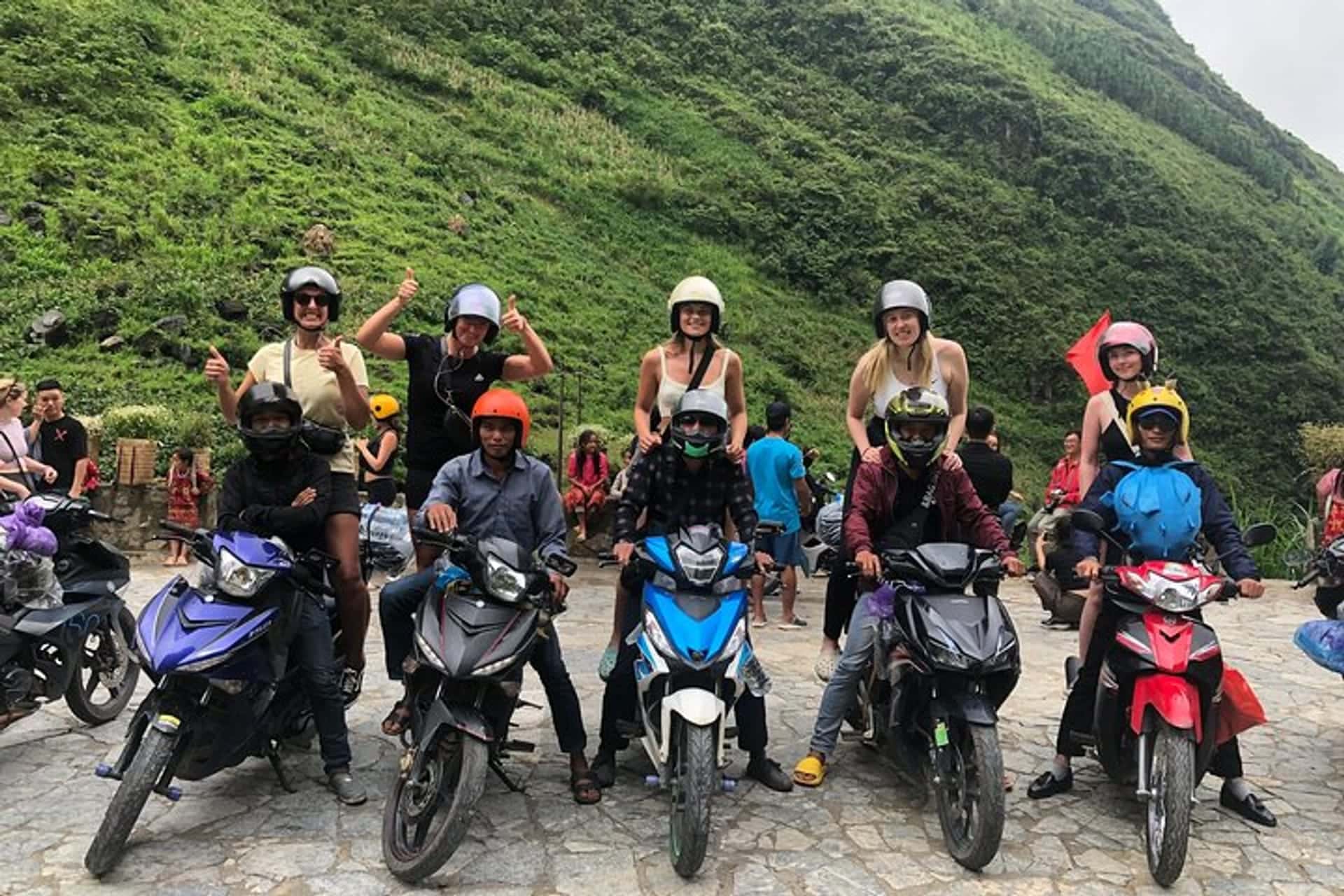
If the licensing and insurance hurdles seem too high, there is a completely legal, fully insurable alternative that allows you to experience the best routes without the liability stress.
[Read the Full Guide: Why Riding Pillion Might Be Your Best Insurance Strategy] (Link to Spoke 5)
Vietnam is a remarkably safe country for travelers, but opportunistic motorbike theft is a reality you must prepare for. If a rental motorcycle is stolen while in your possession, the hard truth is that you are legally and financially responsible for paying the rental company the full replacement value of the bike.
A common, and costly, misconception is that standard rental damage waivers will bail you out—they won’t. Those waivers strictly cover accidental crash damage, never theft or total loss. Keeping the bike secure overnight is entirely your responsibility. Before you park on the street, [read our complete guide on exactly how to secure your rental bike and navigate local parking systems].
how to secure your rental bike and navigate local parking systems
For many new arrivals, a 1968 International Driving Permit (IDP) feels like a golden ticket to hitting the roads. However, it’s vital to understand that a 1968 IDP is strictly designed for temporary visitors on a tourist visa. If you transition to resident status, such as acquiring a Temporary Residence Card (TRC) or simply living in Vietnam for more than three months, your IDP automatically loses its legal validity.
Continuing to drive on an expired IDP not only breaks local laws but completely voids your health and vehicle insurance. If you plan on staying long-term, read our complete guide on exactly when your IDP expires and why you must convert to a Vietnamese driver’s license.
Almost universally, no. While high-end travel credit cards often provide excellent Collision Damage Waivers (CDW) for rental cars, their terms and conditions explicitly exclude two-wheeled vehicles, motorcycles, and mopeds. If you drop a rental bike in Vietnam, your credit card will not cover the repair costs, which is why securing a Damage Waiver directly from your outfitter is crucial.
No. Vietnamese traffic police strictly require the physical, original booklet of your 1968 International Driving Permit, along with your physical home country license. Presenting a digital IDP, a photo on your phone, or an unofficial online translation is treated the same as riding without a license and can result in immediate fines or vehicle impoundment.
Caveat: You may meet a friendly cop and get away with this, but you should not think it is guaranteed.
Yes, absolutely. Wearing a helmet is legally mandatory for all riders and passengers in Vietnam. If you are involved in a crash and sustain injuries while riding bareheaded—or while wearing a cheap, uncertified plastic “cap” instead of a real crash helmet—your insurer will likely categorize this as illegal or reckless behavior and deny your entire medical claim, even if your IDP paperwork is perfect.
In Vietnam, livestock wandering onto the road is incredibly common. If you hit a cow, pig, or water buffalo, it is treated as property damage. The animal belongs to a local farmer, and you will generally be expected to compensate them for the financial value of the animal. While your mandatory CTPL insurance technically covers third-party property damage, locals almost always demand an immediate cash settlement on the spot to avoid involving the police.
This is a dangerous gray area. While the “pillion loophole” generally covers your medical bills as a passenger, many travel insurance policies state that you must be riding behind a legally licensed driver. If your friend is riding illegally (e.g., holding a 1949 IDP instead of the required 1968 IDP) and causes a crash, the insurance company has grounds to void your passenger medical claim. For guaranteed coverage, always ride pillion behind a licensed, professional local guide.
Navigating insurance isn’t the most thrilling part of planning a trip, but dialing it in means you can ride the northern loops with total peace of mind. We’ll be diving into these topics visually on upcoming episodes of Kickstand Down: Vietnam, so keep an eye out for real-world breakdowns of how this looks on the road.
Got your paperwork sorted? Let’s get you on a bike.
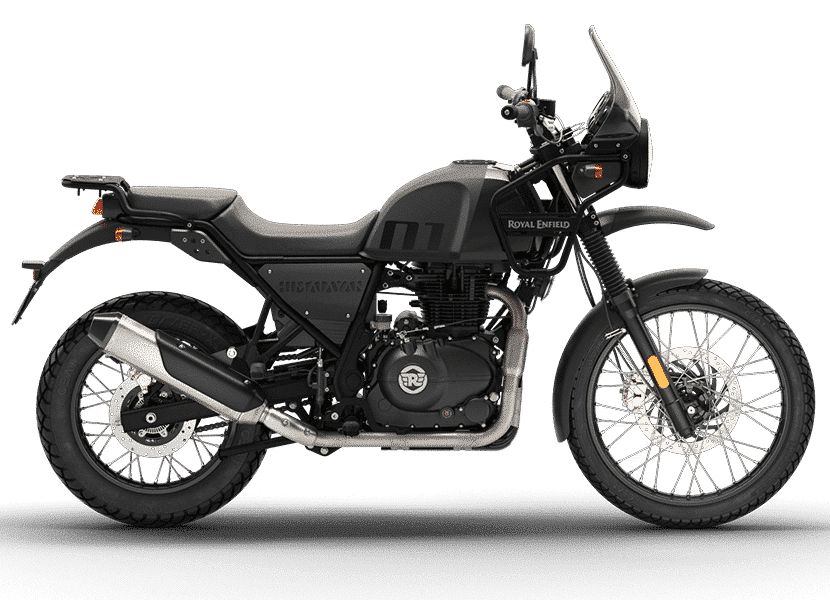
Engine Type
air-cooled, single cylinder, SOHC
Displacement
411 cc
Bore X Stroke
78 mm x 86 mm
Ignition
TCI
Fuel System
fuel injection
Compression Ratio
9.5:1
Starter
electric
Gearbox
5-speed
Front Suspension
telescopic forks; stanchion diameter 41 mm
Rear Suspension
linkage-type monoshock
Front Brakes
single disc brake, diameter 300 mm, 2-piston floating caliper
Rear Brakes
single disc brake, diameter 240 mm, single-piston floating caliper
Front Tyres
90/90 – 21
Rear Tyres
120/90 – 17
Wheelbase
1465 mm
Seat Height
800 mm
Ground Clearance
220 mm
Kerb Weight
199 kg
Fuel Capacity
15 litres
Dimensions
2190 mm (L) x 840 mm (W) x 1360 mm (H)
Daily
Total
Rider (CRF 300)
$220
Pillion
$120
Damage Waiver
$20
Private Room
$40
Support Vehicle*
$150
* All prices given are in USD and apply per rider except for the support vehicle. The support vehicle is free for groups of 7 or more, otherwise the cost is shared across the group.
Daily
Total
Rider (XR 150)
Rider (CRF 300)
Rider (CB 500X)
Rider (Himalayan 400)
$220
Rider (GS 1250)
Pillion
$120
Damage Waiver
$20
Private Room
$40
Support Vehicle*
$150
* All prices given are in USD and apply per rider except for the support vehicle. The support vehicle is free for groups of 7 or more, otherwise the cost is shared across the group.
Daily
Total
Jeep (1 PAX)
$210
Jeep (2 PAX)
$120
Jeep (3 PAX)
$90
Jeep (4+ PAX)
$80
Rider (Easy Rider)
$115
Rider (Self-Drive)
$105
Private Room
$15
* Our jeep tour prices operate on a sliding scale. The larger your group, the less each person pays—each member of your group will pay the lowest daily rate shown. For example, if you have a group of 4 or more, you will each only pay $80/day. All prices are given in USD.
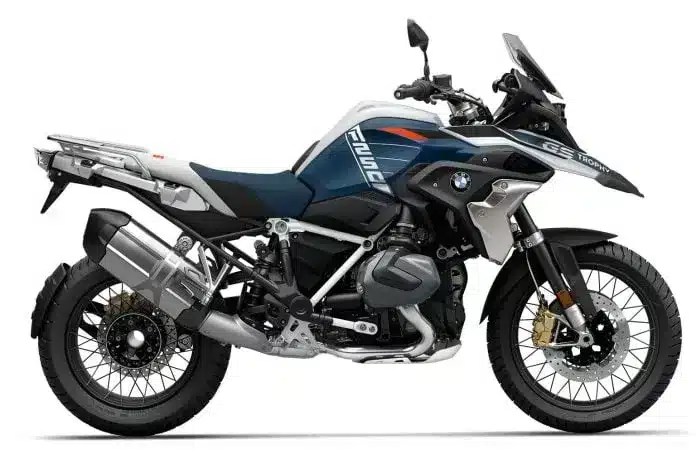
Engine Type
air-liquid cooled, twin cylinder, DOHC, boxer engine
Displacement
1255 cc
Bore X Stroke
102.5 mm x 76 mm
Ignition
FI
Fuel System
fuel injection
Compression Ratio
12.5:1
Starter
electric
Gearbox
6-speed
Front Suspension
BMW Motorrad Telelever; stanchion diameter 37 mm
Rear Suspension
single-sided swing arm with BMW Motorrad Paralever
Front Brakes
dual disc brake, floating brake discs, diameter 305 mm, 4-piston radial calipers
Rear Brakes
single disc brake, diameter 276 mm, double-piston floating caliper
Front Tyres
120/70 R19
Rear Tyres
170/60 R17
Wheelbase
1514 mm
Seat Height
850 mm
Ground Clearance
790 mm
Kerb Weight
249 kg
Fuel Capacity
20 litres
Dimensions
2207 mm (L) x 952.5mm (W) x 1430 mm (H)
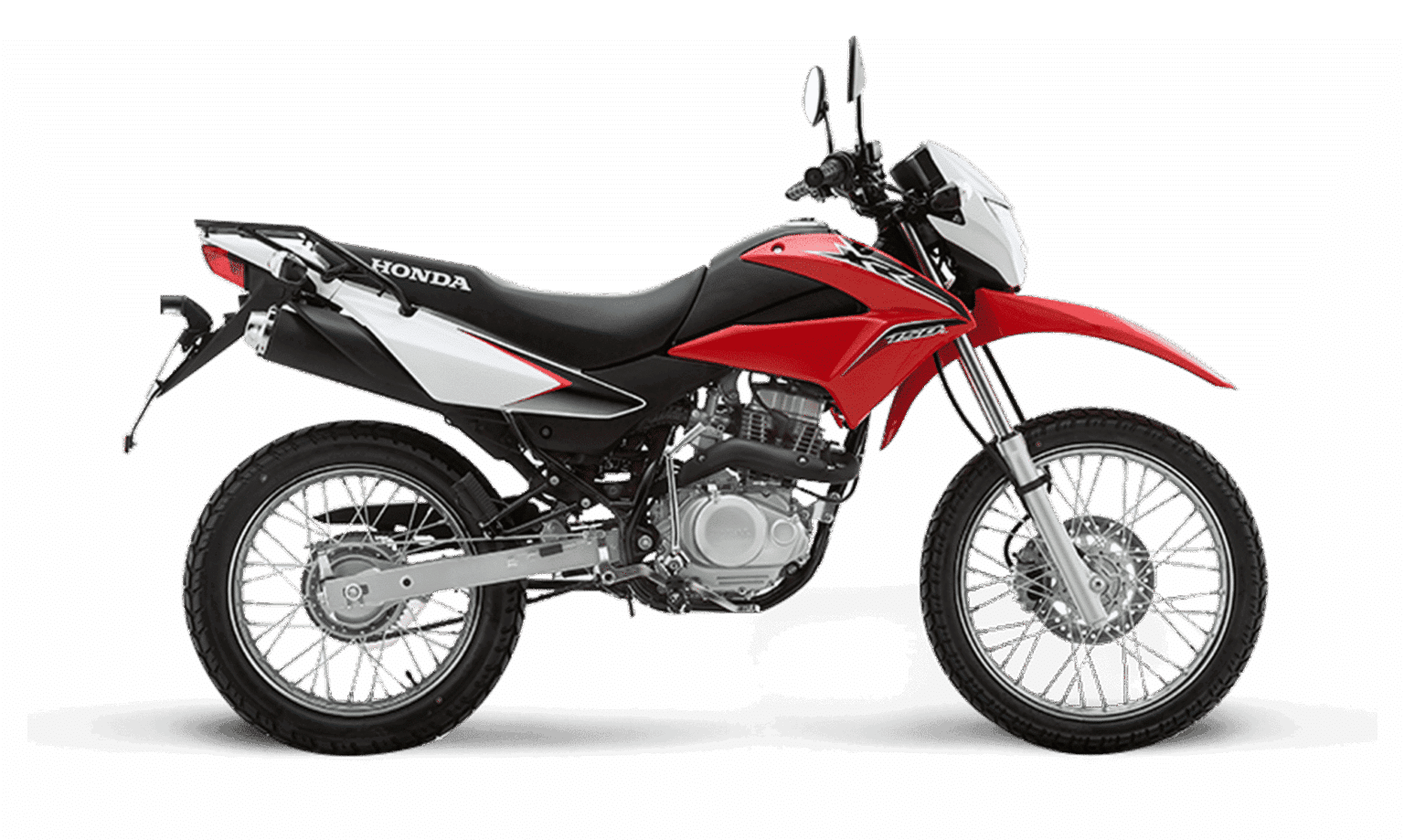
Engine Type
air cooled, OHC, single cylinder
Displacement
149 cc
Bore X Stroke
57.3 mm x 57.8 mm
Ignition
CDI
Fuel System
20 mm piston valve carburettor
Compression Ratio
9.5:1
Starter
electric with kick starter backup
Gearbox
5-speed
Front Suspension
telescopic fork, 180 mm axle travel
Rear Suspension
single shock swing arm, 150 mm axle travel
Front Brakes
dual piston caliper, 240 mm disc
Rear Brakes
mechanical drum
Front Tyres
90/90 19
Rear Tyres
110/90 17
Wheelbase
1362 mm
Seat Height
825 mm
Ground Clearance
243 mm
Kerb Weight
129 kg
Fuel Capacity
12 litres
Dimensions
2091 mm (L) x 811 mm (W) x 1125 mm (H)
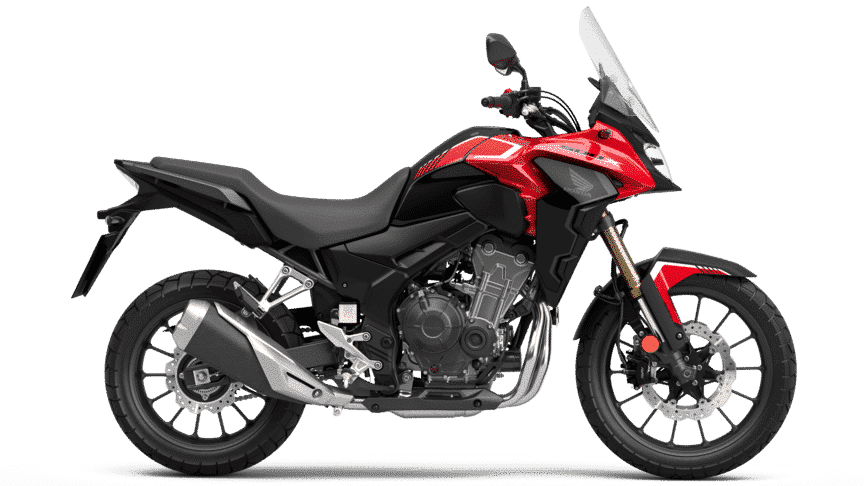
Engine Type
liquid cooled parallel-twin four stroke
Displacement
470 cc
Bore X Stroke
67 mm x 66.8 mm
Ignition
PGMI – FI
Fuel System
fuel injection
Compression Ratio
10.7:1
Starter
electric
Gearbox
6-speed
Front Suspension
41 mm SFF-BP USD Forks
Rear Suspension
Prolink Mono with 5 stage pre load adjuster
Front Brakes
dual 296 mm discs with 4 piston calipers; ABS
Rear Brakes
240 mm disc; ABS
Front Tyres
110/80R19M/C (59H)
Rear Tyres
160/60R17M/C
Wheelbase
1445 mm
Seat Height
830 mm
Ground Clearance
180 mm
Kerb Weight
199 kg
Fuel Capacity
17.7 litres
Dimensions
2,155 mm (L) x 830 mm (W) x 1,410 mm (H)
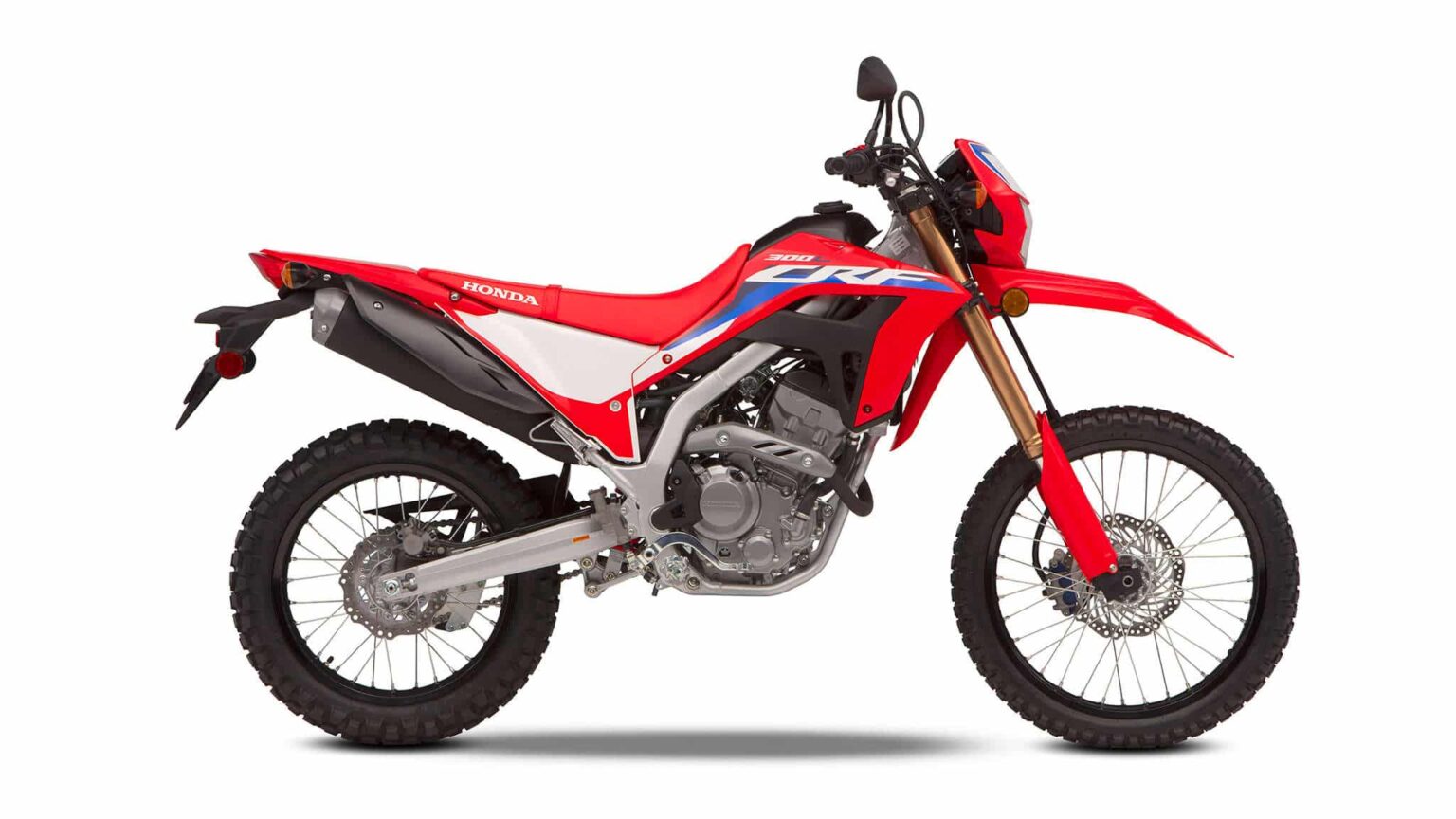
Engine Type
single cylinder, DOHC, liquid cooled
Displacement
286 cc
Bore X Stroke
76 mm x 63 mm
Ignition
Full Transistor Digital
Fuel System
PGM-FI electronic fuel injection
Compression Ratio
10.7:1
Starter
electric
Gearbox
5-speed
Front Suspension
43 mm telescopic upside down
Rear Suspension
Prolink Mono with 5 stage pre load adjuster
Front Brakes
Rear Brakes
220 mm disc, single piston caliper
Front Tyres
80/100 21
Rear Tyres
120/80 18
Wheelbase
1455 mm
Seat Height
880 mm
Ground Clearance
285 mm
Kerb Weight
142 kg
Fuel Capacity
7.8 litres
Dimensions
2230 mm (L) x 820 mm (W) x 1200 mm (H)