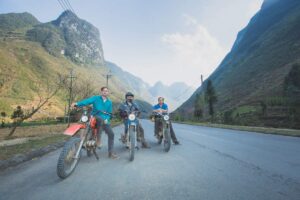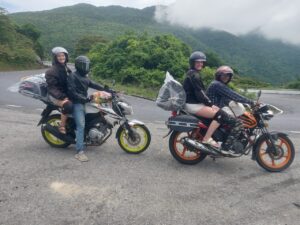

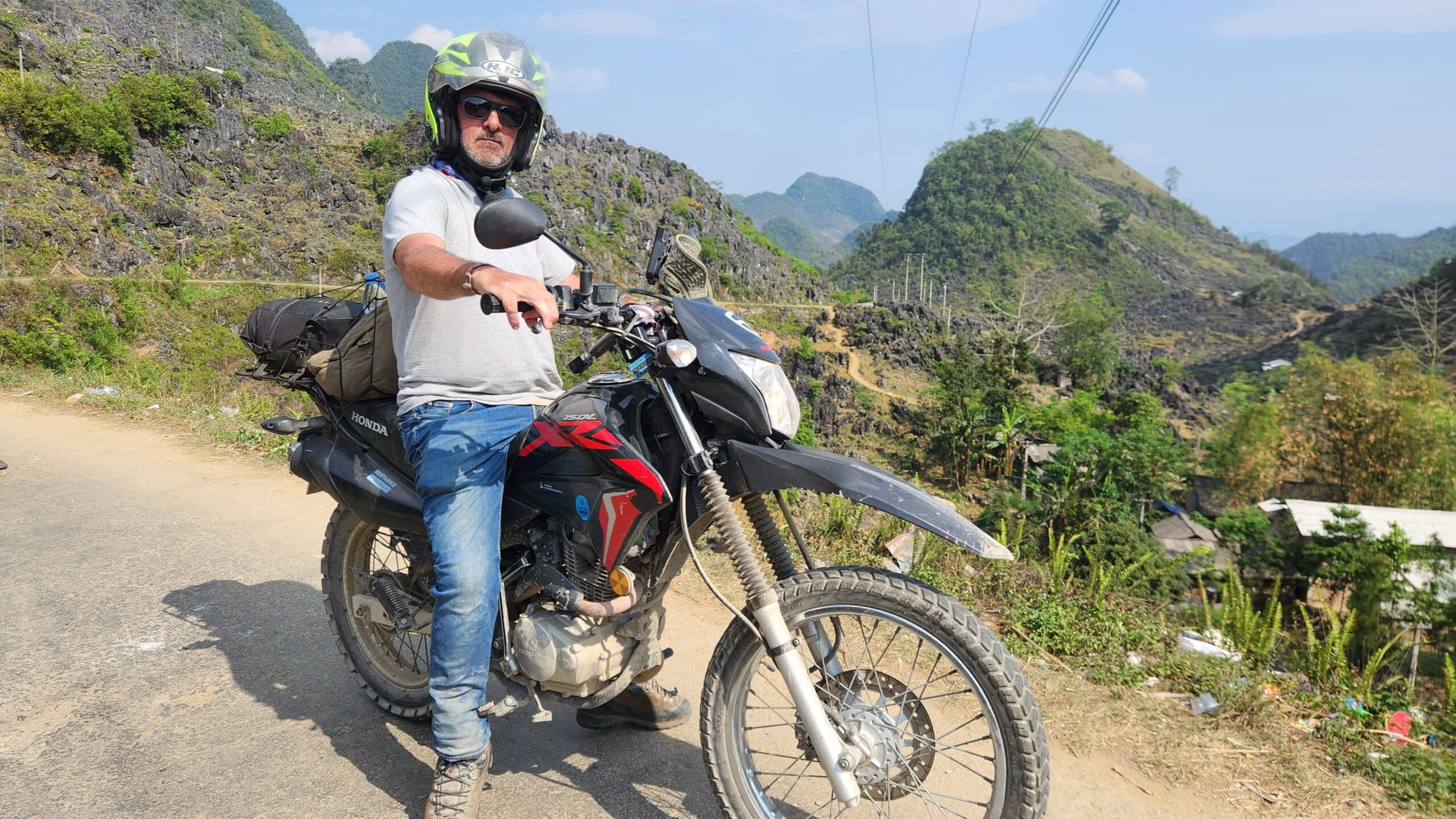
There is nothing quite like the freedom of dropping the kickstand in Vietnam. Whether you are carving through the legendary karst mountains of the north or navigating the winding coastal passes, exploring this country on two wheels is a rite of passage.
But before you twist the throttle, there is a massive legal hurdle that catches thousands of riders off guard every year: the International Driving Permit (IDP). Navigating the legalities of riding here can feel like a maze, and the rules are strictly enforced by local police.
Here at Rentabike Vietnam, we want your trip to be memorable for the right reasons. Here is the deep dive into the treaties, the rules, and exactly what you need to know to keep your ride legal, safe, and fully insured.Encoding test 🏍️🇻🇳🔥⭐
When discussing international driving laws, you will often hear about countries that “signed” a treaty. However, in international law, there is a massive difference between signing and ratifying.
One of the most common and dangerous mistakes travelers make happens when they actually receive their physical 1968 IDP. You will likely flip to the inside cover or the back pages and see a long list of countries printed directly on the permit. Naturally, you might assume that if a country’s name is printed on your official document, you are legally covered to ride there.
Beware: This is a massive misconception.
The list printed inside the IDP booklet is often just a historical list of countries that signed the original 1968 agreement—it does not mean they actually ratified it into law.
For example, countries like Spain, Thailand, and Chile might be printed right there in your 1968 booklet because their diplomats signed the paper decades ago. However, because their domestic governments never followed through with ratification, your 1968 IDP is completely invalid in those countries.
Do not trust the printed list on your booklet as proof of legality. Always independently verify a country’s strict ratification status before you assume you are covered.
There are two primary treaties governing global driving permits. Your home country’s legal standing with these treaties changes everything when you arrive in Vietnam.
Vietnam formally acceded to the 1968 Vienna Convention. If your home country has also ratified this treaty (e.g., the UK, Germany, France, Australia), your 1968 IDP is fully valid and legal in Vietnam, provided you meet these conditions:
Vietnam is not a party to the older 1949 Geneva Convention. If your home country only issues 1949 IDPs (e.g., the USA, Canada, Japan), that document holds zero legal weight here. Handing a 1949 IDP to a traffic cop is the legal equivalent of handing them a library card. You will be treated as an unlicensed driver.
| Nationality | Treaty Status | Legal to Ride in Vietnam? |
|---|---|---|
| United Kingdom | 1968 (ratified) | Yes (Requires ‘A’ endorsement) |
| Germany | 1968 (ratified) | Yes (Requires ‘A’ endorsement) |
| France | 1968 (ratified) | Yes (Requires ‘A’ endorsement) |
| Australia | 1949 Only | No |
| United States | 1949 Only | No |
| Canada | 1949 Only | No |
| Netherlands | 1968 (ratified) | Yes (Requires ‘A’ endorsement) |
| South Africa | 1968 (ratified) | Yes (Requires ‘A’ endorsement) |
| Switzerland | 1968 (ratified) | Yes (Requires ‘A’ endorsement) |
| New Zealand | 1949 Only | No |
| Spain | 1968 (signed Only) | No |
| Ireland | Not a Party | No |
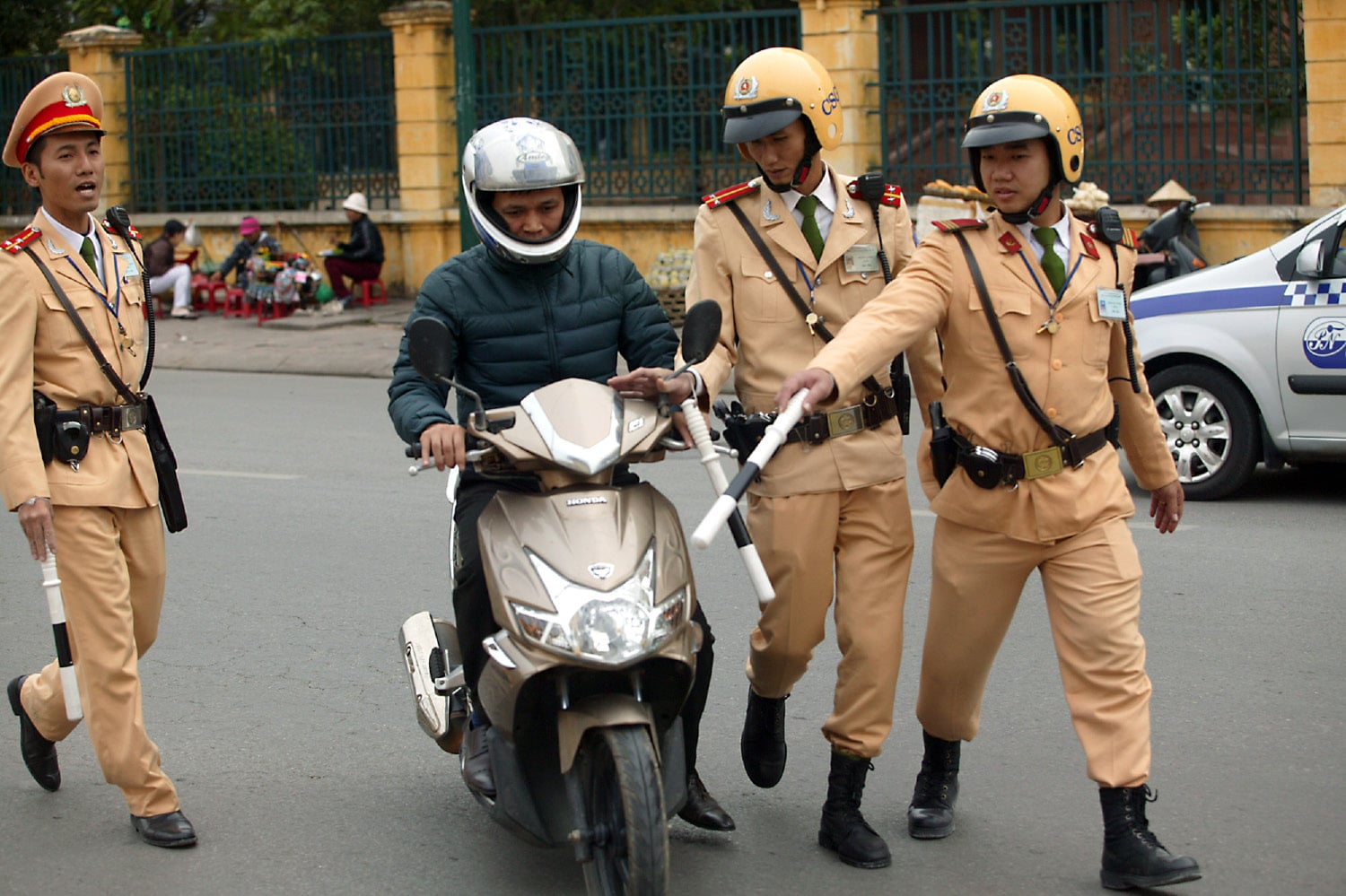
If you have read older blogs or watched dated YouTube videos, you might be working with expired information. Here are the recent legal shifts in Vietnam:
Fines and impounded bikes are a headache, but the real danger of riding with an invalid permit (like a 1949 IDP or a car-only 1968 IDP) is the insurance trap.
If you are riding illegally under Vietnamese law, your travel and medical insurance policies are instantly voided. In the event of an accident, you will receive zero coverage. You become 100% financially responsible for your own medical bills, damages to third parties, and the cost of replacing the motorcycle.
When you hit the road, the goal is to focus on the journey, the culture, and the landscapes—not looking over your shoulder for the next police checkpoint. Ensuring your paperwork is bulletproof is the most important part of your pre-trip preparation.
No. Vietnam is only a party to the 1968 Vienna Convention. If your home country issues a 1949 IDP (such as the United States, Australia, or Canada), it holds absolutely no legal weight in Vietnam. Handing a 1949 IDP to a police officer will result in you being treated as an unlicensed driver.
No. A 1968 IDP is simply a translation of your home country’s license. To legally rent and ride a motorbike in Vietnam, your physical home license must have a specific motorcycle endorsement (usually an “A” category stamp). A standard car license does not legally clear you for two-wheeled vehicles, even if it is translated on a 1968 IDP.
No. Vietnam does not recognize digital IDPs or permits issued by private third-party companies like the International Automobile Association (IAA). You must carry the physical, state-issued 1968 IDP booklet alongside your physical home country license at all times.
This is the biggest risk of riding illegally. If you are riding with a 1949 IDP, or without the proper motorcycle endorsement on a 1968 IDP, you are breaking Vietnamese law. This instantly voids almost all travel and medical insurance policies, leaving you 100% financially responsible for medical bills, third-party liability, and vehicle damages in the event of an accident.
As of the legal updates that took effect in 2025, a standard A1 motorcycle license (and its IDP equivalent) now only permits you to ride motorbikes up to 125cc. If you plan to rent a 150cc touring bike or larger, you are legally required to hold a full “A” category motorcycle license. (Note: A1 licenses issued prior to January 1, 2025, remain valid for up to 175cc until their expiration date).
When you are surrounded by the towering limestone peaks of Northern Vietnam, the last thing you want on your mind is the anxiety of an approaching police checkpoint. The rules regarding International Driving Permits might seem overly strict, but they are exactly what stand between the trip of a lifetime and a costly legal headache.
Take the time before you fly to check your home country’s exact ratification status, get your physical motorcycle endorsement, and ensure you have the correct 1968 booklet in hand. At Rentabike Vietnam, our priority is making sure you hit the road fully legal, fully insured, and fully prepared for the adventure ahead.
Drop the kickstand, twist the throttle, and enjoy Vietnam the right way.
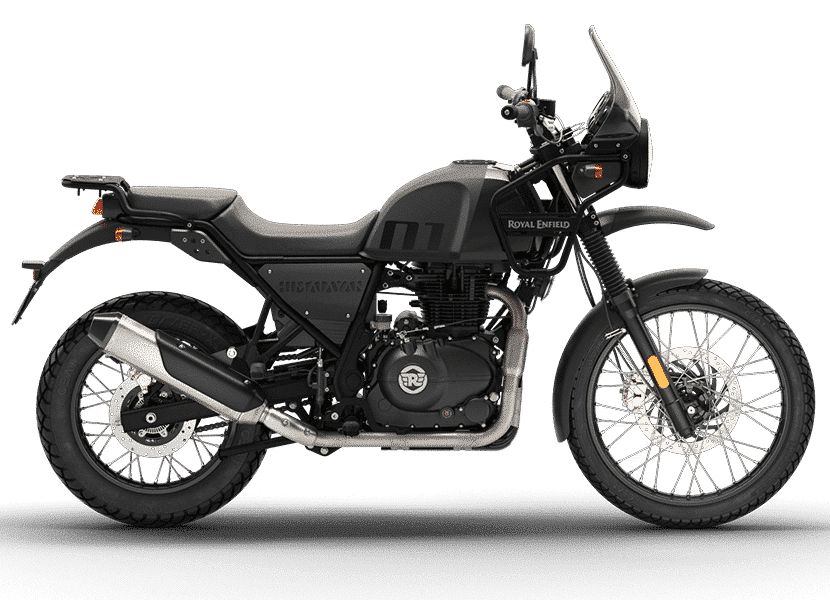
Engine Type
air-cooled, single cylinder, SOHC
Displacement
411 cc
Bore X Stroke
78 mm x 86 mm
Ignition
TCI
Fuel System
fuel injection
Compression Ratio
9.5:1
Starter
electric
Gearbox
5-speed
Front Suspension
telescopic forks; stanchion diameter 41 mm
Rear Suspension
linkage-type monoshock
Front Brakes
single disc brake, diameter 300 mm, 2-piston floating caliper
Rear Brakes
single disc brake, diameter 240 mm, single-piston floating caliper
Front Tyres
90/90 – 21
Rear Tyres
120/90 – 17
Wheelbase
1465 mm
Seat Height
800 mm
Ground Clearance
220 mm
Kerb Weight
199 kg
Fuel Capacity
15 litres
Dimensions
2190 mm (L) x 840 mm (W) x 1360 mm (H)
Daily
Total
Rider (CRF 300)
$220
Pillion
$120
Damage Waiver
$20
Private Room
$40
Support Vehicle*
$150
* All prices given are in USD and apply per rider except for the support vehicle. The support vehicle is free for groups of 7 or more, otherwise the cost is shared across the group.
Daily
Total
Rider (XR 150)
Rider (CRF 300)
Rider (CB 500X)
Rider (Himalayan 400)
$220
Rider (GS 1250)
Pillion
$120
Damage Waiver
$20
Private Room
$40
Support Vehicle*
$150
* All prices given are in USD and apply per rider except for the support vehicle. The support vehicle is free for groups of 7 or more, otherwise the cost is shared across the group.
Daily
Total
Jeep (1 PAX)
$210
Jeep (2 PAX)
$120
Jeep (3 PAX)
$90
Jeep (4+ PAX)
$80
Rider (Easy Rider)
$115
Rider (Self-Drive)
$105
Private Room
$15
* Our jeep tour prices operate on a sliding scale. The larger your group, the less each person pays—each member of your group will pay the lowest daily rate shown. For example, if you have a group of 4 or more, you will each only pay $80/day. All prices are given in USD.
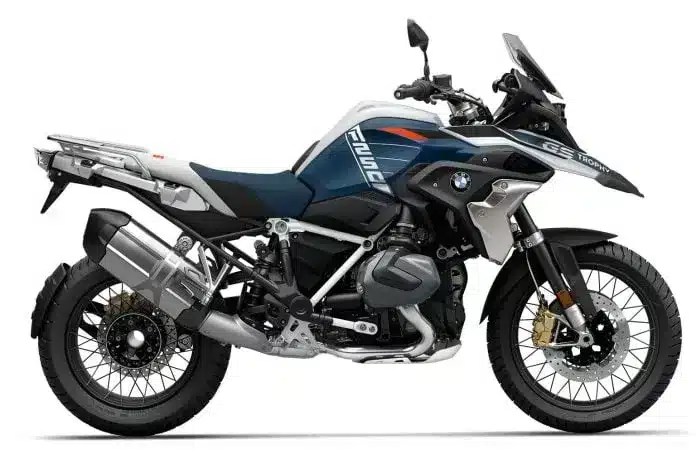
Engine Type
air-liquid cooled, twin cylinder, DOHC, boxer engine
Displacement
1255 cc
Bore X Stroke
102.5 mm x 76 mm
Ignition
FI
Fuel System
fuel injection
Compression Ratio
12.5:1
Starter
electric
Gearbox
6-speed
Front Suspension
BMW Motorrad Telelever; stanchion diameter 37 mm
Rear Suspension
single-sided swing arm with BMW Motorrad Paralever
Front Brakes
dual disc brake, floating brake discs, diameter 305 mm, 4-piston radial calipers
Rear Brakes
single disc brake, diameter 276 mm, double-piston floating caliper
Front Tyres
120/70 R19
Rear Tyres
170/60 R17
Wheelbase
1514 mm
Seat Height
850 mm
Ground Clearance
790 mm
Kerb Weight
249 kg
Fuel Capacity
20 litres
Dimensions
2207 mm (L) x 952.5mm (W) x 1430 mm (H)
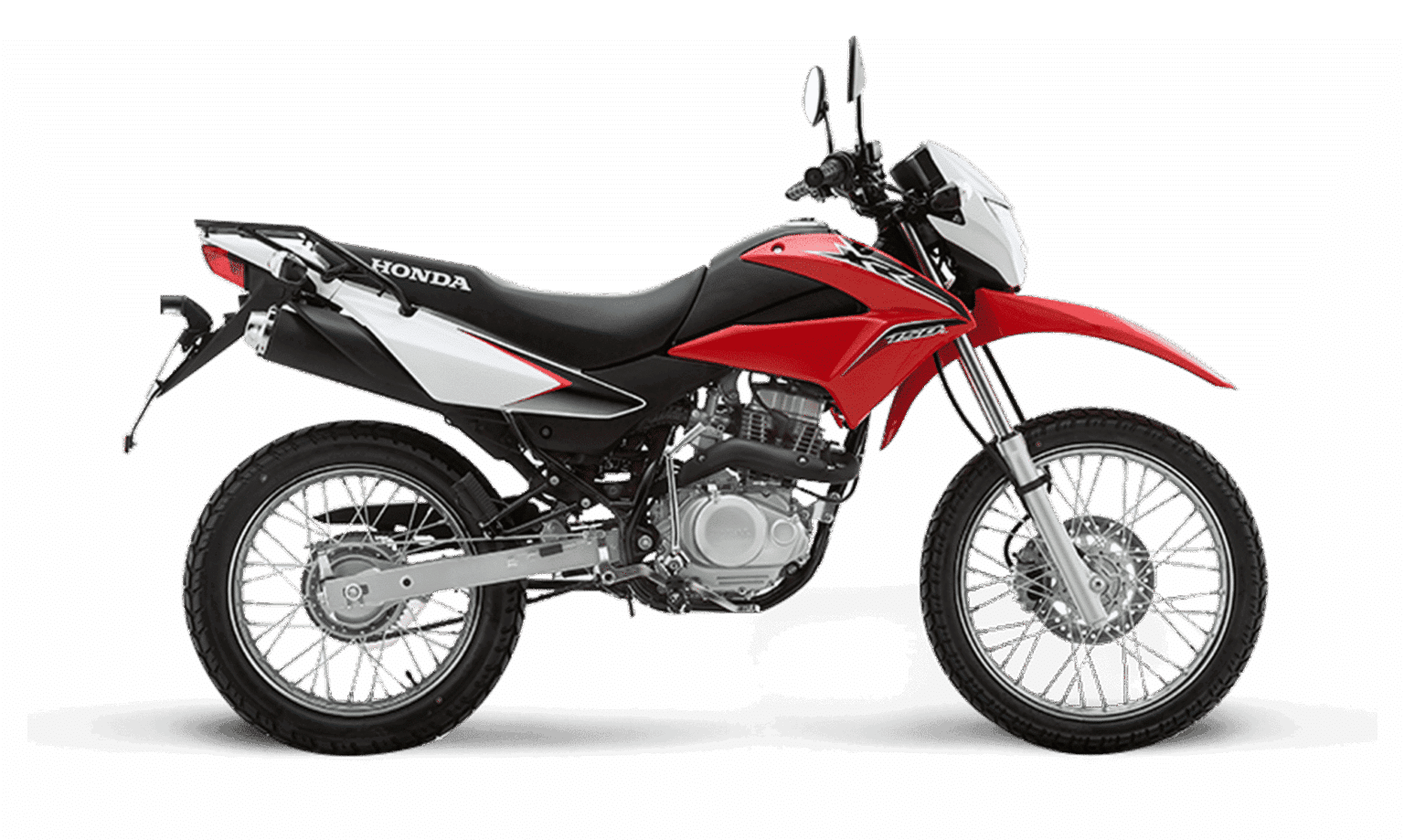
Engine Type
air cooled, OHC, single cylinder
Displacement
149 cc
Bore X Stroke
57.3 mm x 57.8 mm
Ignition
CDI
Fuel System
20 mm piston valve carburettor
Compression Ratio
9.5:1
Starter
electric with kick starter backup
Gearbox
5-speed
Front Suspension
telescopic fork, 180 mm axle travel
Rear Suspension
single shock swing arm, 150 mm axle travel
Front Brakes
dual piston caliper, 240 mm disc
Rear Brakes
mechanical drum
Front Tyres
90/90 19
Rear Tyres
110/90 17
Wheelbase
1362 mm
Seat Height
825 mm
Ground Clearance
243 mm
Kerb Weight
129 kg
Fuel Capacity
12 litres
Dimensions
2091 mm (L) x 811 mm (W) x 1125 mm (H)
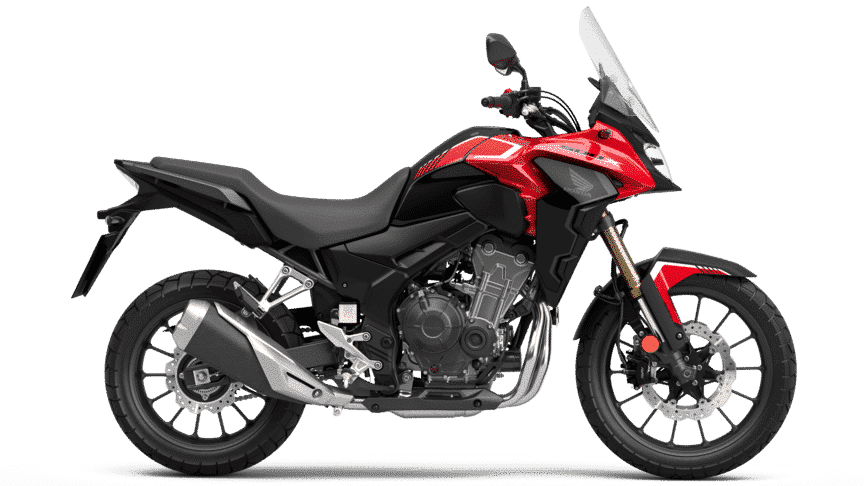
Engine Type
liquid cooled parallel-twin four stroke
Displacement
470 cc
Bore X Stroke
67 mm x 66.8 mm
Ignition
PGMI – FI
Fuel System
fuel injection
Compression Ratio
10.7:1
Starter
electric
Gearbox
6-speed
Front Suspension
41 mm SFF-BP USD Forks
Rear Suspension
Prolink Mono with 5 stage pre load adjuster
Front Brakes
dual 296 mm discs with 4 piston calipers; ABS
Rear Brakes
240 mm disc; ABS
Front Tyres
110/80R19M/C (59H)
Rear Tyres
160/60R17M/C
Wheelbase
1445 mm
Seat Height
830 mm
Ground Clearance
180 mm
Kerb Weight
199 kg
Fuel Capacity
17.7 litres
Dimensions
2,155 mm (L) x 830 mm (W) x 1,410 mm (H)
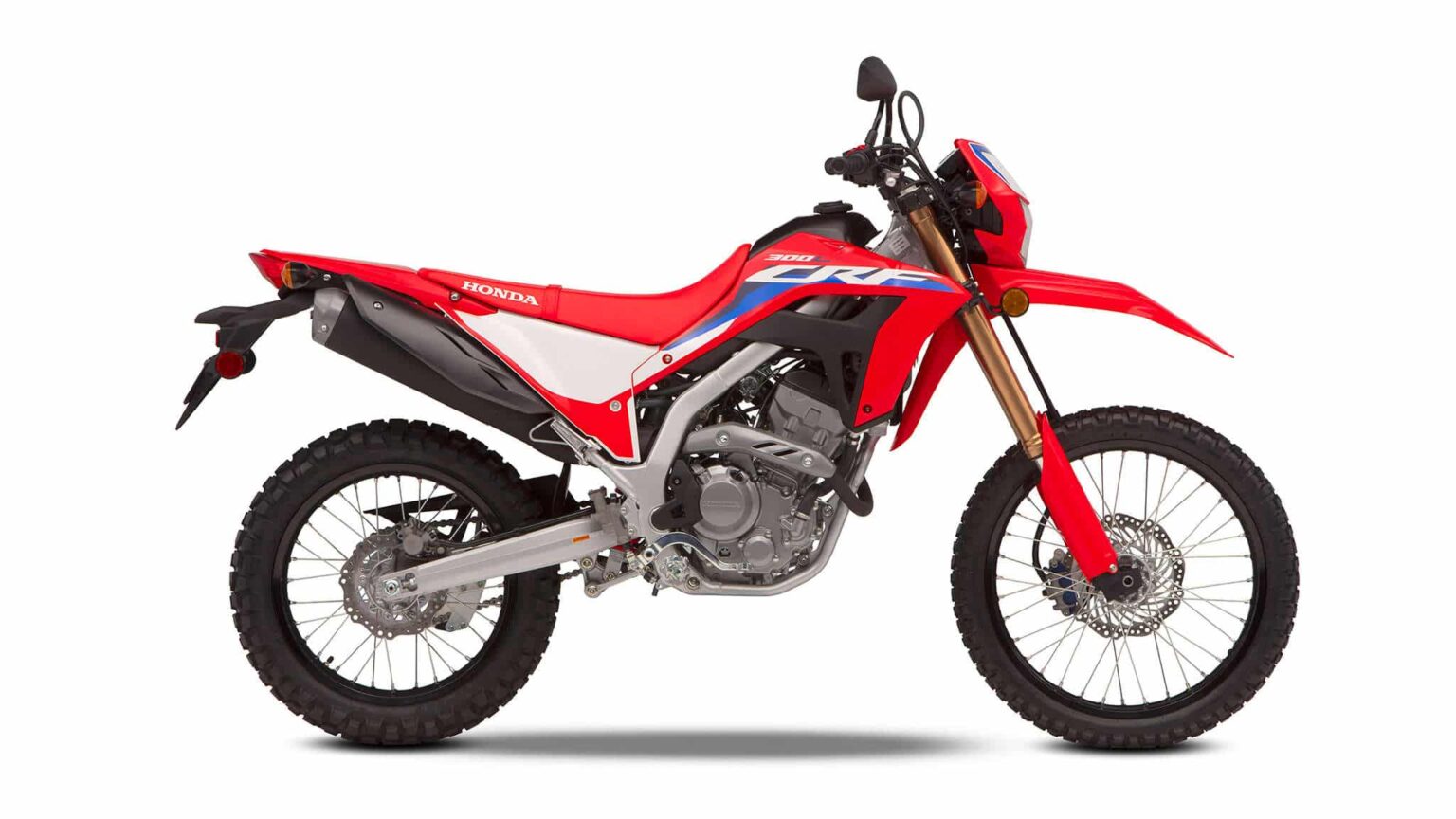
Engine Type
single cylinder, DOHC, liquid cooled
Displacement
286 cc
Bore X Stroke
76 mm x 63 mm
Ignition
Full Transistor Digital
Fuel System
PGM-FI electronic fuel injection
Compression Ratio
10.7:1
Starter
electric
Gearbox
5-speed
Front Suspension
43 mm telescopic upside down
Rear Suspension
Prolink Mono with 5 stage pre load adjuster
Front Brakes
Rear Brakes
220 mm disc, single piston caliper
Front Tyres
80/100 21
Rear Tyres
120/80 18
Wheelbase
1455 mm
Seat Height
880 mm
Ground Clearance
285 mm
Kerb Weight
142 kg
Fuel Capacity
7.8 litres
Dimensions
2230 mm (L) x 820 mm (W) x 1200 mm (H)