
Imagine rolling into a town hungry, only to find every restaurant locked. The “Tet Shutdown” is real. Your savior isn’t an energy bar, but Banh Chung—the original survival ration. It’s calorie-dense, durable enough for a saddlebag, and culturally iconic.
Learn why you need this “green brick” below. (And to survive other closures, like gas stations and mechanics, check The Ultimate Guide to Riding Vietnam During Tet).
To eat Banh Chung is to consume a piece of Vietnamese identity. This isn’t just a snack; it is the culinary soul of the nation, with a history that stretches back thousands of years to the Hung Kings dynasty.
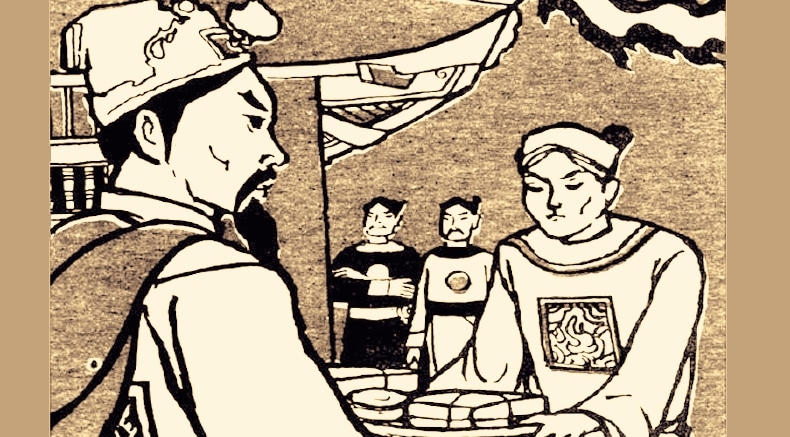
The origin story is one every Vietnamese child knows. The 6th Hung King, looking for an heir, challenged his sons to create a dish that best honored the ancestors. While the wealthy princes scoured the earth for exotic shark fins and bird nests, the poorest prince, Lang Lieu, looked to the fields. He realized that rice was the lifeblood of the people. Using nothing but sticky rice, mung beans, and pork, he created a dish that represented the agrarian soul of the country.
Lang Lieu shaped his creation into a perfect square, wrapping it in green leaves to represent the Earth (which, in ancient Vietnamese cosmology, was believed to be flat and square). He called it Banh Chung. The King was moved by the philosophy that the most valuable things are the simple products of hard work and the land. Lang Lieu was crowned King, and the cake became the eternal symbol of Tet.
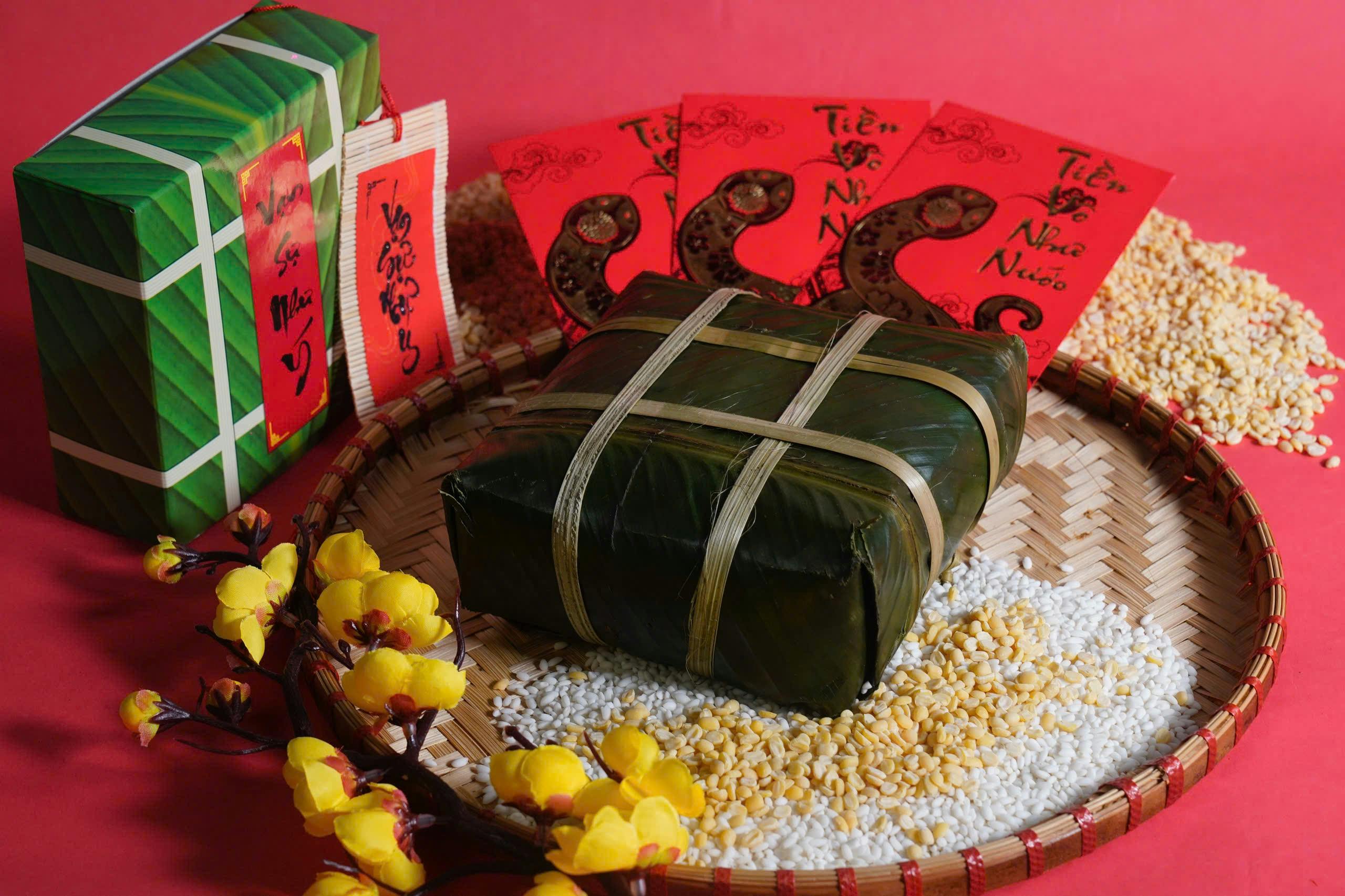
Culinary-wise, it is a masterpiece of balance. The outer layer consists of high-quality glutinous rice (Gao Nep), soaked for hours to ensure stickiness. The core is a savory paste of steamed mung beans encasing chunks of pork belly that have been marinated in fish sauce and black pepper. As the cake cooks, the fat from the pork renders out, soaking into the beans and rice, creating a rich, unified flavor profile.
The packaging is as iconic as the food. The cake is tightly swaddled in layers of La Dong (Phrynium leaves). These aren’t just for show; they are functional. During the boiling process, the chlorophyll from the leaves seeps into the rice, dyeing it a vibrant, natural green and imparting a subtle, tea-like aroma that balances the richness of the pork.
If you are riding through villages a few days before Tet, look at the sidewalks. You will see huge metal drums boiling over wood fires, with family members taking turns to watch the pot. Banh Chung requires a marathon 10 to 12-hour boil. This long cooking time essentially sterilizes the cake, killing all bacteria and allowing the ingredients to meld completely. It is this process that gives the cake its legendary shelf life.
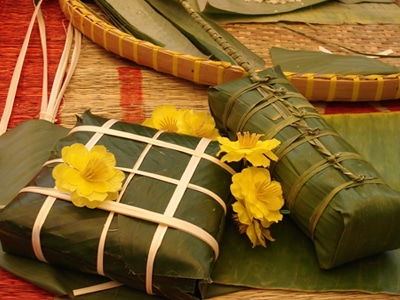
Vietnam is a long, thin country, and as you ride your rental motorbike from the mountains of Ha Giang to the delta of the Mekong, you will witness the evolution of this dish. The geography of the land dictates the shape of the food.
In the North, tradition rules. The Banh Chung is strictly square and savory. It is the centerpiece of the ancestral altar, placed in pairs. The flavor profile is earthy and salty, designed to be hearty food for the cold, damp Northern winter. If you are riding the Northern Loop, this is the version you will find strapped to the back of motorbikes.
Once you cross the Hai Van Pass and descend into the tropical South, the rules change. The cake transforms into a cylinder (log shape) and is called Banh Tet. While the basic ingredients remain similar, the Southern palate prefers a touch of sweetness. It is common to find coconut milk mixed into the rice, or versions where the pork is replaced with banana (Banh Tet Chuoi), creating a dessert-like variation.
Why the change? Cultural historians suggest the cylindrical shape of the South was influenced by the Cham culture’s fertility symbols (the Linga). However, practical rural folk will tell you that a log shape allows the cakes to be stacked more efficiently in a pot, maximizing space—a crucial factor when cooking for huge Southern clans.
The further south you go, the more complex the fillings become. In the Mekong Delta, you might encounter Banh Tet La Cam, where the rice is dyed purple using magenta plant leaves, and the filling includes salted egg yolks for a rich, savory-sweet punch. It’s a completely different experience from the stoic Northern square.
Because glutinous rice is incredibly sticky, using a metal knife to cut it is a disaster—the rice sticks to the blade and ruins the shape. Locals have a genius solution: they peel off the bamboo strings used to tie the wrapper and use the string itself as a wire cutter. They loop the string around the cake and pull, slicing it into perfect, clean wedges. Watch a local do it; it is a magic trick of efficiency.
Why should a motorbike traveler care about a rice cake? Because functionally, it is the best road trip food ever invented. It beats a granola bar in almost every metric.
Cyclists and runners talk about “bonking”—running out of glycogen. Banh Chung is the antidote. It is a dense brick of slow-release carbohydrates (rice), plant protein (beans), and animal fats (pork). Eating just one wedge provides a massive, sustained energy release that will power you through 4 hours of winding mountain roads without a crash.
For the eco-conscious rider, Banh Chung is a dream. The Dong leaves are nature’s Tupperware. You can throw a wrapped cake into your backpack or saddlebag without worrying about leaks or mess. When you are finished, the wrapper is 100% biodegradable. You can leave it in the forest, and it returns to the earth—no plastic waste left behind.
The genius of the 12-hour boil and the salted meat is preservation. In the cool weather of Northern Vietnam (15°C – 20°C), a Banh Chung can sit at room temperature for up to a week without spoiling. This is vital when you are staying in remote homestays that might not have reliable electricity or refrigeration.
During Tet, inflation hits many tourist services, but Banh Chung remains the food of the people. You can buy a large cake (1kg) for about 50,000 to 100,000 VND ($2 – $4 USD). Considering one cake can feed a hungry rider for nearly two full days, it is the most economical food source available.
Vietnamese cuisine is governed by the philosophy of Yin and Yang (Hot and Cold elements). Banh Chung is considered “heavy” and rich. To eat it alone would be overwhelming, so it is always served with specific side dishes to cut the fat.
You will rarely see a plate of Banh Chung without a bowl of Dua Hanh nearby. These are small shallots (in the North) or leeks (in the South) pickled in vinegar and sugar. The sharp acidity and crunchy texture slice through the stickiness of the rice and the fat of the pork, cleansing the palate between bites. It is a mandatory marriage of flavors.
Often served on the same plate is Gio Lua, a steamed pork roll with a texture similar to mortadella but with a distinct fish-sauce savory note. It requires no cooking and is sold in banana-leaf logs. For a rider, buying a Banh Chung and a stick of Gio Lua means you have the components for limitless roadside sandwiches (without the bread).
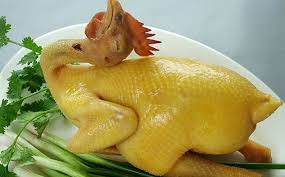
If you are staying at a homestay during Tet, you will inevitably be offered boiled chicken (Ga Luoc). It is the standard offering to ancestors. Be warned: the Vietnamese prefer a “chewy” texture for chicken, and it is chopped bone-in with a cleaver. Chew carefully!
After the heavy meal, you will be offered tea and Mut. These are dried, sugared fruits—coconut, ginger, carrot, or lotus seeds. For riders, the Mut Gung (candied ginger) is particularly good to keep in your pocket; the spicy heat helps settle the stomach on twisty roads and warms you up on cold foggy mornings.
If you find the texture of the steamed cake too sticky or heavy, wait until the next morning. There is a “secret menu” way to eat Banh Chung that many foreigners prefer over the original.
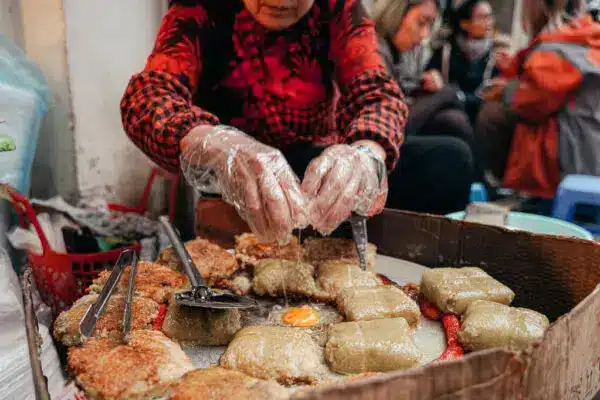
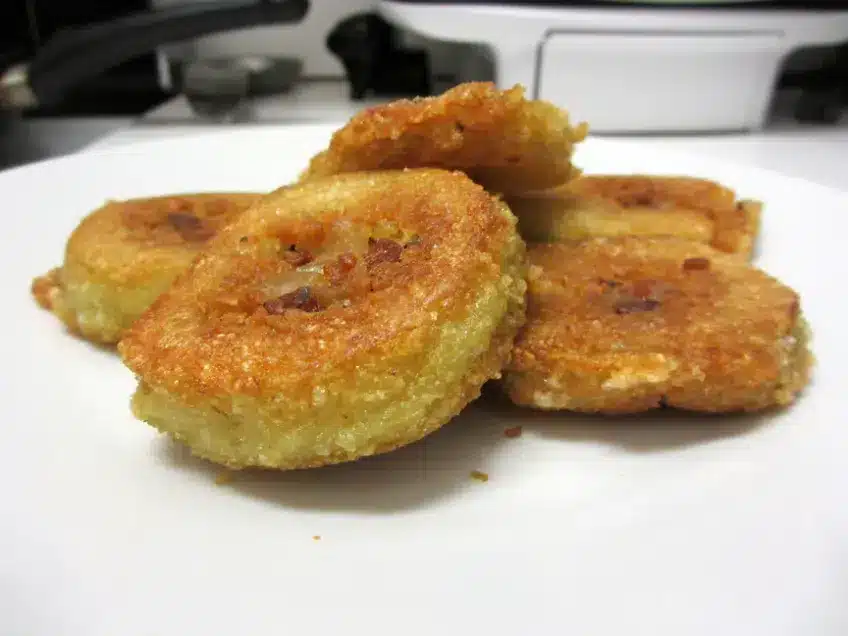
After a few days, the leftover Banh Chung hardens as the rice retrogrades. To refresh it, locals slice it flat and pan-fry it in hot oil. The transformation is miraculous. The sticky rice turns into a golden, crispy crust, while the mung bean and pork inside become hot and molten.
The result, Banh Chung Ran, eats like a savory pancake or a very thick, crispy pizza. The contrast between the crunch of the rice crust and the soft, savory interior is texturally addictive. It is widely considered the ultimate comfort food for a cold winter morning in Hanoi.
If you are checking out of a hotel or homestay, ask the host if they can fry some Banh Chung for your breakfast. It provides the warmth and calories needed to start a riding day, especially if you are heading up into the misty mountains of Sapa or Ha Giang.
Traditionally, no. The center contains fatty pork belly. However, due to Buddhist influences, there is a widely available version called Banh Chung Chay (Vegetarian Banh Chung). It uses only mung beans, and sometimes mushrooms, chestnuts, or cashews to replace the meat. You can find these at pagodas or vegetarian shops.
No! Please peel off the green leaves. They are just the packaging. The rice inside will be green because it has absorbed the color of the leaf, which often confuses first-timers. Peel it like a banana and eat the sticky rice inside.
Use your nose. Banh Chung has a distinct, pleasant smell of sticky rice and leaves. If the cake smells sour, fermented, or feels slimy to the touch, do not eat it. While they last a long time, the humid weather in the South can make them spoil faster (3-4 days) compared to the cool North (7-10 days).
During the weeks leading up to Tet, you can’t miss them. They are sold at every wet market, inside supermarkets (like WinMart or Go!), and by street vendors with baskets on nearly every corner. Look for the stacks of square green bricks tied with bamboo strings.
Technically, yes, but be very careful with customs regulations in your home country regarding pork products. Many countries (like Australia, New Zealand, or the USA) strictly ban the import of meat products, even if cooked, to prevent diseases like Swine Fever. It is much safer (and tastier) to finish your cake in Vietnam!
Food is the fastest way to understand a culture, and Banh Chung is the taste of the Vietnamese New Year. It represents the land, the ancestors, and the resilience of the people. It is a dish born from the soil, designed to sustain life through the winter.
For the rider, it represents freedom. With a Banh Chung in your saddlebag, you aren’t reliant on restaurant opening hours or tourist traps. You have the freedom to stop wherever the view is best—perhaps a cliff edge overlooking the Ma Pi Leng Pass—unwrap the green leaf, and enjoy a picnic that connects you to the history of the ground you are standing on.
Hungry for adventure?
Don’t let the holiday shutdown stop you. Book your Motorbike Rental now, grab a cake, and eat your way through the most beautiful roads in Asia this Tet!
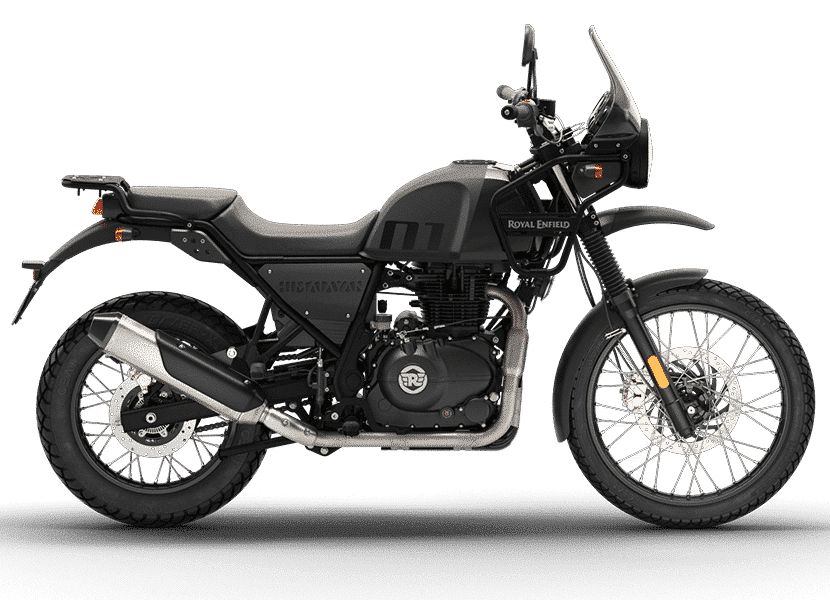
Engine Type
air-cooled, single cylinder, SOHC
Displacement
411 cc
Bore X Stroke
78 mm x 86 mm
Ignition
TCI
Fuel System
fuel injection
Compression Ratio
9.5:1
Starter
electric
Gearbox
5-speed
Front Suspension
telescopic forks; stanchion diameter 41 mm
Rear Suspension
linkage-type monoshock
Front Brakes
single disc brake, diameter 300 mm, 2-piston floating caliper
Rear Brakes
single disc brake, diameter 240 mm, single-piston floating caliper
Front Tyres
90/90 – 21
Rear Tyres
120/90 – 17
Wheelbase
1465 mm
Seat Height
800 mm
Ground Clearance
220 mm
Kerb Weight
199 kg
Fuel Capacity
15 litres
Dimensions
2190 mm (L) x 840 mm (W) x 1360 mm (H)
Daily
Total
Rider (CRF 300)
$220
Pillion
$120
Damage Waiver
$20
Private Room
$40
Support Vehicle*
$150
* All prices given are in USD and apply per rider except for the support vehicle. The support vehicle is free for groups of 7 or more, otherwise the cost is shared across the group.
Daily
Total
Rider (XR 150)
Rider (CRF 300)
Rider (CB 500X)
Rider (Himalayan 400)
$220
Rider (GS 1250)
Pillion
$120
Damage Waiver
$20
Private Room
$40
Support Vehicle*
$150
* All prices given are in USD and apply per rider except for the support vehicle. The support vehicle is free for groups of 7 or more, otherwise the cost is shared across the group.
Daily
Total
Jeep (1 PAX)
$210
Jeep (2 PAX)
$120
Jeep (3 PAX)
$90
Jeep (4+ PAX)
$80
Rider (Easy Rider)
$115
Rider (Self-Drive)
$105
Private Room
$15
* Our jeep tour prices operate on a sliding scale. The larger your group, the less each person pays—each member of your group will pay the lowest daily rate shown. For example, if you have a group of 4 or more, you will each only pay $80/day. All prices are given in USD.
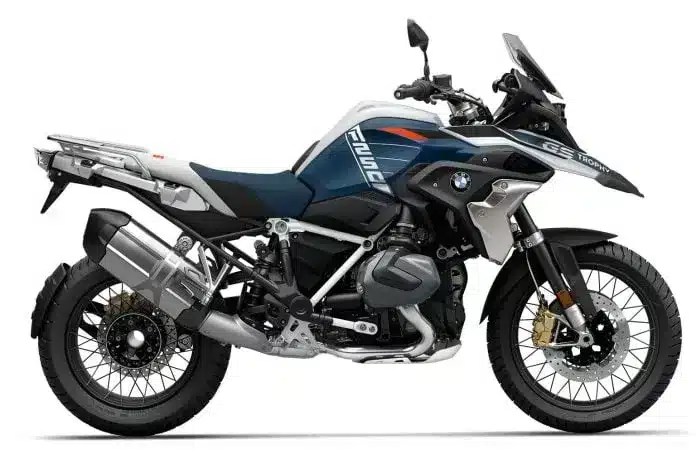
Engine Type
air-liquid cooled, twin cylinder, DOHC, boxer engine
Displacement
1255 cc
Bore X Stroke
102.5 mm x 76 mm
Ignition
FI
Fuel System
fuel injection
Compression Ratio
12.5:1
Starter
electric
Gearbox
6-speed
Front Suspension
BMW Motorrad Telelever; stanchion diameter 37 mm
Rear Suspension
single-sided swing arm with BMW Motorrad Paralever
Front Brakes
dual disc brake, floating brake discs, diameter 305 mm, 4-piston radial calipers
Rear Brakes
single disc brake, diameter 276 mm, double-piston floating caliper
Front Tyres
120/70 R19
Rear Tyres
170/60 R17
Wheelbase
1514 mm
Seat Height
850 mm
Ground Clearance
790 mm
Kerb Weight
249 kg
Fuel Capacity
20 litres
Dimensions
2207 mm (L) x 952.5mm (W) x 1430 mm (H)
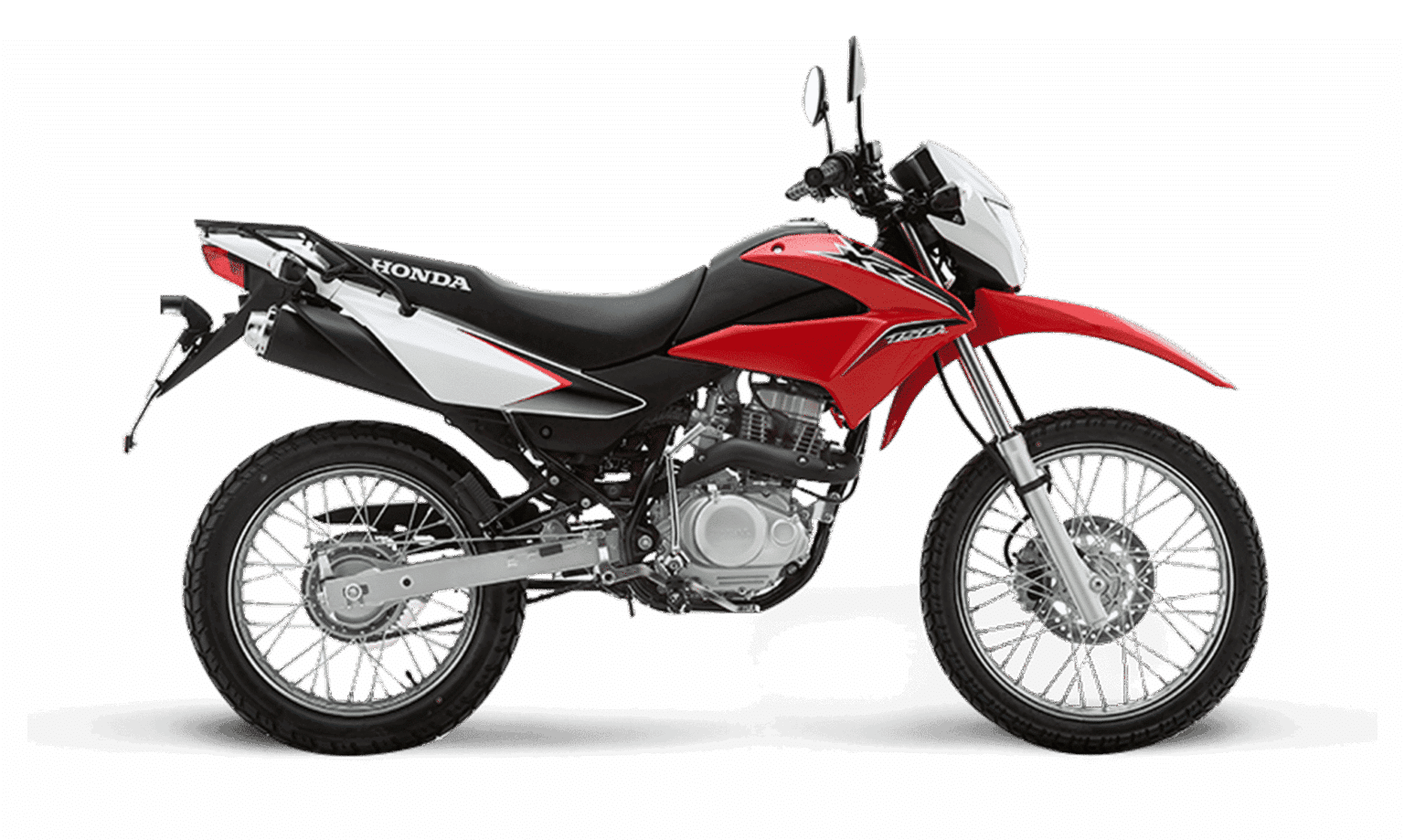
Engine Type
air cooled, OHC, single cylinder
Displacement
149 cc
Bore X Stroke
57.3 mm x 57.8 mm
Ignition
CDI
Fuel System
20 mm piston valve carburettor
Compression Ratio
9.5:1
Starter
electric with kick starter backup
Gearbox
5-speed
Front Suspension
telescopic fork, 180 mm axle travel
Rear Suspension
single shock swing arm, 150 mm axle travel
Front Brakes
dual piston caliper, 240 mm disc
Rear Brakes
mechanical drum
Front Tyres
90/90 19
Rear Tyres
110/90 17
Wheelbase
1362 mm
Seat Height
825 mm
Ground Clearance
243 mm
Kerb Weight
129 kg
Fuel Capacity
12 litres
Dimensions
2091 mm (L) x 811 mm (W) x 1125 mm (H)
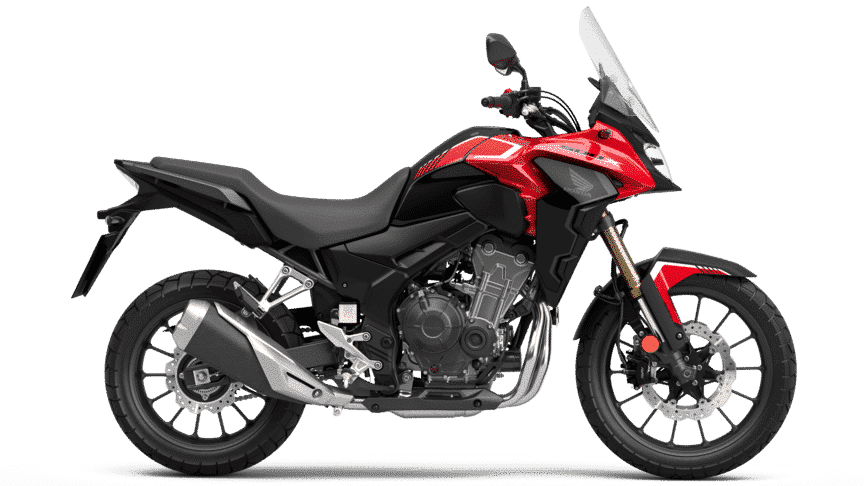
Engine Type
liquid cooled parallel-twin four stroke
Displacement
470 cc
Bore X Stroke
67 mm x 66.8 mm
Ignition
PGMI – FI
Fuel System
fuel injection
Compression Ratio
10.7:1
Starter
electric
Gearbox
6-speed
Front Suspension
41 mm SFF-BP USD Forks
Rear Suspension
Prolink Mono with 5 stage pre load adjuster
Front Brakes
dual 296 mm discs with 4 piston calipers; ABS
Rear Brakes
240 mm disc; ABS
Front Tyres
110/80R19M/C (59H)
Rear Tyres
160/60R17M/C
Wheelbase
1445 mm
Seat Height
830 mm
Ground Clearance
180 mm
Kerb Weight
199 kg
Fuel Capacity
17.7 litres
Dimensions
2,155 mm (L) x 830 mm (W) x 1,410 mm (H)
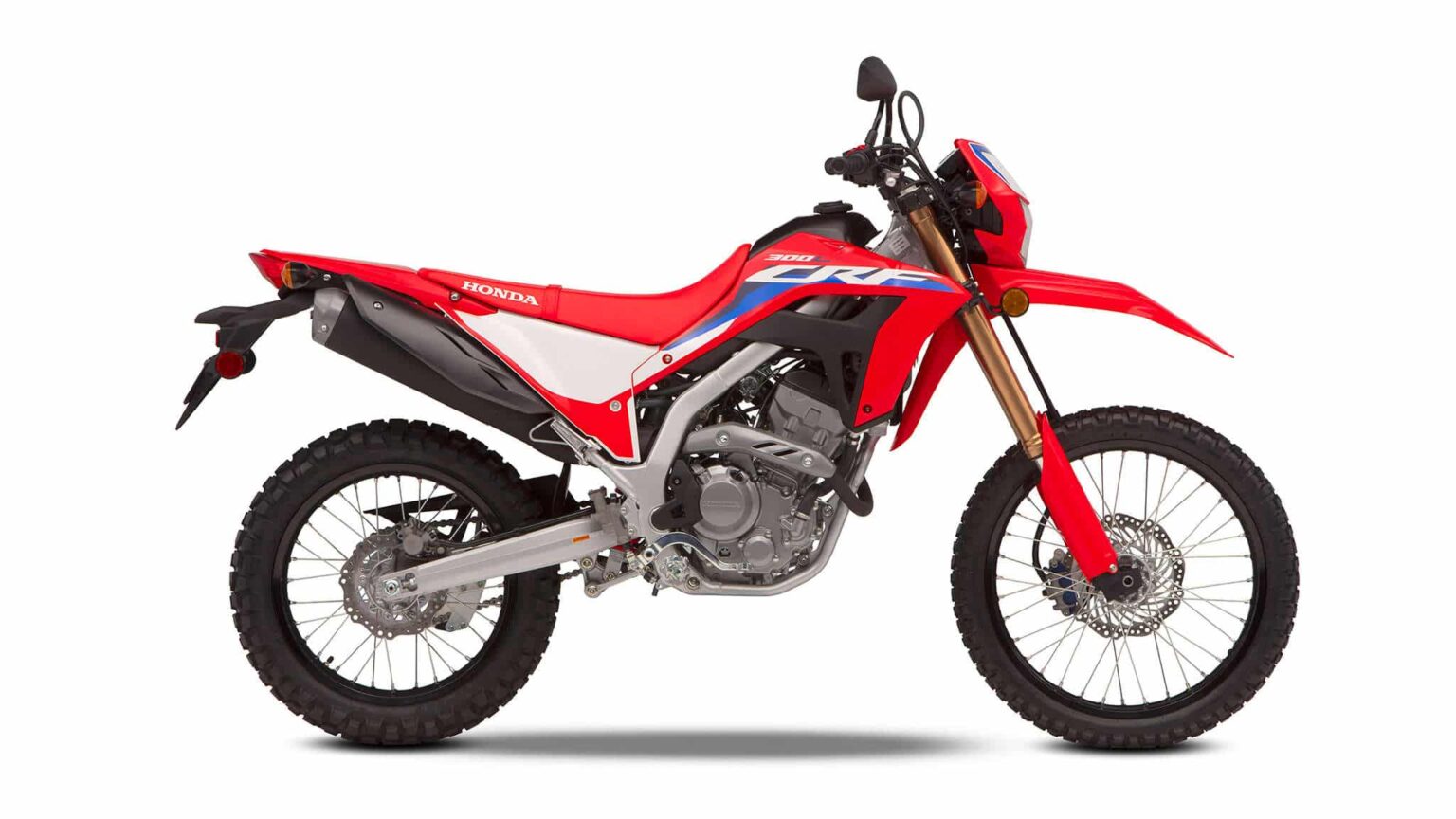
Engine Type
single cylinder, DOHC, liquid cooled
Displacement
286 cc
Bore X Stroke
76 mm x 63 mm
Ignition
Full Transistor Digital
Fuel System
PGM-FI electronic fuel injection
Compression Ratio
10.7:1
Starter
electric
Gearbox
5-speed
Front Suspension
43 mm telescopic upside down
Rear Suspension
Prolink Mono with 5 stage pre load adjuster
Front Brakes
Rear Brakes
220 mm disc, single piston caliper
Front Tyres
80/100 21
Rear Tyres
120/80 18
Wheelbase
1455 mm
Seat Height
880 mm
Ground Clearance
285 mm
Kerb Weight
142 kg
Fuel Capacity
7.8 litres
Dimensions
2230 mm (L) x 820 mm (W) x 1200 mm (H)