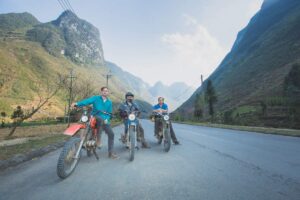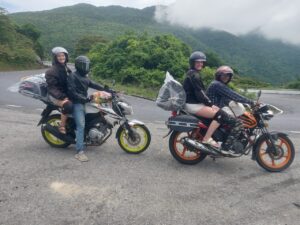

Riding a motorbike through Vietnam is a bucket-list adventure. From the Ha Giang Loop in the north to the coastal roads of the south, the freedom of two wheels is unmatched.
But there is a massive, common pitfall that ruins many trips within the first few hours: bad navigation.
If you just open Google Maps, punch in your destination, and hit “start,” you are likely heading for trouble. Why? Because Google Maps, by default, thinks you are a car. And in Vietnam, cars and motorbikes have very different rules.
The most critical rule is this: Motorbikes are strictly forbidden on expressways.
If you end up on one, you face dangerous traffic moving much faster than you, getting stuck at toll booths that won’t let you pass, and heavy fines from the police waiting at the exits.
Here is the complete guide to setting up Google Maps correctly so you stay safe, legal, and on the best scenic routes.
Before we touch the settings, you need to know what you are avoiding.
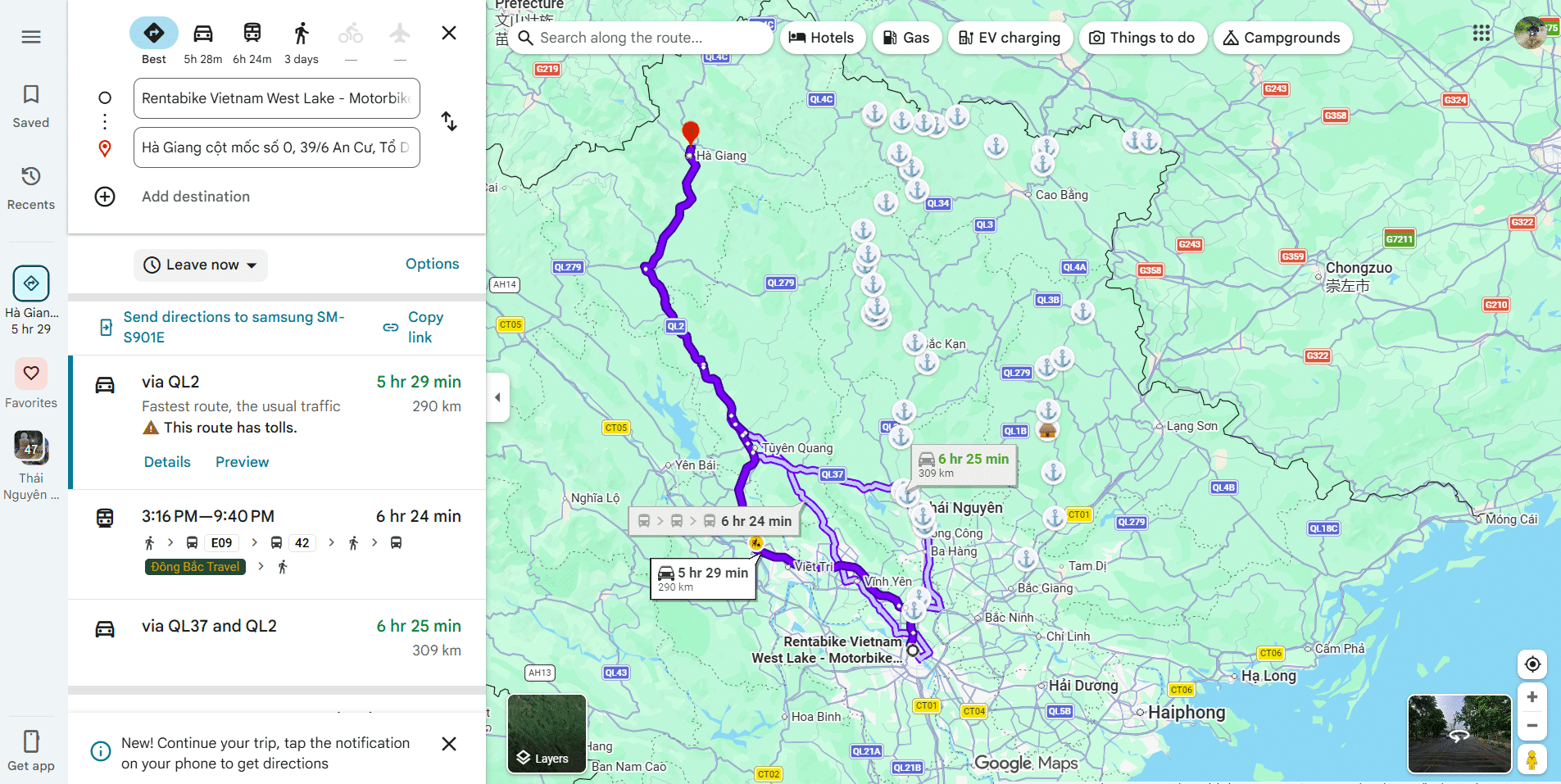
In Vietnam, expressways or controlled-access highways are often labeled with “CT” (short for Cao Tốc, meaning High Speed). Examples include the CT01 or CT08.
Your goal in Google Maps is to force the app to never, ever suggest these roads.
*Important* There are some roads marked CT that motorbikes can travel on. CT02 through Pu Luong, of all places, springs to mind. Yes, it is a little confusing. So, you need to know what a CT road does or does not look like. Check out the video for that.
You need to do two a minimum of 2 things. One is obvious, but the second one is the vital safety net that saves your trip. Then, of course there is more you can do, but it is not strictly necessary. Let’s take it step by step.
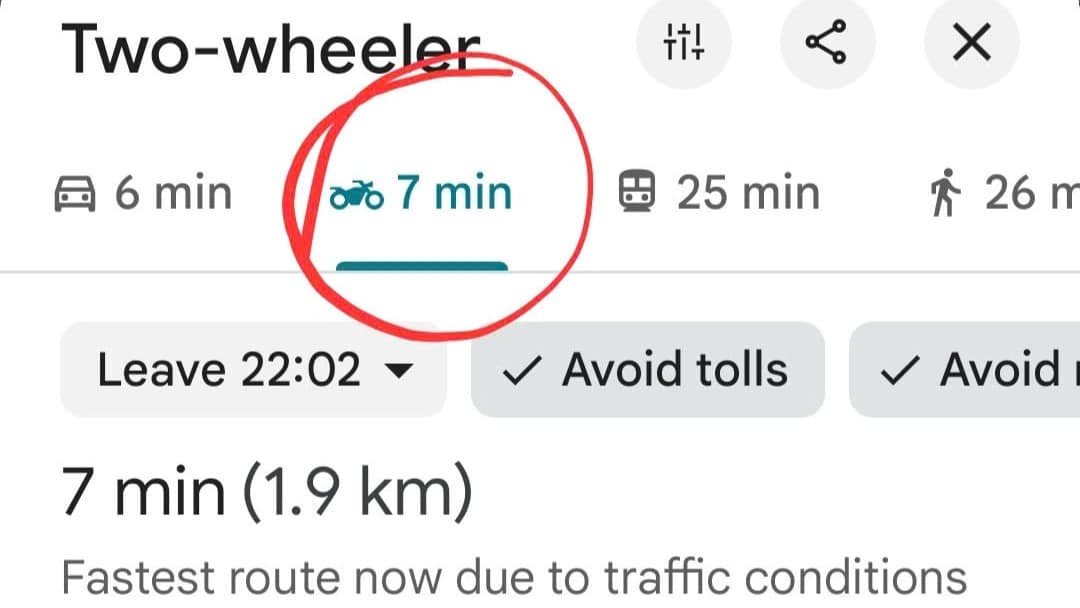
Google Maps has integrated a specific mode for two-wheelers in Southeast Asia. It generally tries to find routes that are bike-friendly and often provides more accurate travel times for riding.
*This is ONLY available on phones*
1. Open Google Maps on your phone.
2. Enter your destination.
3. Look at the transport icons below the search bar (Car, Public Transport, Walking).
4. Keep scrolling right until you see the Motorcycle icon (a small scooter). Tap it.
While this is helpful, do not rely on this alone. Sometimes, the motorcycle mode algorithm still messes up and tries to put you on a short section of highway to save time. You need Step 2 to be sure.
No Motorcycle Mode ?
If your phone does not show the motorbike icon in Google Maps, it thinks you are not in Asia. There are several fixes for this.
1. Restart your phone. This could fix this glitch.
2. Clear the cache & Data: Go to Phone Settings>Apps>Google Maps>Storage>Clear Cache, then Clear Data (or for iOS:
3. Profile>settings>About, terms & privacy>Clear application data).
4. Update the App: Ensure Google Maps is the latest version from your app store.
5. Reinstall the App: Uninstall Google Maps and reinstall it; this often resets problematic data.

This is the most important step of the entire process. You must manually tell Google Maps that highways are off-limits.
With your destination entered and motorcycle mode selected, look at the top right corner of the screen and…
Google Maps will instantly recalculate your route. You will likely see the travel time increase — this is good! It means it has removed the fast, illegal CT roads and replaced them with national highways (labeled “QL” or “AH”) and smaller backroads, which is where you want to be anyway.
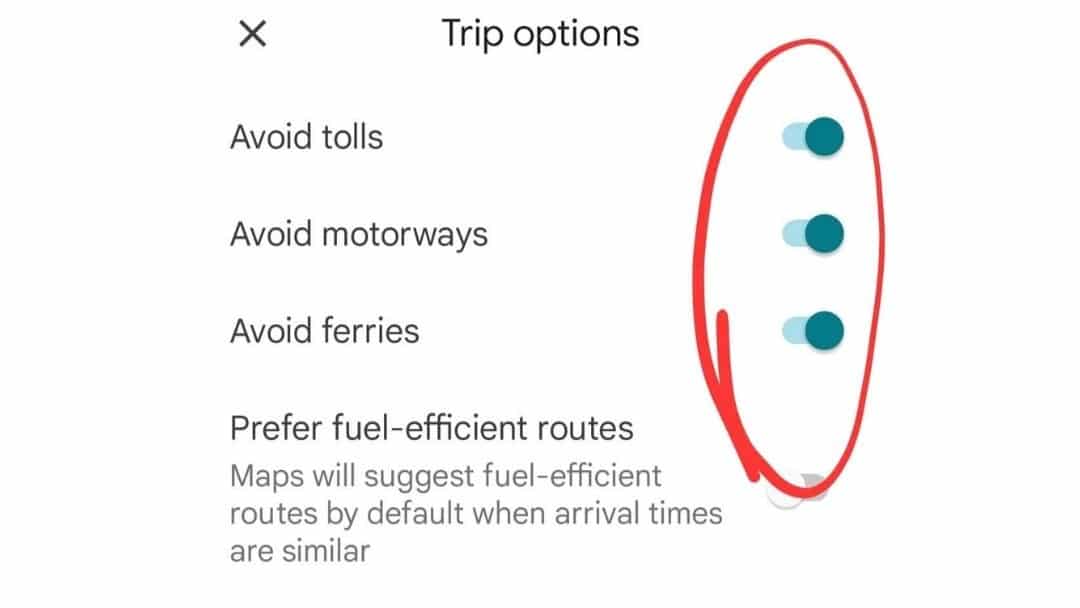
You can also press buttons:
This will then keep you from going on toll roads and ferry routes. You might worry that this would keep you off many roads, but in practicality it does not. If anything, it puts you onto the smaller and more scenic roads, which is ideal for a motorcycle trip.
Caveat: As we said, the system is not perfect and some roads are incorrectly labelled or Google has not quite caught up with new information. Therefore, PROCEED WITH CAUTION and keep your eyes open.
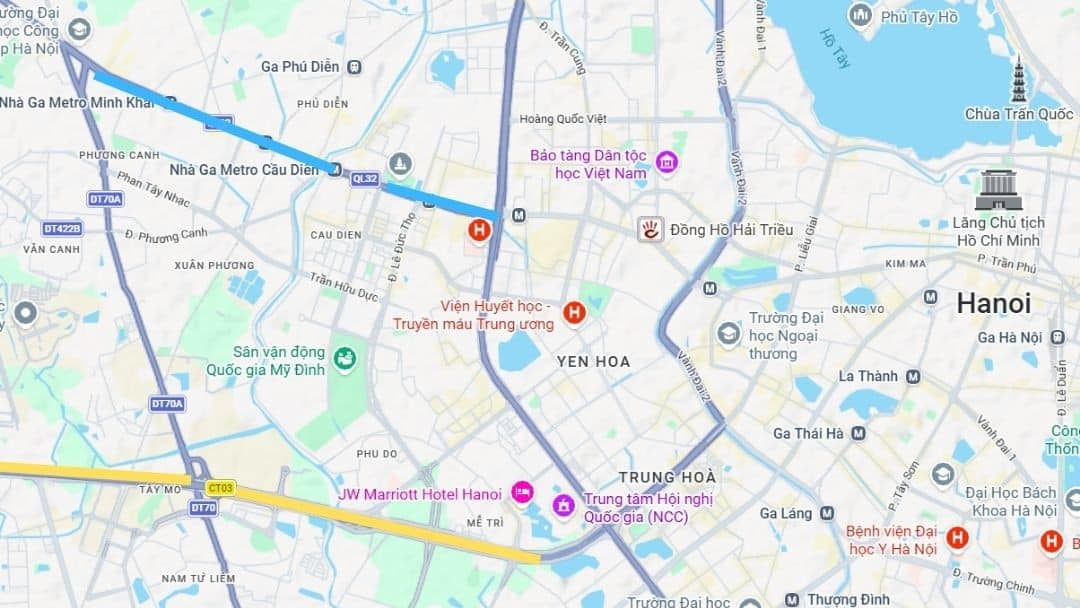
Before you put your phone in its mount and twist the throttle, do a quick visual scan of the proposed route.
Zoom in on the map. You want to be on roads that are labeled QL (Quốc lộ – National Road), DT (Provincial Road), or unnamed smaller streets.
If you see the route trying to merge onto a massive road labeled CT, something is wrong. Go back and re-do the “Avoid Highways” step.
Take Care when reading the map. CT roads have YELLOW labels and QL roads have BLUE labels, on the map that is.
Pro-Tip: When you are actually on the road, green signs usually indicate regular roads. Blue signs usually indicate expressways/CT roads. If you see a ramp with a blue sign, stay away!
By default, Google Maps often prioritizes the fastest route, which usually includes cars-only expressways.
Even if you select “Motorcycle Mode,” the algorithm can sometimes glitch and route you onto prohibited roads to save time.
To prevent this, you must manually enable “Avoid Highways” in the route options in addition to selecting the motorcycle icon. This forces the map to stick to legal National (QL) and Provincial (DT) roads.
“CT” stands for Cao Tốc, which translates to “High Speed.”
These are controlled-access expressways strictly for cars, trucks, and buses. Motorbikes of any engine size are legally forbidden on these roads. Entering a CT road is dangerous and carries heavy penalties, including fines of 2–4 million VND ($80–$160 USD) and potential driver’s license confiscation.
If the motorcycle icon is missing, the app may not have updated your location context to Asia. Try these fixes:
Restart your phone to refresh location services.
Clear the app cache/data (Settings > Apps > Google Maps > Storage).
Update the app to the latest version via your app store.
Reinstall the app if the issue persists, which often resets the region data.
No, relying solely on “Motorcycle Mode” is a common mistake.
While it provides better travel time estimates for two-wheelers, it isn’t 100% perfect at avoiding restricted zones.
The critical safety net is to access the menu (three dots), select “Route Options,” and toggle on “Avoid Highways.” You can also toggle “Avoid Tolls” to further ensure you stay on scenic, slower backroads.
Visual cues are your best defense against GPS errors.
In Vietnam, Blue signs typically indicate expressways or “CT” roads, which are off-limits to bikes.
Green or White signs usually indicate regular National (QL) or Provincial (DT) roads, which are safe and legal.
Always perform a visual check of your route on the map before starting; if you see the route merging onto a “CT” road, do not follow it.
Vietnam offers some of the most spectacular riding in the world, but it demands respect for local rules. By taking thirty seconds to adjust your Google Maps settings before you leave, you aren’t just avoiding a police fine; you are ensuring your trip remains the freedom-filled adventure it was meant to be.
Remember, technology is a tool, not a guarantee. Stick to the ‘QL’ and ‘DT’ roads, watch for the green signs, and always trust your eyes as much as your screen. Now that your navigation is set for safety, the only thing left to do is kick up the kickstand, twist the throttle, and enjoy the ride.
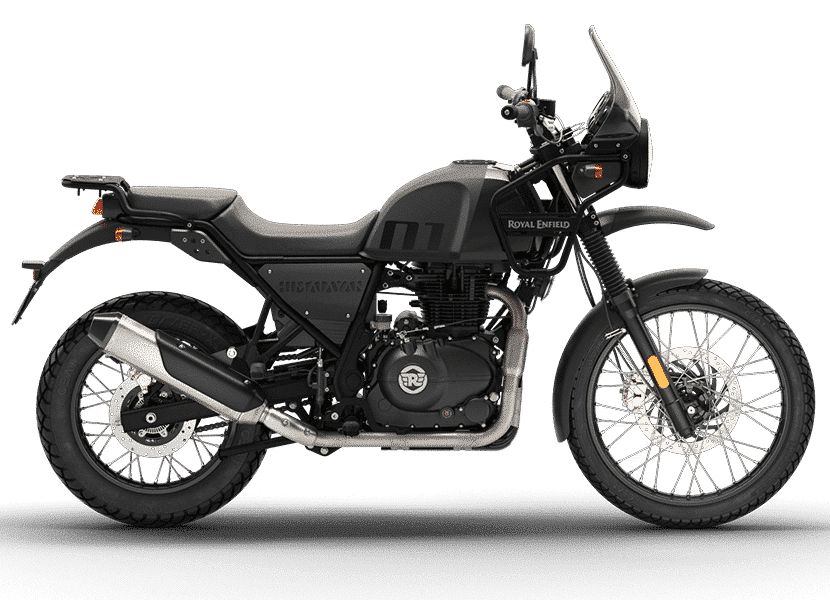
Engine Type
air-cooled, single cylinder, SOHC
Displacement
411 cc
Bore X Stroke
78 mm x 86 mm
Ignition
TCI
Fuel System
fuel injection
Compression Ratio
9.5:1
Starter
electric
Gearbox
5-speed
Front Suspension
telescopic forks; stanchion diameter 41 mm
Rear Suspension
linkage-type monoshock
Front Brakes
single disc brake, diameter 300 mm, 2-piston floating caliper
Rear Brakes
single disc brake, diameter 240 mm, single-piston floating caliper
Front Tyres
90/90 – 21
Rear Tyres
120/90 – 17
Wheelbase
1465 mm
Seat Height
800 mm
Ground Clearance
220 mm
Kerb Weight
199 kg
Fuel Capacity
15 litres
Dimensions
2190 mm (L) x 840 mm (W) x 1360 mm (H)
Daily
Total
Rider (CRF 300)
$220
Pillion
$120
Damage Waiver
$20
Private Room
$40
Support Vehicle*
$150
* All prices given are in USD and apply per rider except for the support vehicle. The support vehicle is free for groups of 7 or more, otherwise the cost is shared across the group.
Daily
Total
Rider (XR 150)
Rider (CRF 300)
Rider (CB 500X)
Rider (Himalayan 400)
$220
Rider (GS 1250)
Pillion
$120
Damage Waiver
$20
Private Room
$40
Support Vehicle*
$150
* All prices given are in USD and apply per rider except for the support vehicle. The support vehicle is free for groups of 7 or more, otherwise the cost is shared across the group.
Daily
Total
Jeep (1 PAX)
$210
Jeep (2 PAX)
$120
Jeep (3 PAX)
$90
Jeep (4+ PAX)
$80
Rider (Easy Rider)
$115
Rider (Self-Drive)
$105
Private Room
$15
* Our jeep tour prices operate on a sliding scale. The larger your group, the less each person pays—each member of your group will pay the lowest daily rate shown. For example, if you have a group of 4 or more, you will each only pay $80/day. All prices are given in USD.
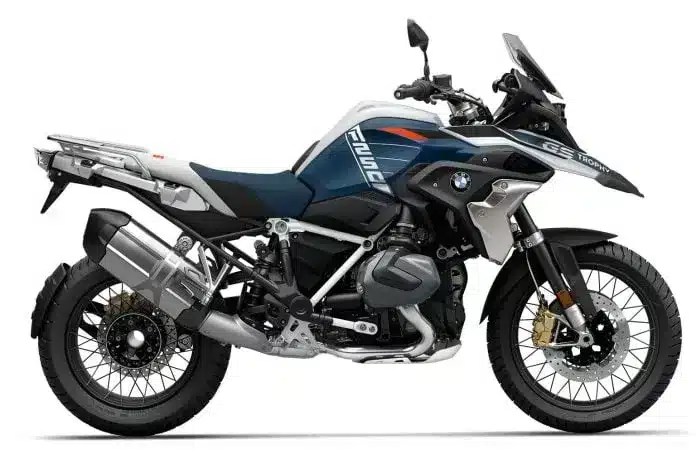
Engine Type
air-liquid cooled, twin cylinder, DOHC, boxer engine
Displacement
1255 cc
Bore X Stroke
102.5 mm x 76 mm
Ignition
FI
Fuel System
fuel injection
Compression Ratio
12.5:1
Starter
electric
Gearbox
6-speed
Front Suspension
BMW Motorrad Telelever; stanchion diameter 37 mm
Rear Suspension
single-sided swing arm with BMW Motorrad Paralever
Front Brakes
dual disc brake, floating brake discs, diameter 305 mm, 4-piston radial calipers
Rear Brakes
single disc brake, diameter 276 mm, double-piston floating caliper
Front Tyres
120/70 R19
Rear Tyres
170/60 R17
Wheelbase
1514 mm
Seat Height
850 mm
Ground Clearance
790 mm
Kerb Weight
249 kg
Fuel Capacity
20 litres
Dimensions
2207 mm (L) x 952.5mm (W) x 1430 mm (H)
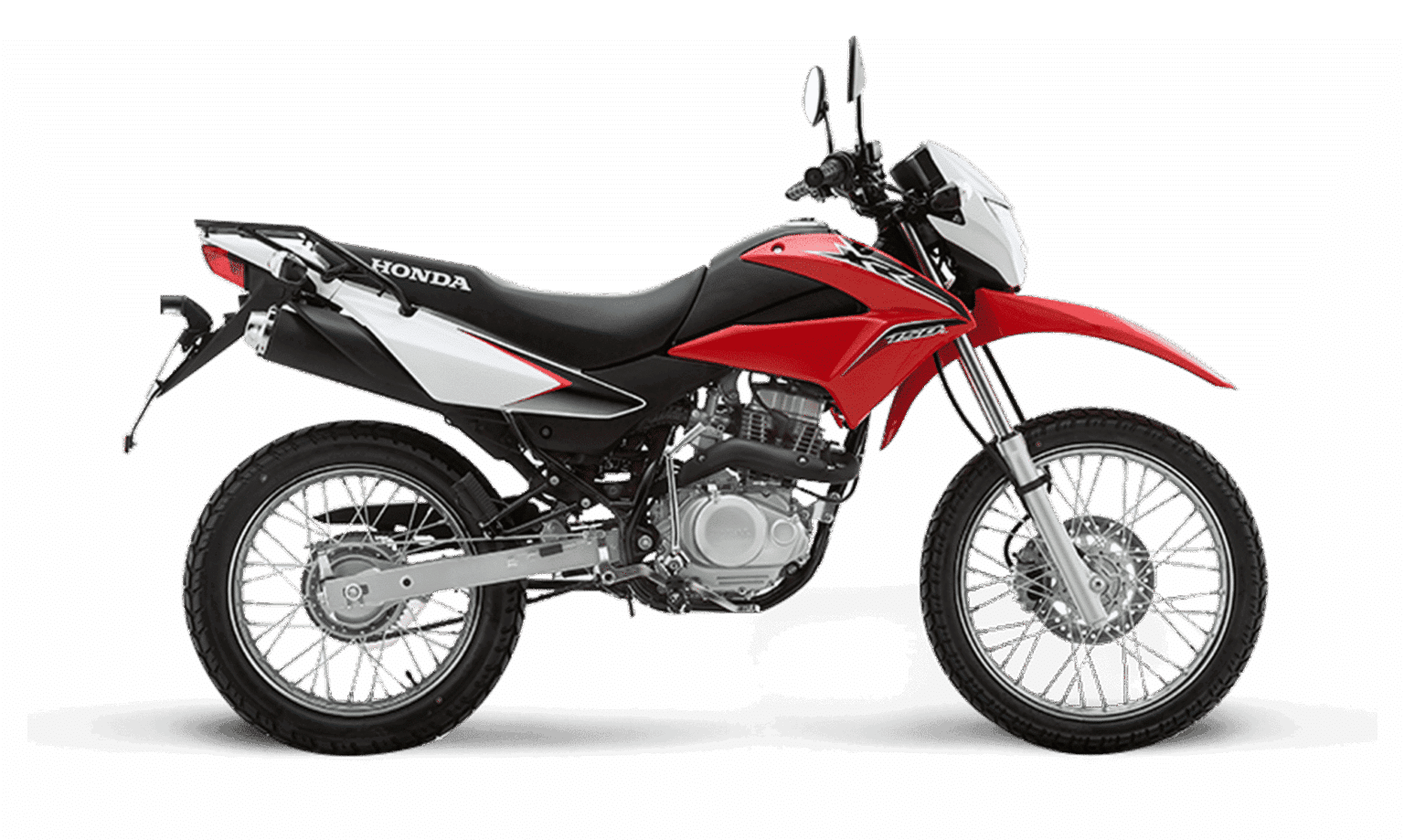
Engine Type
air cooled, OHC, single cylinder
Displacement
149 cc
Bore X Stroke
57.3 mm x 57.8 mm
Ignition
CDI
Fuel System
20 mm piston valve carburettor
Compression Ratio
9.5:1
Starter
electric with kick starter backup
Gearbox
5-speed
Front Suspension
telescopic fork, 180 mm axle travel
Rear Suspension
single shock swing arm, 150 mm axle travel
Front Brakes
dual piston caliper, 240 mm disc
Rear Brakes
mechanical drum
Front Tyres
90/90 19
Rear Tyres
110/90 17
Wheelbase
1362 mm
Seat Height
825 mm
Ground Clearance
243 mm
Kerb Weight
129 kg
Fuel Capacity
12 litres
Dimensions
2091 mm (L) x 811 mm (W) x 1125 mm (H)
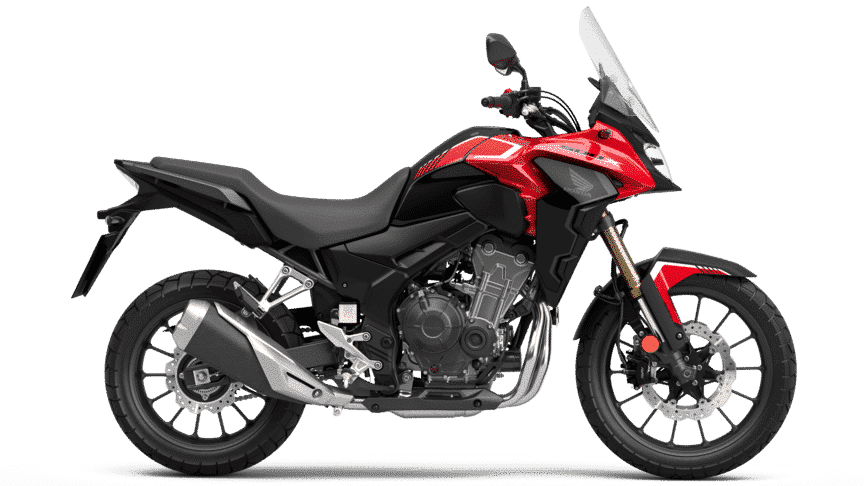
Engine Type
liquid cooled parallel-twin four stroke
Displacement
470 cc
Bore X Stroke
67 mm x 66.8 mm
Ignition
PGMI – FI
Fuel System
fuel injection
Compression Ratio
10.7:1
Starter
electric
Gearbox
6-speed
Front Suspension
41 mm SFF-BP USD Forks
Rear Suspension
Prolink Mono with 5 stage pre load adjuster
Front Brakes
dual 296 mm discs with 4 piston calipers; ABS
Rear Brakes
240 mm disc; ABS
Front Tyres
110/80R19M/C (59H)
Rear Tyres
160/60R17M/C
Wheelbase
1445 mm
Seat Height
830 mm
Ground Clearance
180 mm
Kerb Weight
199 kg
Fuel Capacity
17.7 litres
Dimensions
2,155 mm (L) x 830 mm (W) x 1,410 mm (H)
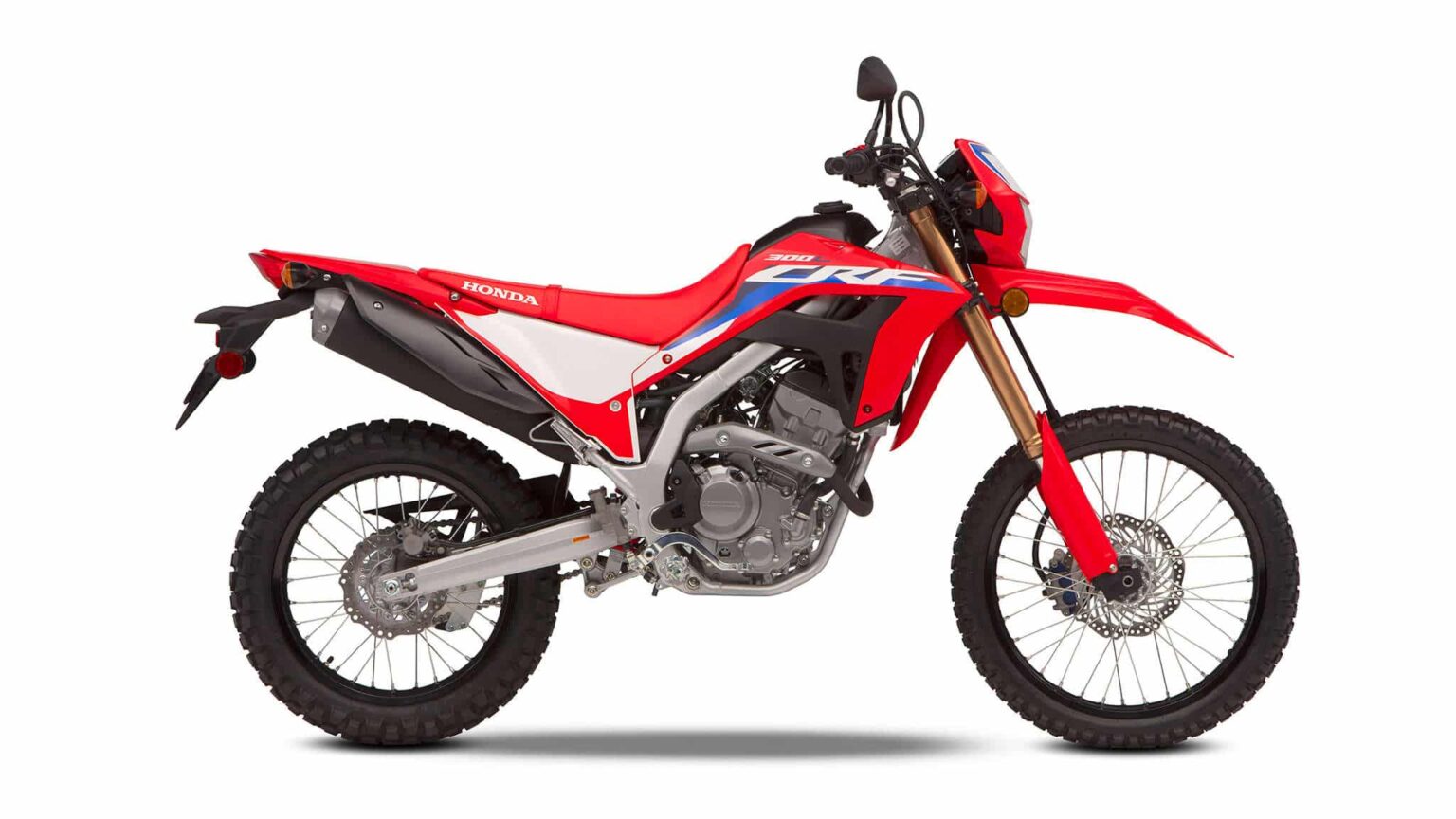
Engine Type
single cylinder, DOHC, liquid cooled
Displacement
286 cc
Bore X Stroke
76 mm x 63 mm
Ignition
Full Transistor Digital
Fuel System
PGM-FI electronic fuel injection
Compression Ratio
10.7:1
Starter
electric
Gearbox
5-speed
Front Suspension
43 mm telescopic upside down
Rear Suspension
Prolink Mono with 5 stage pre load adjuster
Front Brakes
Rear Brakes
220 mm disc, single piston caliper
Front Tyres
80/100 21
Rear Tyres
120/80 18
Wheelbase
1455 mm
Seat Height
880 mm
Ground Clearance
285 mm
Kerb Weight
142 kg
Fuel Capacity
7.8 litres
Dimensions
2230 mm (L) x 820 mm (W) x 1200 mm (H)