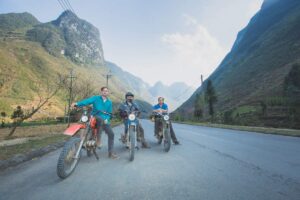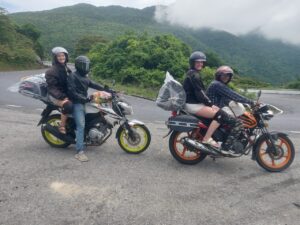


Vietnam’s traffic is legendary, but on the first day of Tet, the music stops. The smog clears and the cities fall into a deep slumber, offering a once-a-lifetime ride through wide-open boulevards.
Here is your guide to experiencing the quiet. (For advice on where everyone else went—and how to ride safely there—consult The Ultimate Guide to Riding Vietnam During Tet).
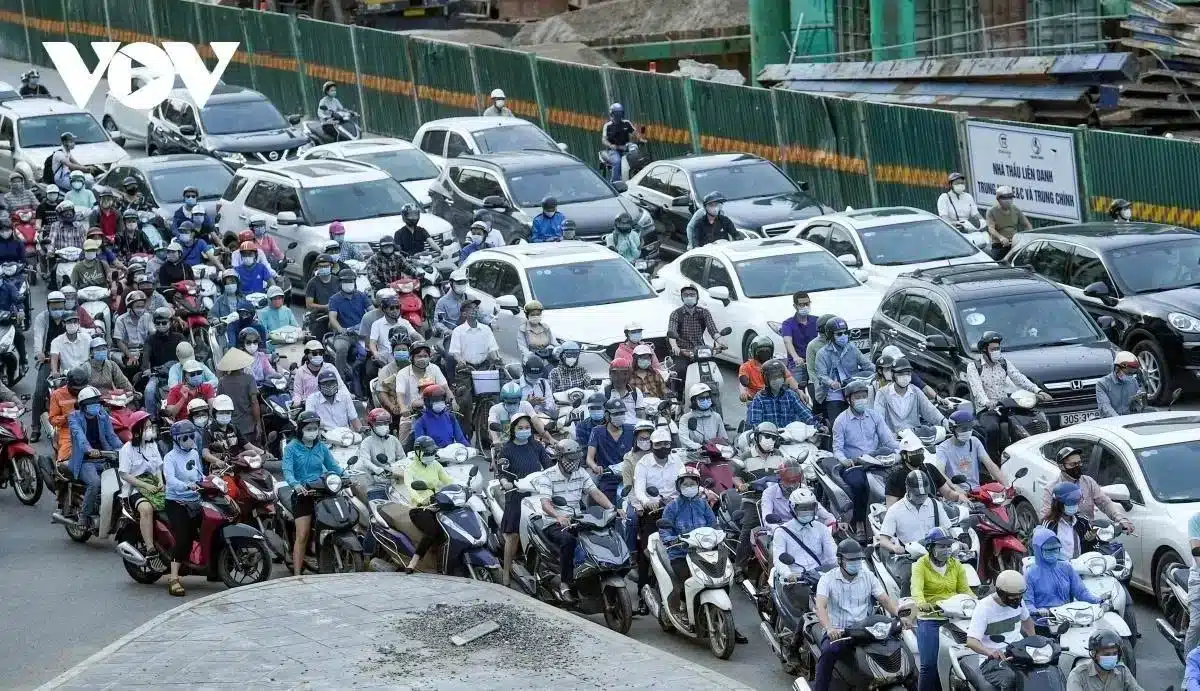
To understand the silence, you must understand the cultural gravity of Tet. It is not just a holiday; it is a homecoming.
In the week leading up to Tet, the population of major cities drops by nearly 50%. Millions of workers, students, and officials pack their bags (and their bikes) to return to their ancestral hometowns in the provinces. This mass exodus drains the lifeblood—traffic—out of the metropolis. By New Year’s Eve, the cities are left to the “true” locals: the families who have lived there for generations.
The stillness peaks on the morning of Mung 1 (The First Day of Tet). Culturally, this is a time for family. People stay indoors to perform rituals at their ancestors’ altars and enjoy the first meal of the year. No shops are open. No markets are buzzing. The streets are abandoned because, traditionally, leaving the house too early without a specific destination is seen as wandering—a bad omen for the year.
The physical atmosphere of the city changes. With millions of exhausts turned off, the air quality improves dramatically. In Hanoi, the winter mist hangs low over the lakes without being cut by fumes. In Saigon, the morning sun hits the colonial architecture without the haze. It feels like stepping back in time to the 1990s, before the motorcycle boom took over.
This window is small. By the afternoon of Day 1, families begin to emerge to visit relatives. By Day 2, the pagodas are crowded. By Day 3, the taxis are back. But that first morning—from sunrise (6:00 AM) until noon—is pure magic. It is a fleeting moment of tranquility that you must wake up early to catch.
Most tourists are asleep or stuck in their hotels, thinking there is nothing to do. But you have a key to the city: a motorbike. While walking the empty streets is nice, riding them is euphoric. You can appreciate the layout, the architecture, and the flow of the city without the stress of survival.
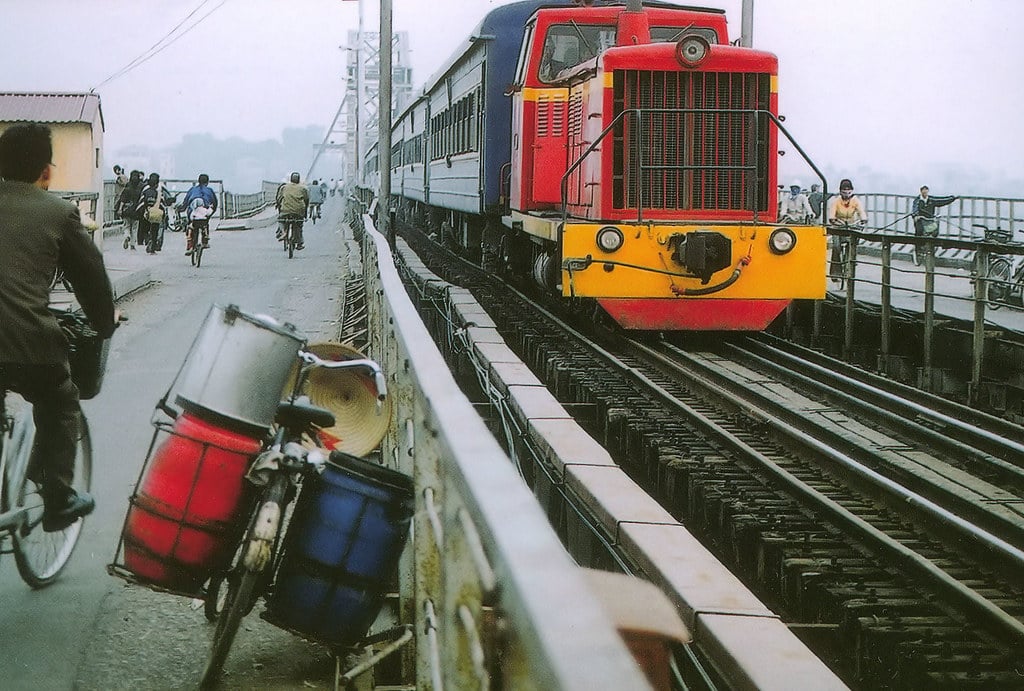
Hanoi during Tet is often cold, misty, and incredibly atmospheric. The ancient capital wears its age well in the silence.
Usually, the Old Quarter is a claustrophobic maze where pedestrians dodge scooters. On Tet morning, you can ride down Hang Gai (Silk Street) or Hang Dao and actually look up at the architecture. You will notice the French shutters, the mossy tiled roofs, and the ancient banyan trees that are usually obscured by commercial signage and traffic jams.
The road circling Hoan Kiem Lake is the heart of the city. On a normal weekend, it is pedestrianized; on weekdays, it is gridlocked. On Tet morning, it is open to bikes but empty. Riding a slow, smooth loop around the lake, watching the red The Huc Bridge reflect in the still water, is a Zen-like experience.
This historic, rusted bridge is typically a chaotic stream of commuters. During Tet, it becomes a lonely iron spine stretching across the Red River. You can stop your bike in the middle of the bridge (something usually impossible) to take photos of the river and the banana plantations below without fearing for your life.
The wide, Soviet-style boulevards around the Ho Chi Minh Mausoleum and the Flag Tower are built for parades, but usually filled with buses. Riding these massive, empty avenues gives you a sense of scale and grandeur that is lost in the daily crush.
As you ride through Hanoi’s narrow alleys, take a deep breath. The city doesn’t smell of gasoline; it smells of burning incense and wood smoke from the Banh Chung boiling pots. It is the olfactory definition of the Vietnamese New Year.
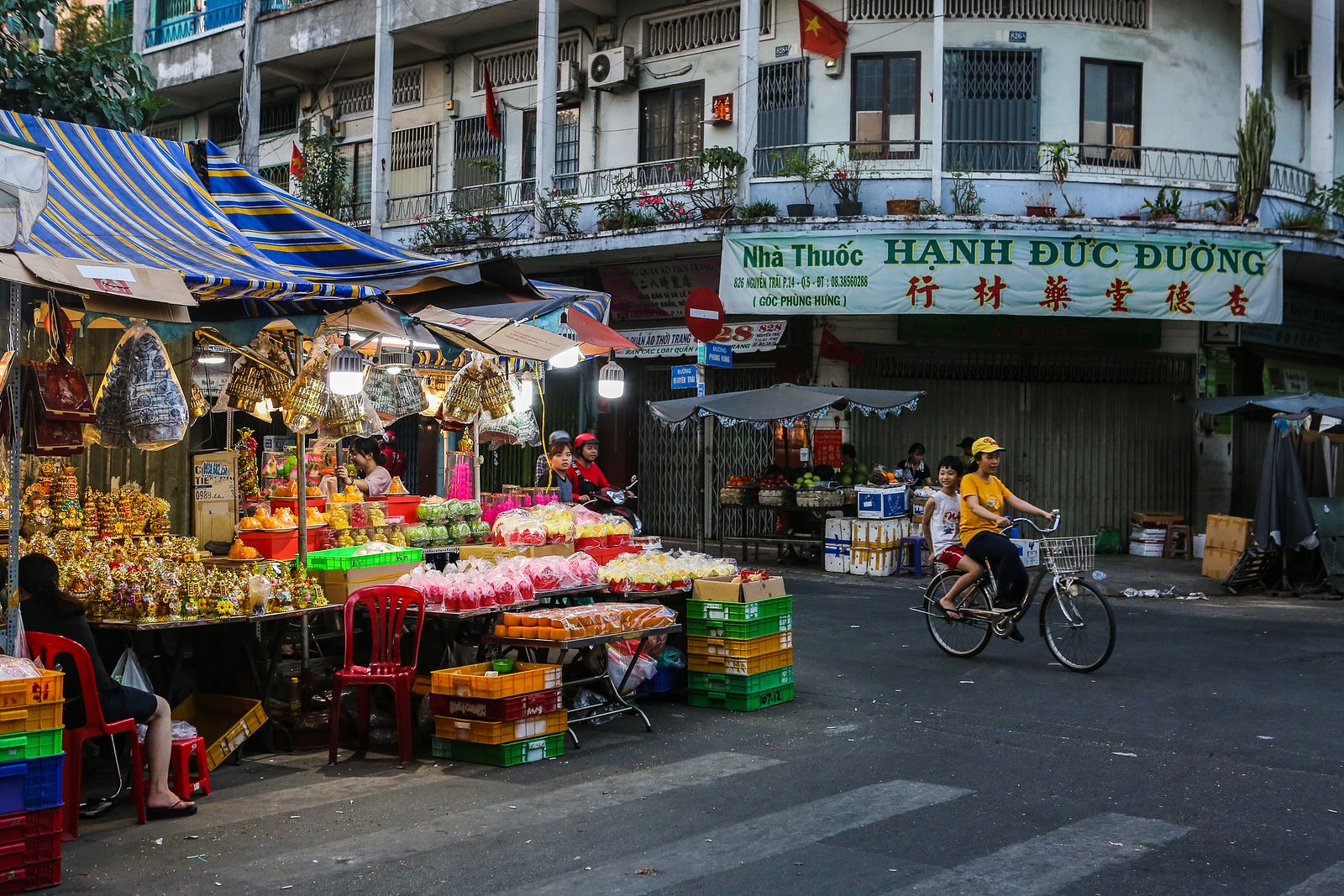
Ho Chi Minh City is the engine of Vietnam’s economy—fast, loud, and aggressive. Seeing it stopped is perhaps even more shocking than seeing Hanoi quiet.
The area around the Notre Dame Cathedral and the Central Post Office is usually a parking lot of tourist buses and taxis. On Tet morning, you can park your bike right in front of the cathedral for the perfect photo. The colonial brickwork glows in the Southern sun, and the silence allows you to hear the birds in the park—a rarity in D1.
The roundabout in front of Ben Thanh Market is famous for being a “circle of death” for hesitant riders. Conquering it usually requires nerves of steel. On Tet, you can ride through it in calm, wide circles. The market itself is shuttered, offering a rare view of the building’s structure without the clutter of stalls.
Cross the river to the Thu Thiem side. Riding back over the Ba Son Bridge (Thu Thiem 2) gives you a panoramic view of the District 1 skyline. Usually, you can’t stop here. On Tet, you can pull over (safely) and admire the modern skyscrapers rising out of the quiet riverbank.
While District 1 is quiet, District 5 (Cho Lon) has a different vibe. The Chinese-Vietnamese community takes the “luck” rituals very seriously. While traffic is light, the pagodas (like Thien Hau) are engulfed in clouds of incense coils. Riding from the silence of D1 to the spiritual haze of D5 is a fantastic contrast.
Note that Nguyen Hue Walking Street is transformed into a massive floral display (“Flower Street”). It is pedestrian-only, but riding alongside it on the parallel streets gives you a glimpse of the colorful elaborate statues and millions of flowers without the jostling crowds if you go early enough.
If you are a content creator or just want amazing Instagram photos, this is your “Golden Hour”—literally and figuratively.
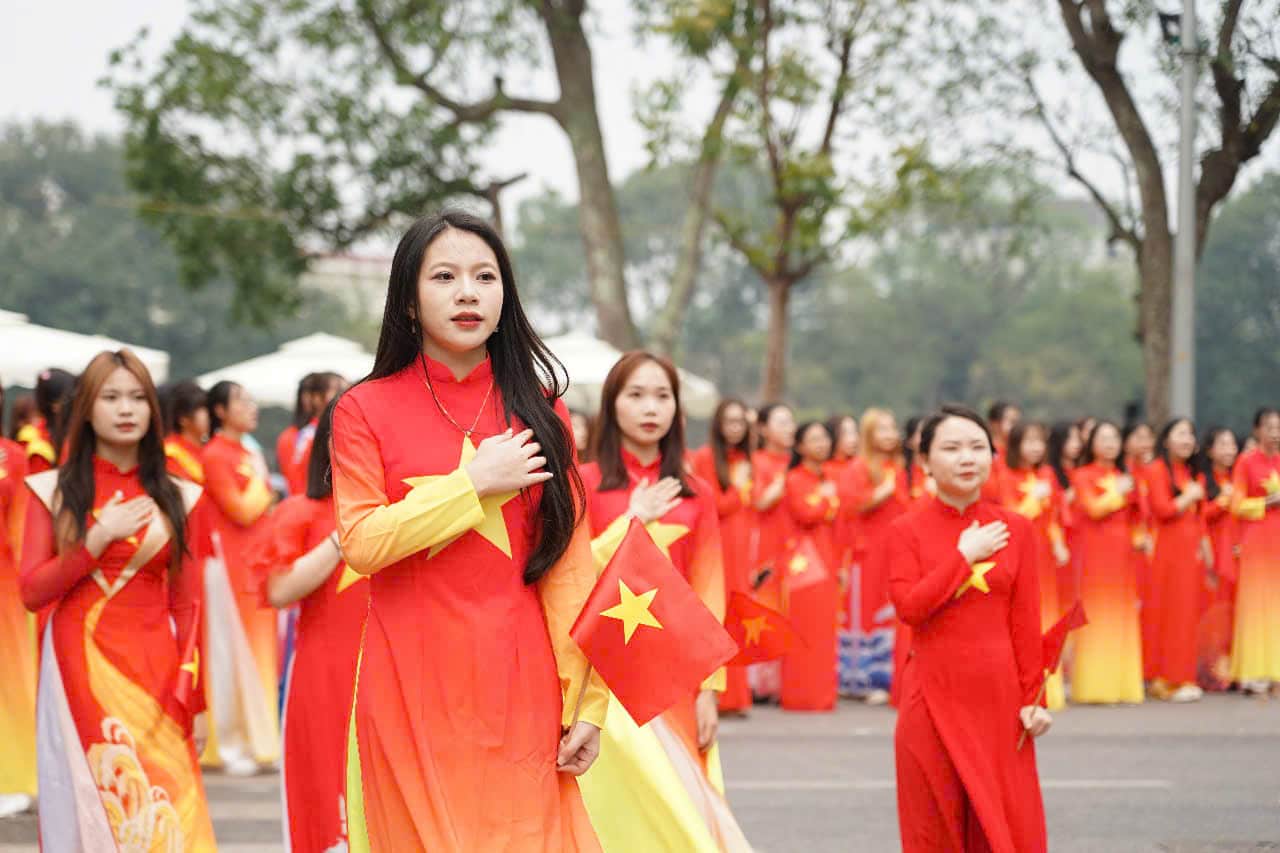
The Holy Grail of Tet photography is the “Lonely Rider” shot: you, your bike, and a famous landmark with absolutely zero people in the background. To get this, you need to be out by 6:30 AM or 7:00 AM. By 9:00 AM, the first families will start appearing in their Ao Dai for photoshoots.
Usually, shooting wide-angle in Vietnam is messy because the frame is cluttered with random vehicles. On Tet, you can use wide lenses to capture the leading lines of the empty streets and the geometry of the buildings.
While flying drones in cities is generally restricted and risky, the lack of crowds reduces the safety hazard. However, be extremely careful near government buildings (especially in Hanoi near the Mausoleum) where it is strictly illegal. Stick to the rivers or open parks.
Look for the red. Every house will have a red flag flying, and the streets are lined with red banners. Against the grey sky of Hanoi or the blue sky of Saigon, this red “pop” is visually striking and signifies the festive spirit.
Later in the morning, head to the major lakes or cathedrals. You will see thousands of locals dressed in their finest traditional dress (Ao Dai). It is a colorful fashion show. While the “Ghost City” vibe fades, the cultural portrait opportunities begin.
It is easy to get lulled into a false sense of security by the empty roads. Do not let your guard down. The “Ghost City” has its own specific dangers.
Because the roads are empty, the few people who are driving tend to drive very fast. Young locals on modified bikes often treat the empty boulevards as race tracks during Tet. Always check your mirrors and intersections, even if it looks deserted.
Traffic lights in Vietnam are often treated as “suggestions” on normal days. On Tet, they are frequently ignored completely. Do not assume that a green light means you are safe. Look left, look right, and look left again before crossing any intersection.
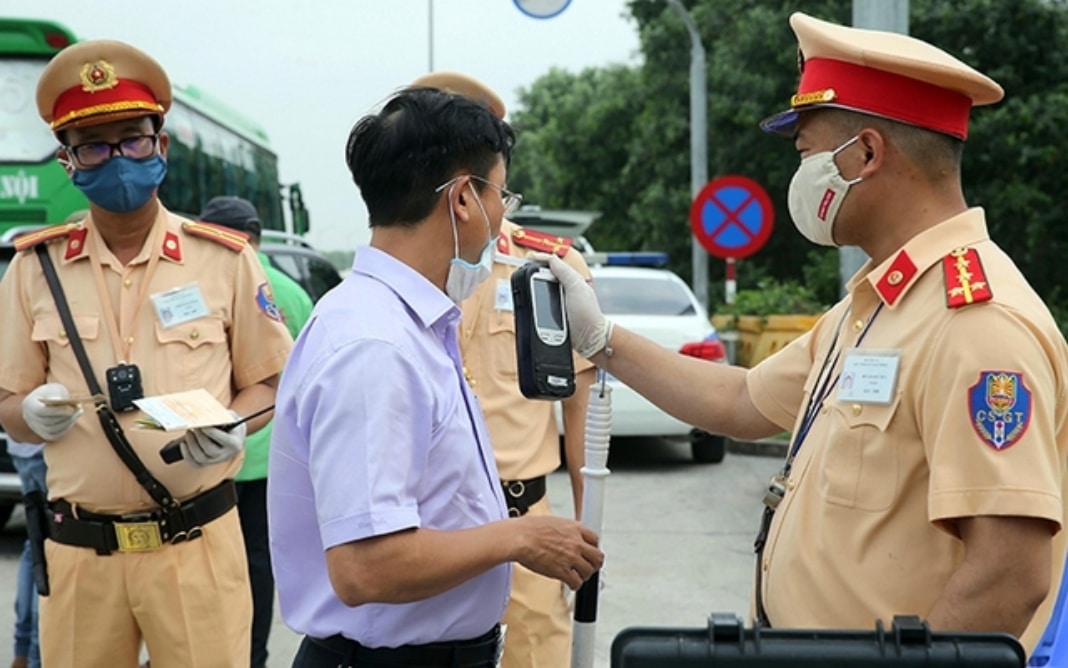
Tet is a drinking holiday. “Happy New Year” toasts start at 8:00 AM. By the afternoon, there is a significantly higher percentage of intoxicated drivers on the road than usual. If you see a rider swerving or driving erratically, give them a massive amount of space.
With the streets empty, people use the road for other things. You might turn a corner and find a family playing badminton in the middle of the street, or a neighborhood party that has spilled out onto the asphalt. Ride at a cruising speed, not a racing speed.
While major petrol stations stay open, smaller ones may close. Don’t wait until your tank is empty. If you see an open station (Petrolimex is your best bet), fill up.
The peak “Ghost City” time is from 6:00 AM to 11:00 AM on the 1st Day of the Lunar New Year. The afternoon of Day 1 gets busier. Day 2 and 3 are relatively quiet compared to normal days, but the absolute “dead” silence is only on the morning of Day 1.
Yes! Coffee culture never sleeps. While street stalls close, major chains (like Highlands or The Coffee House) and many trendy independent cafes stay open to serve the youth. In fact, going for coffee on Day 1 is a tradition for young friends. Expect a surcharge on the menu.
Not at all. It feels peaceful and cleansing. It is a rare moment where you can hear the wind in the trees and see the architecture without the visual pollution of traffic. It feels like the city is taking a deep breath.
Usually, no. Most rental shops (including us!) will be closed on Day 1 so our staff can be with their families. You need to pick up your rental bike at least 2 days before Tet and keep it for the duration of the holiday.
If you are just riding, wear your safety gear. But if you plan to stop and walk around heavily populated photo spots (like the Cathedral or Lake), dress respectfully. It is a formal holiday. You will feel underdressed in dirty backpacker shorts when everyone else is in silk gowns and suits.
Tet is not just a holiday; it is a complete reset of the country’s rhythm. The chaos of the city melts into the quiet of the countryside, and the usual noise of commerce is replaced by the sounds of family celebrations.
For the motorbike rider, it presents challenges, certainly. But it also presents an empty open road, a festive atmosphere, and a chance to see Vietnam in its most authentic, joyous state. Riding through the silent, empty streets of Hanoi or Saigon on the first day of Tet is a surreal and wonderful experience—a photographer’s delight and a rider’s dream.
Ready to see the cities like never before?
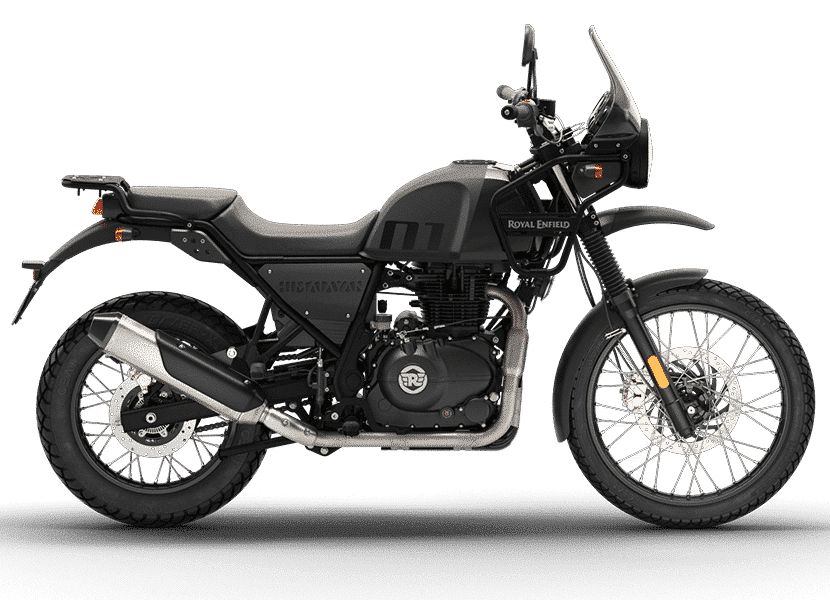
Engine Type
air-cooled, single cylinder, SOHC
Displacement
411 cc
Bore X Stroke
78 mm x 86 mm
Ignition
TCI
Fuel System
fuel injection
Compression Ratio
9.5:1
Starter
electric
Gearbox
5-speed
Front Suspension
telescopic forks; stanchion diameter 41 mm
Rear Suspension
linkage-type monoshock
Front Brakes
single disc brake, diameter 300 mm, 2-piston floating caliper
Rear Brakes
single disc brake, diameter 240 mm, single-piston floating caliper
Front Tyres
90/90 – 21
Rear Tyres
120/90 – 17
Wheelbase
1465 mm
Seat Height
800 mm
Ground Clearance
220 mm
Kerb Weight
199 kg
Fuel Capacity
15 litres
Dimensions
2190 mm (L) x 840 mm (W) x 1360 mm (H)
Daily
Total
Rider (CRF 300)
$220
Pillion
$120
Damage Waiver
$20
Private Room
$40
Support Vehicle*
$150
* All prices given are in USD and apply per rider except for the support vehicle. The support vehicle is free for groups of 7 or more, otherwise the cost is shared across the group.
Daily
Total
Rider (XR 150)
Rider (CRF 300)
Rider (CB 500X)
Rider (Himalayan 400)
$220
Rider (GS 1250)
Pillion
$120
Damage Waiver
$20
Private Room
$40
Support Vehicle*
$150
* All prices given are in USD and apply per rider except for the support vehicle. The support vehicle is free for groups of 7 or more, otherwise the cost is shared across the group.
Daily
Total
Jeep (1 PAX)
$210
Jeep (2 PAX)
$120
Jeep (3 PAX)
$90
Jeep (4+ PAX)
$80
Rider (Easy Rider)
$115
Rider (Self-Drive)
$105
Private Room
$15
* Our jeep tour prices operate on a sliding scale. The larger your group, the less each person pays—each member of your group will pay the lowest daily rate shown. For example, if you have a group of 4 or more, you will each only pay $80/day. All prices are given in USD.
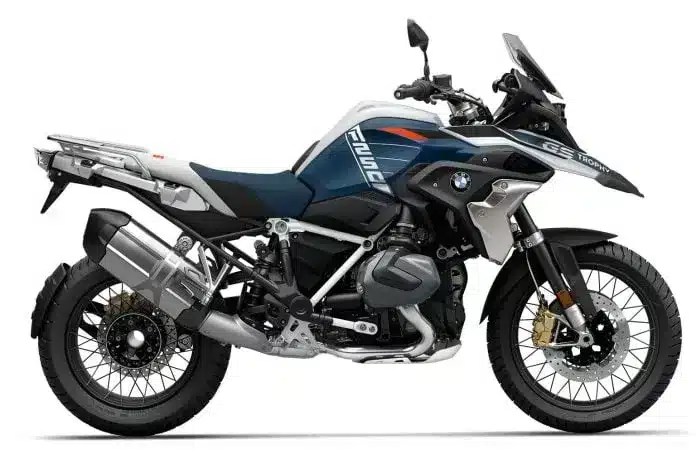
Engine Type
air-liquid cooled, twin cylinder, DOHC, boxer engine
Displacement
1255 cc
Bore X Stroke
102.5 mm x 76 mm
Ignition
FI
Fuel System
fuel injection
Compression Ratio
12.5:1
Starter
electric
Gearbox
6-speed
Front Suspension
BMW Motorrad Telelever; stanchion diameter 37 mm
Rear Suspension
single-sided swing arm with BMW Motorrad Paralever
Front Brakes
dual disc brake, floating brake discs, diameter 305 mm, 4-piston radial calipers
Rear Brakes
single disc brake, diameter 276 mm, double-piston floating caliper
Front Tyres
120/70 R19
Rear Tyres
170/60 R17
Wheelbase
1514 mm
Seat Height
850 mm
Ground Clearance
790 mm
Kerb Weight
249 kg
Fuel Capacity
20 litres
Dimensions
2207 mm (L) x 952.5mm (W) x 1430 mm (H)
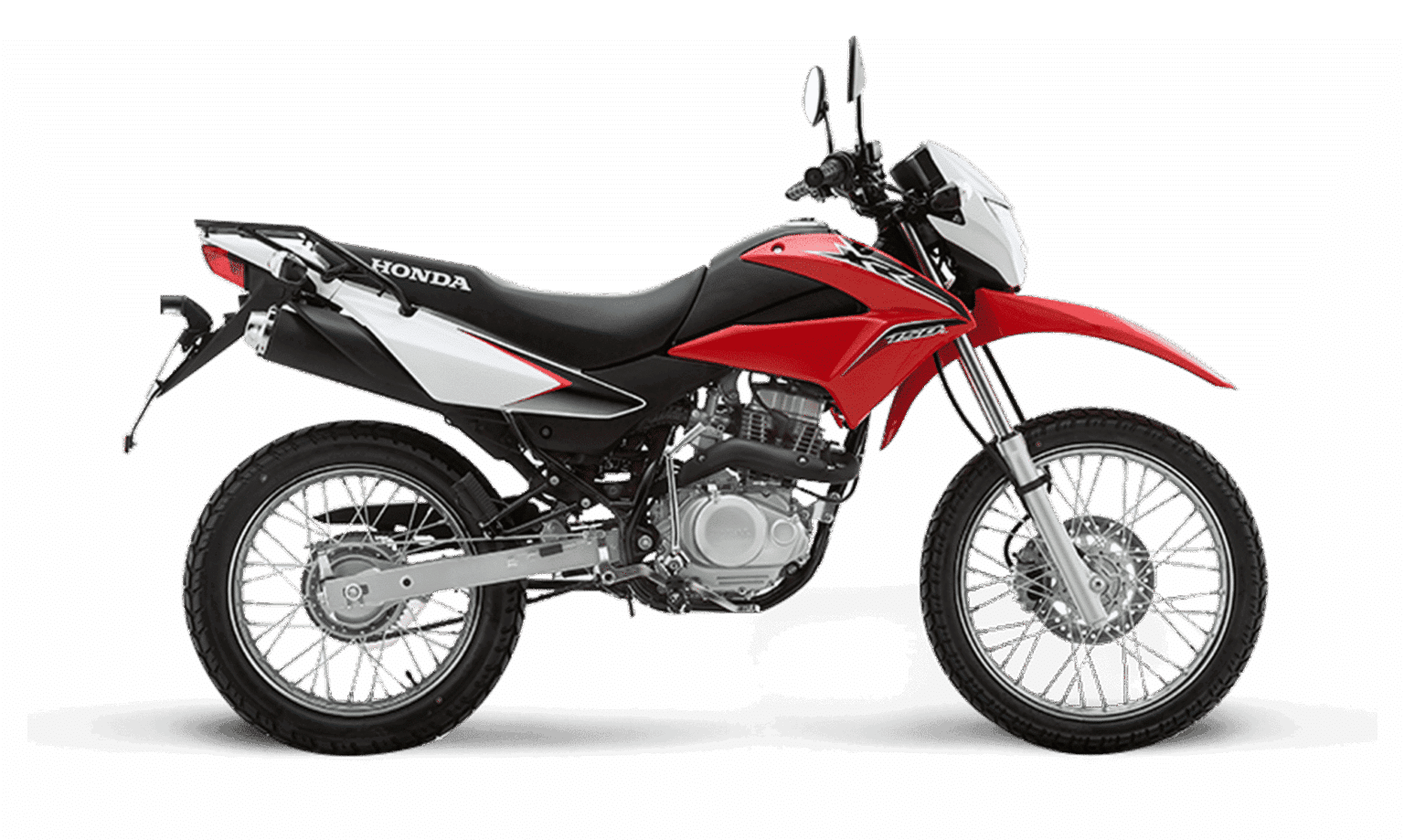
Engine Type
air cooled, OHC, single cylinder
Displacement
149 cc
Bore X Stroke
57.3 mm x 57.8 mm
Ignition
CDI
Fuel System
20 mm piston valve carburettor
Compression Ratio
9.5:1
Starter
electric with kick starter backup
Gearbox
5-speed
Front Suspension
telescopic fork, 180 mm axle travel
Rear Suspension
single shock swing arm, 150 mm axle travel
Front Brakes
dual piston caliper, 240 mm disc
Rear Brakes
mechanical drum
Front Tyres
90/90 19
Rear Tyres
110/90 17
Wheelbase
1362 mm
Seat Height
825 mm
Ground Clearance
243 mm
Kerb Weight
129 kg
Fuel Capacity
12 litres
Dimensions
2091 mm (L) x 811 mm (W) x 1125 mm (H)
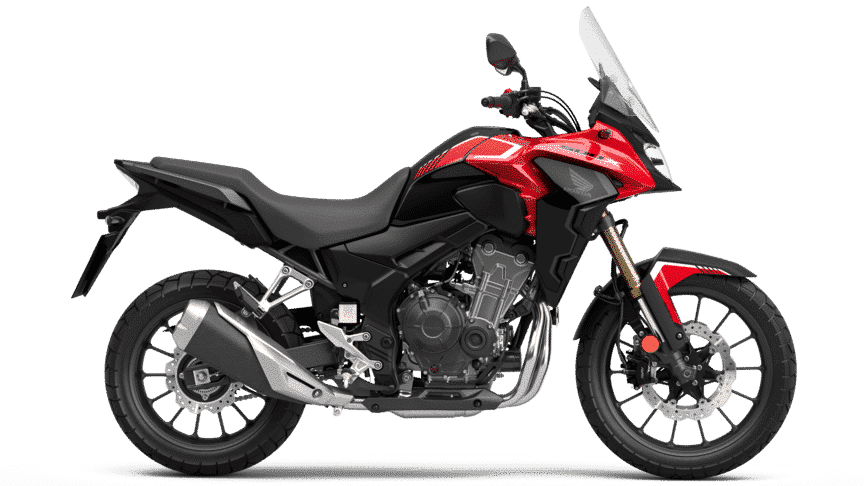
Engine Type
liquid cooled parallel-twin four stroke
Displacement
470 cc
Bore X Stroke
67 mm x 66.8 mm
Ignition
PGMI – FI
Fuel System
fuel injection
Compression Ratio
10.7:1
Starter
electric
Gearbox
6-speed
Front Suspension
41 mm SFF-BP USD Forks
Rear Suspension
Prolink Mono with 5 stage pre load adjuster
Front Brakes
dual 296 mm discs with 4 piston calipers; ABS
Rear Brakes
240 mm disc; ABS
Front Tyres
110/80R19M/C (59H)
Rear Tyres
160/60R17M/C
Wheelbase
1445 mm
Seat Height
830 mm
Ground Clearance
180 mm
Kerb Weight
199 kg
Fuel Capacity
17.7 litres
Dimensions
2,155 mm (L) x 830 mm (W) x 1,410 mm (H)
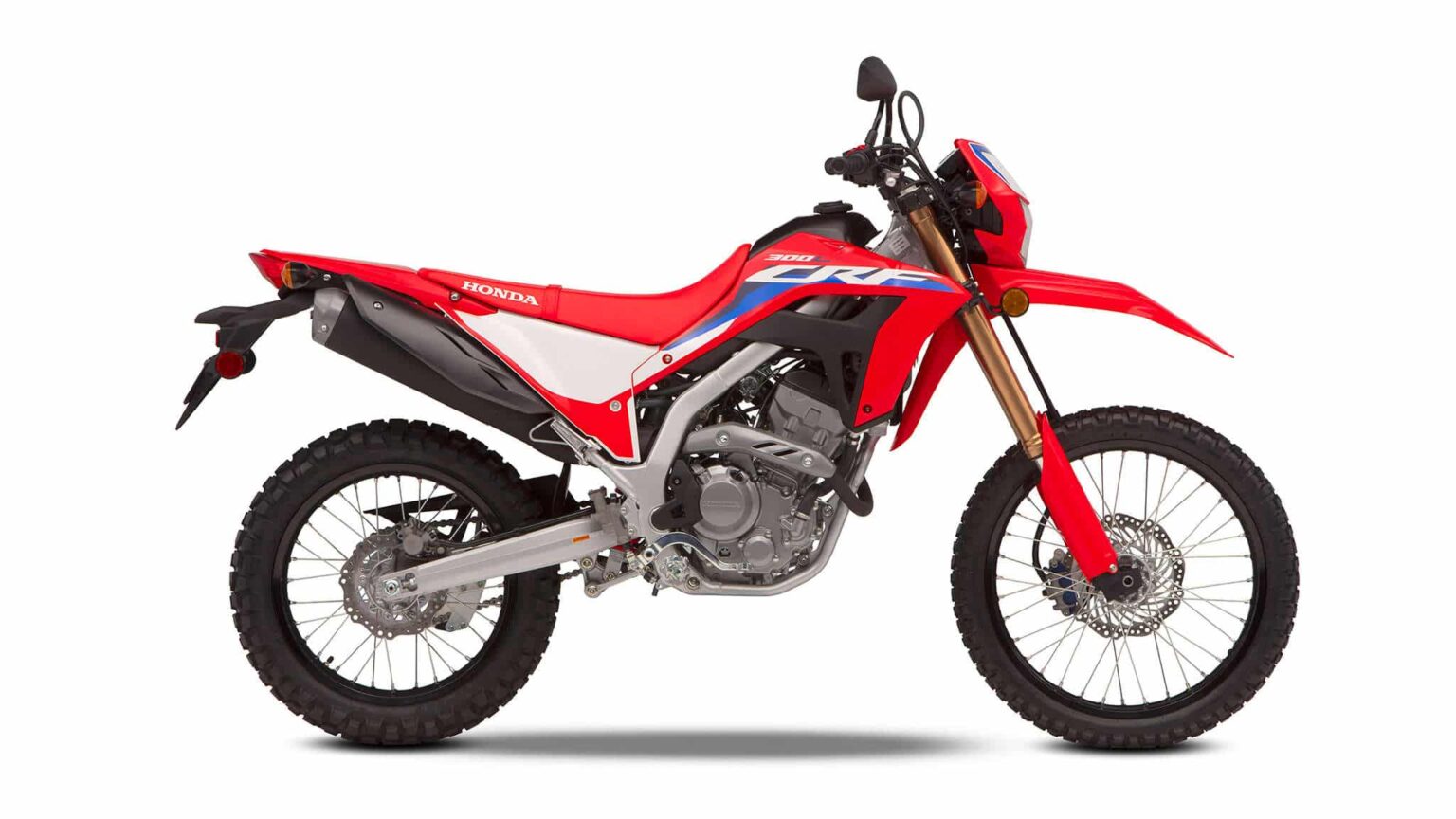
Engine Type
single cylinder, DOHC, liquid cooled
Displacement
286 cc
Bore X Stroke
76 mm x 63 mm
Ignition
Full Transistor Digital
Fuel System
PGM-FI electronic fuel injection
Compression Ratio
10.7:1
Starter
electric
Gearbox
5-speed
Front Suspension
43 mm telescopic upside down
Rear Suspension
Prolink Mono with 5 stage pre load adjuster
Front Brakes
Rear Brakes
220 mm disc, single piston caliper
Front Tyres
80/100 21
Rear Tyres
120/80 18
Wheelbase
1455 mm
Seat Height
880 mm
Ground Clearance
285 mm
Kerb Weight
142 kg
Fuel Capacity
7.8 litres
Dimensions
2230 mm (L) x 820 mm (W) x 1200 mm (H)