
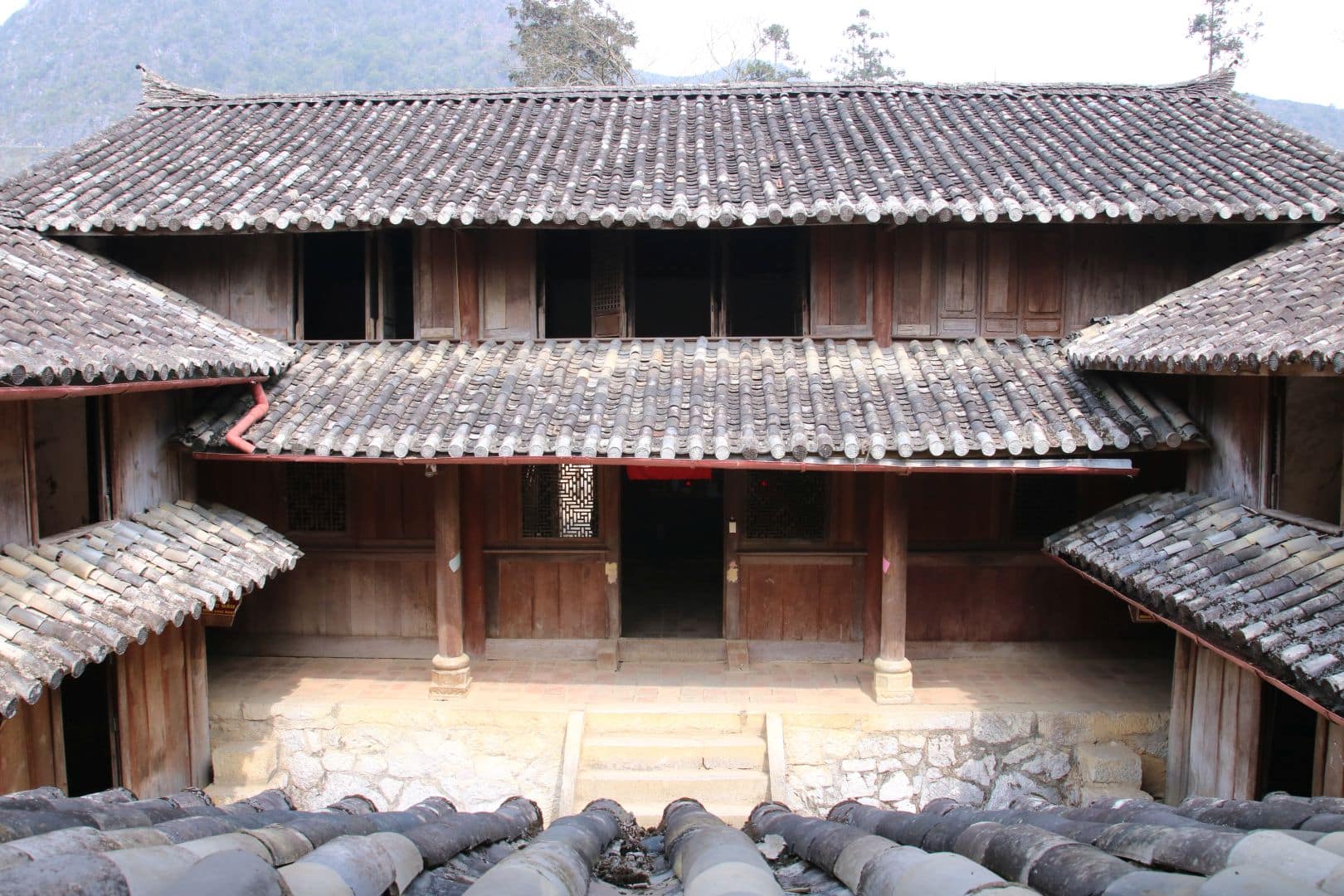
The Hmong King’s Palace, nestled in the Sa Phin Valley of Ha Giang province, Vietnam, is a captivating testament to the rich history and cultural heritage of the Hmong people. Built in the early 20th century, this architectural gem served as the residence of the Vuong family, influential figures in the region.
The palace’s unique blend of architectural styles and its historical significance make it a must-visit destination for those seeking to delve into Vietnam’s vibrant past.
Tucked away in Sa Phin Valley and well protected from both the elements and attack, the Hmong King’s Palace is an amazing blend of cultures and traditions.
The Hmong King’s Palace showcases a harmonious fusion of architectural influences, reflecting the cultural interactions of the time. The design incorporates elements of traditional Hmong architecture, Chinese artistry, and French colonial aesthetics. This blend of styles creates a visually striking and culturally significant landmark.
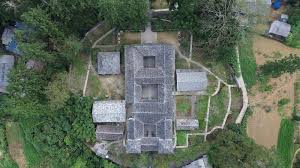
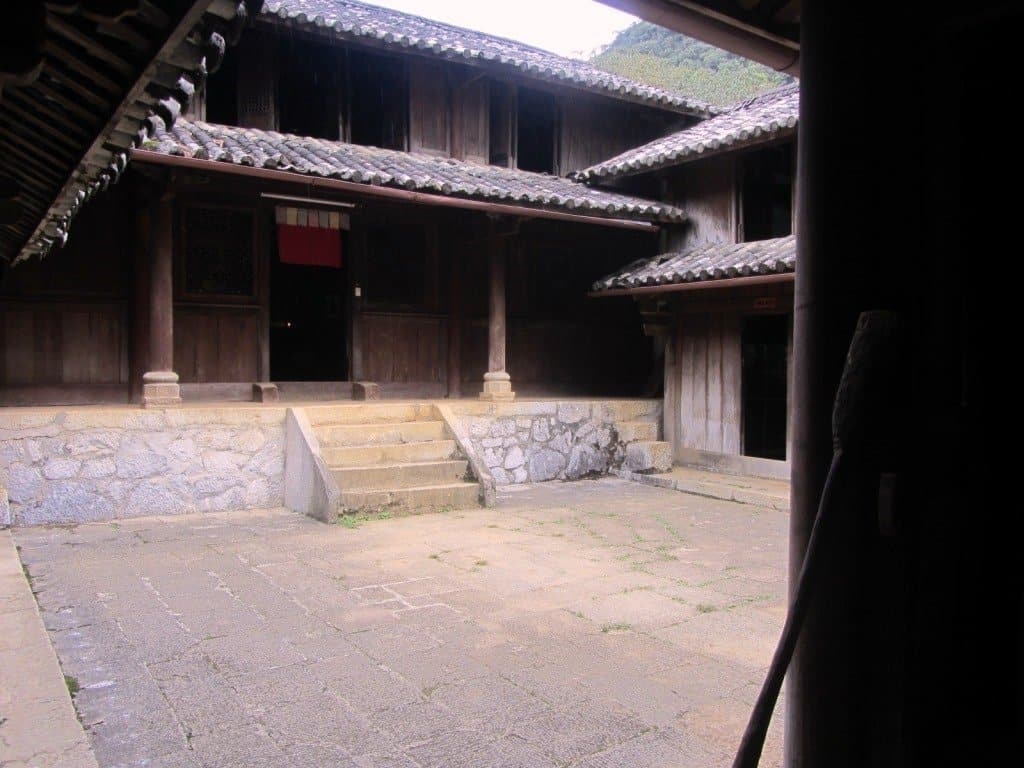
The palace complex, spread across three main sections, once housed up to 100 people in its 64 rooms. The front section was designated for servants and guards, while the central and rear sections were reserved for the royal family and their guests. The use of local materials, such as wood and stone, further connects the palace to its surroundings.
Intricate carvings adorn the palace’s exterior and interior, depicting symbolic motifs like dragons, phoenixes, and bats, representing prosperity and longevity. The palace’s roof, covered with yin-yang tiles, adds another layer of cultural significance.
The Hmong King’s Palace is intricately linked to the history of the Hmong people and the Vuong family’s influence in the region. Built by Vuong Chinh Duc, the head of the Hmong feudal regime in Ha Giang, the palace served as a symbol of his authority and the cultural identity of the Hmong people.
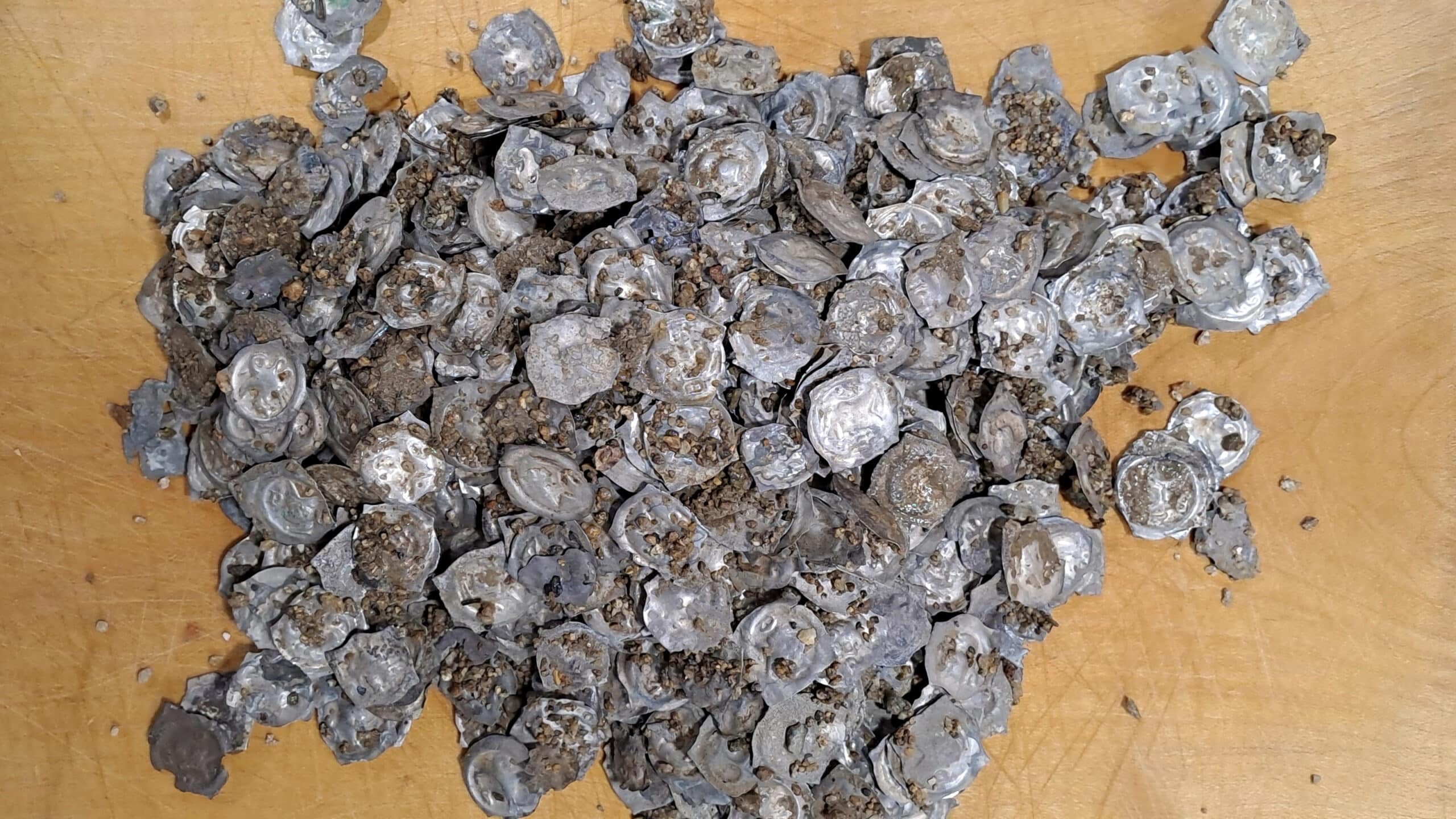
The palace’s construction spanned eight years, from 1898 to 1907, and involved the expertise of Chinese artisans. The project’s cost, estimated at 150,000 silver coins, highlights the Vuong family’s wealth and influence.
During its heyday, the palace played a pivotal role in the political and cultural life of the Hmong people. It served as a center for decision-making, cultural expression, and social gatherings. The palace’s legacy continues to inspire and connect the Hmong community to their heritage.
Recognized as a national artistic architectural monument in 1993, the Hmong King’s Palace has undergone preservation efforts to ensure its longevity. Today, it stands as a popular tourist attraction, offering visitors a glimpse into the history and culture of the Hmong people.
Guided tours provide insights into the palace’s architecture, history, and significance. The surrounding Sa Phin Valley, with its picturesque landscapes and Hmong villages, adds to the allure of the site.
The Hmong King’s Palace is a true embodiment of Vietnam’s diverse cultural heritage. Its unique architecture, historical significance, and ongoing preservation efforts make it a cherished landmark for both locals and visitors.
As you explore the palace’s chambers and admire its intricate details, you’ll embark on a journey through time, gaining a deeper appreciation for the Hmong people and their enduring legacy.
It’s tricky to give an exact figure for the cost of the Hmong King’s Palace in today’s money, as currency values change so much over time! However, we can look at the information we have to get an idea of the scale:
Original cost: The palace cost around 150,000 silver coins This was a huge sum at the time!
Modern equivalents: Sources estimate this to be equivalent to roughly 150 billion VND (Vietnamese Dong) today.
USD conversion: As of February 23, 2025, 150 billion VND is approximately equal to 6 million USD.
Yes. The Hmong King’s Palace is on several of our tours such as Due North 7 Days. and Great Loop..
The Vuong family’s wealth, which allowed them to build the Hmong King’s Palace, stemmed from a combination of factors: Government-granted Monopoly, Trade Control, and Land Ownership.
Essentially, Vuong Chinh Duc leveraged his political position and control over key economic activities to amass a fortune.
A visit to the Hmong King’s Palace can be combined with exploring the beautiful Sa Phin Valley, interacting with local Hmong communities, and discovering the unique landscapes and cultural heritage of the Dong Van Karst Plateau Geopark.
It’s a chance to experience not just the history of the palace, but also the living culture of the Hmong people and the beauty of the surrounding region.
While not a religious site, it’s always a good idea to dress respectfully when visiting historical and cultural places. Avoid overly revealing clothing.
The Hmong King’s Palace in Ha Giang is a captivating blend of history, culture, and architecture. From its intricate carvings to its breathtaking setting in the Sa Phin Valley, the palace offers a unique and memorable experience for any visitor.
Whether you’re exploring the palace itself, venturing into nearby villages, or simply admiring the stunning landscape, a visit here is sure to leave a lasting impression.
So, why wait? Take one of our tours and add the Hmong King’s Palace to your Vietnam travel itinerary and discover the magic for yourself!
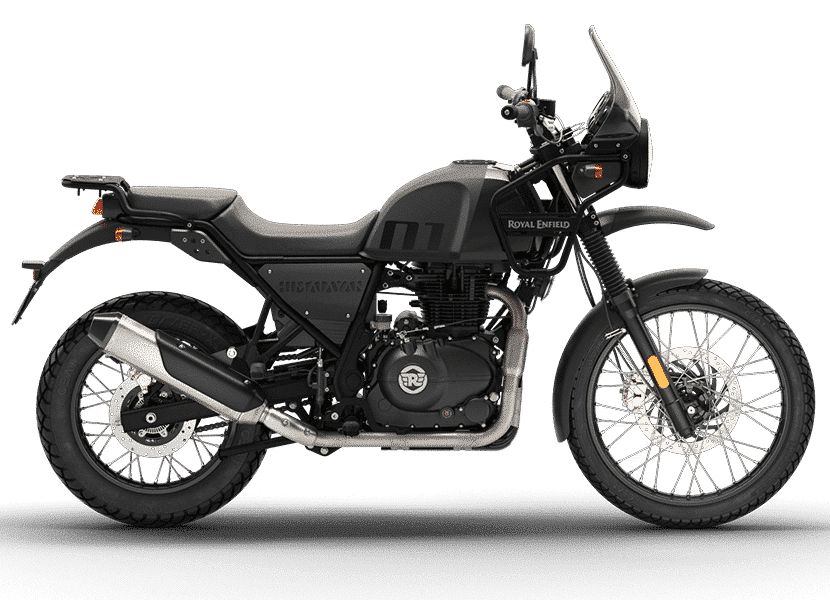
Engine Type
air-cooled, single cylinder, SOHC
Displacement
411 cc
Bore X Stroke
78 mm x 86 mm
Ignition
TCI
Fuel System
fuel injection
Compression Ratio
9.5:1
Starter
electric
Gearbox
5-speed
Front Suspension
telescopic forks; stanchion diameter 41 mm
Rear Suspension
linkage-type monoshock
Front Brakes
single disc brake, diameter 300 mm, 2-piston floating caliper
Rear Brakes
single disc brake, diameter 240 mm, single-piston floating caliper
Front Tyres
90/90 – 21
Rear Tyres
120/90 – 17
Wheelbase
1465 mm
Seat Height
800 mm
Ground Clearance
220 mm
Kerb Weight
199 kg
Fuel Capacity
15 litres
Dimensions
2190 mm (L) x 840 mm (W) x 1360 mm (H)
Daily
Total
Rider (CRF 300)
$220
Pillion
$120
Damage Waiver
$20
Private Room
$40
Support Vehicle*
$150
* All prices given are in USD and apply per rider except for the support vehicle. The support vehicle is free for groups of 7 or more, otherwise the cost is shared across the group.
Daily
Total
Rider (XR 150)
Rider (CRF 300)
Rider (CB 500X)
Rider (Himalayan 400)
$220
Rider (GS 1250)
Pillion
$120
Damage Waiver
$20
Private Room
$40
Support Vehicle*
$150
* All prices given are in USD and apply per rider except for the support vehicle. The support vehicle is free for groups of 7 or more, otherwise the cost is shared across the group.
Daily
Total
Jeep (1 PAX)
$210
Jeep (2 PAX)
$120
Jeep (3 PAX)
$90
Jeep (4+ PAX)
$80
Rider (Easy Rider)
$115
Rider (Self-Drive)
$105
Private Room
$15
* Our jeep tour prices operate on a sliding scale. The larger your group, the less each person pays—each member of your group will pay the lowest daily rate shown. For example, if you have a group of 4 or more, you will each only pay $80/day. All prices are given in USD.
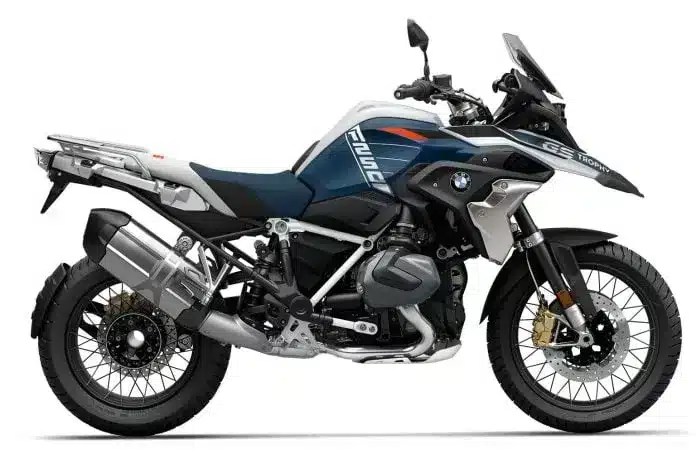
Engine Type
air-liquid cooled, twin cylinder, DOHC, boxer engine
Displacement
1255 cc
Bore X Stroke
102.5 mm x 76 mm
Ignition
FI
Fuel System
fuel injection
Compression Ratio
12.5:1
Starter
electric
Gearbox
6-speed
Front Suspension
BMW Motorrad Telelever; stanchion diameter 37 mm
Rear Suspension
single-sided swing arm with BMW Motorrad Paralever
Front Brakes
dual disc brake, floating brake discs, diameter 305 mm, 4-piston radial calipers
Rear Brakes
single disc brake, diameter 276 mm, double-piston floating caliper
Front Tyres
120/70 R19
Rear Tyres
170/60 R17
Wheelbase
1514 mm
Seat Height
850 mm
Ground Clearance
790 mm
Kerb Weight
249 kg
Fuel Capacity
20 litres
Dimensions
2207 mm (L) x 952.5mm (W) x 1430 mm (H)
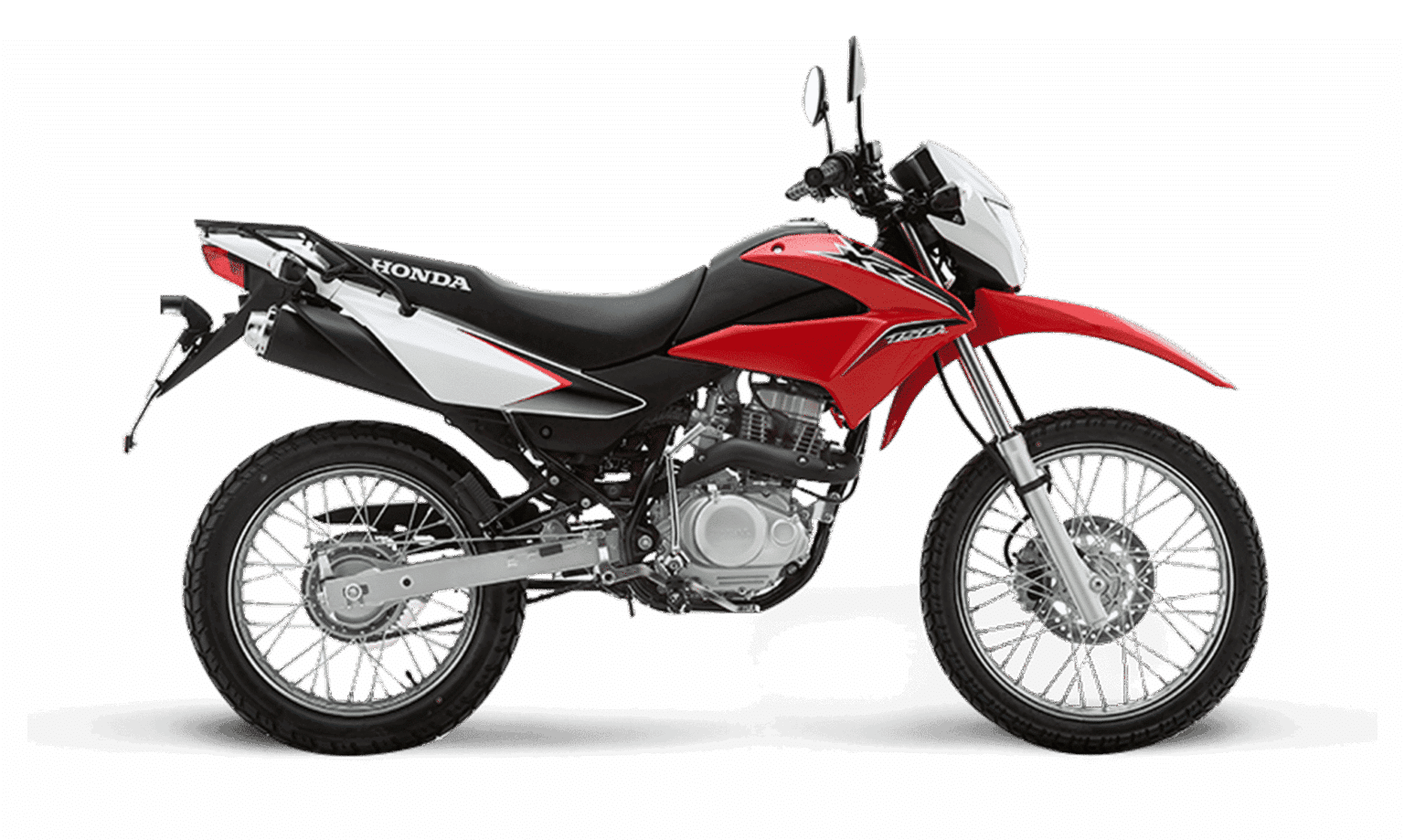
Engine Type
air cooled, OHC, single cylinder
Displacement
149 cc
Bore X Stroke
57.3 mm x 57.8 mm
Ignition
CDI
Fuel System
20 mm piston valve carburettor
Compression Ratio
9.5:1
Starter
electric with kick starter backup
Gearbox
5-speed
Front Suspension
telescopic fork, 180 mm axle travel
Rear Suspension
single shock swing arm, 150 mm axle travel
Front Brakes
dual piston caliper, 240 mm disc
Rear Brakes
mechanical drum
Front Tyres
90/90 19
Rear Tyres
110/90 17
Wheelbase
1362 mm
Seat Height
825 mm
Ground Clearance
243 mm
Kerb Weight
129 kg
Fuel Capacity
12 litres
Dimensions
2091 mm (L) x 811 mm (W) x 1125 mm (H)
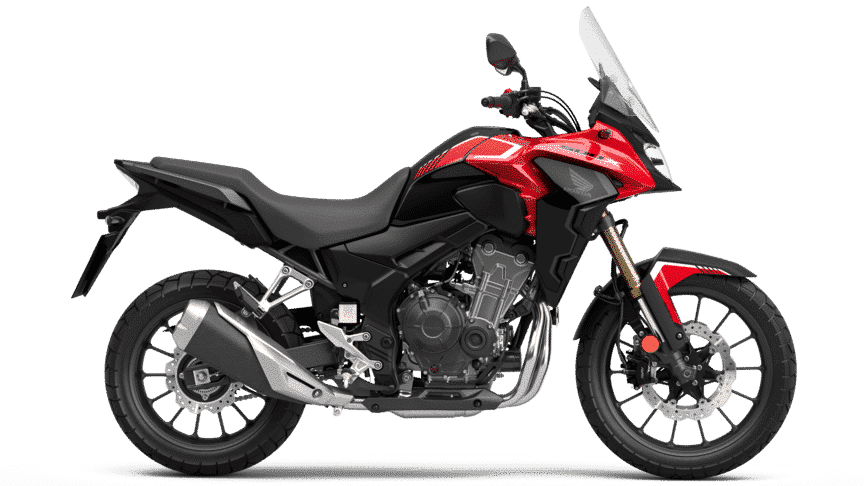
Engine Type
liquid cooled parallel-twin four stroke
Displacement
470 cc
Bore X Stroke
67 mm x 66.8 mm
Ignition
PGMI – FI
Fuel System
fuel injection
Compression Ratio
10.7:1
Starter
electric
Gearbox
6-speed
Front Suspension
41 mm SFF-BP USD Forks
Rear Suspension
Prolink Mono with 5 stage pre load adjuster
Front Brakes
dual 296 mm discs with 4 piston calipers; ABS
Rear Brakes
240 mm disc; ABS
Front Tyres
110/80R19M/C (59H)
Rear Tyres
160/60R17M/C
Wheelbase
1445 mm
Seat Height
830 mm
Ground Clearance
180 mm
Kerb Weight
199 kg
Fuel Capacity
17.7 litres
Dimensions
2,155 mm (L) x 830 mm (W) x 1,410 mm (H)
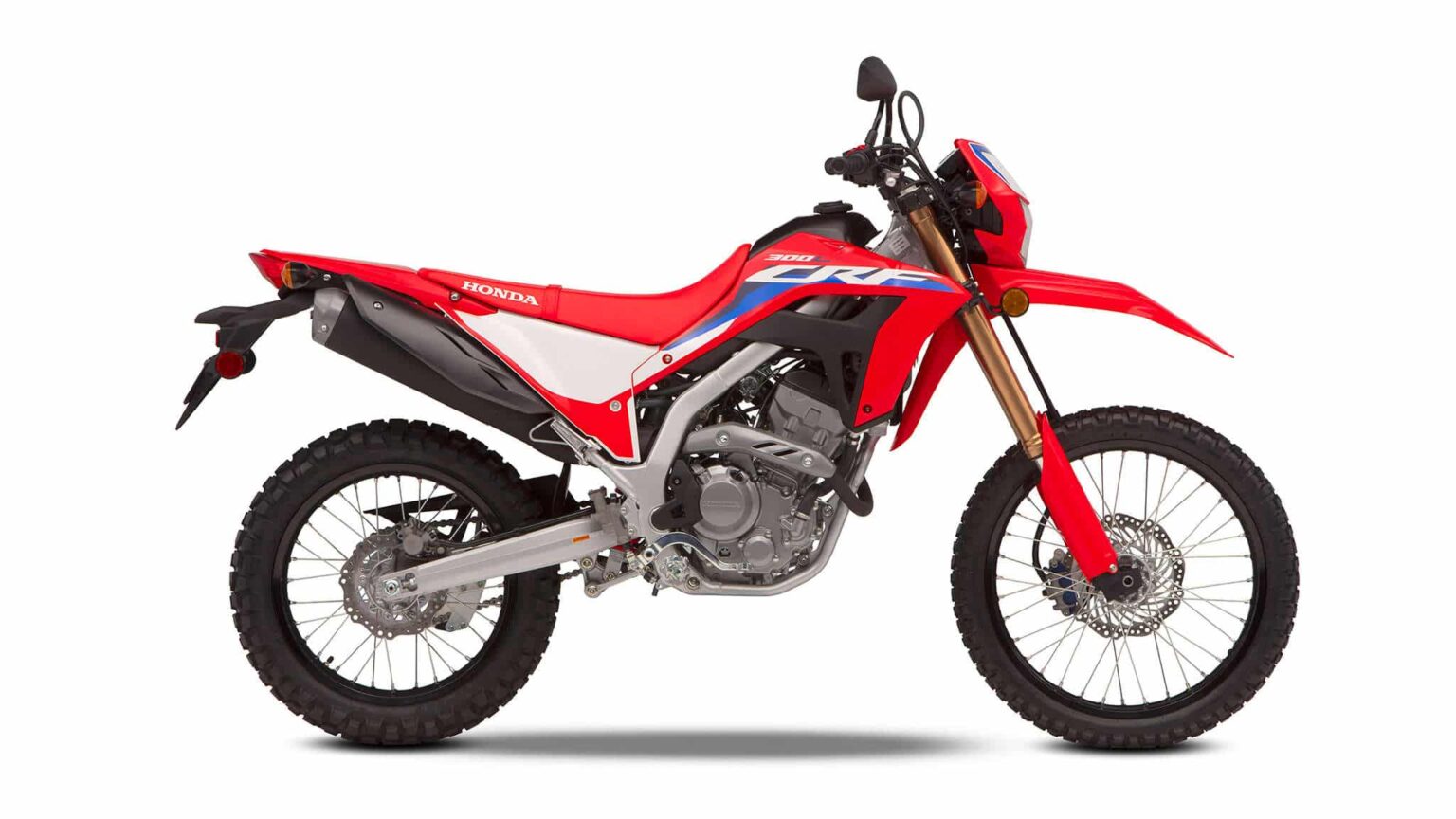
Engine Type
single cylinder, DOHC, liquid cooled
Displacement
286 cc
Bore X Stroke
76 mm x 63 mm
Ignition
Full Transistor Digital
Fuel System
PGM-FI electronic fuel injection
Compression Ratio
10.7:1
Starter
electric
Gearbox
5-speed
Front Suspension
43 mm telescopic upside down
Rear Suspension
Prolink Mono with 5 stage pre load adjuster
Front Brakes
Rear Brakes
220 mm disc, single piston caliper
Front Tyres
80/100 21
Rear Tyres
120/80 18
Wheelbase
1455 mm
Seat Height
880 mm
Ground Clearance
285 mm
Kerb Weight
142 kg
Fuel Capacity
7.8 litres
Dimensions
2230 mm (L) x 820 mm (W) x 1200 mm (H)