
Traveling a week before Tet? If you see traffic jams on bridges and families releasing golden carp into rivers, don’t panic. You’ve hit Ong Tao (The Kitchen Gods day), the official start of the holiday madness. It’s a beautiful tradition that brings serious road congestion.
While we explore the legend below, make sure your travel logistics are solid by checking The Ultimate Guide to Riding Vietnam During Tet.
To understand why the traffic is blocked, you have to understand the soap opera that is Vietnamese mythology. The “Kitchen God” is actually a collective of three deities living in one hearth.
The legend tells of a woman and two men involved in a tragic, accidental love triangle. Through a series of misunderstandings and unfortunate events, all three died in a fire while trying to save each other. The Jade Emperor (King of Heaven) was moved by their loyalty and love, transforming them into the guardians of the household hearth.
They are collectively known as Tao Quan (The Kitchen Gods). They oversee three aspects of the home: the soil (land), the house structure, and the kitchen fire. Because the kitchen is the heart of the home where the family gathers, eats, and argues, the Gods see and hear everything.
They are not just guardians; they are celestial auditors. For 364 days, they watch the family’s behavior—the good deeds, the bad words, the fights, and the kindness. On the 23rd day of the last lunar month, they must fly to Heaven to present a “Year End Report” to the Jade Emperor. This report determines the family’s luck for the coming year.
Because this report is so high-stakes, Vietnamese families go to great lengths to give the Gods a grand send-off. They prepare elaborate feasts and offerings to put the Gods in a good mood, hoping they will sweet-talk the Emperor and gloss over the family’s mistakes.
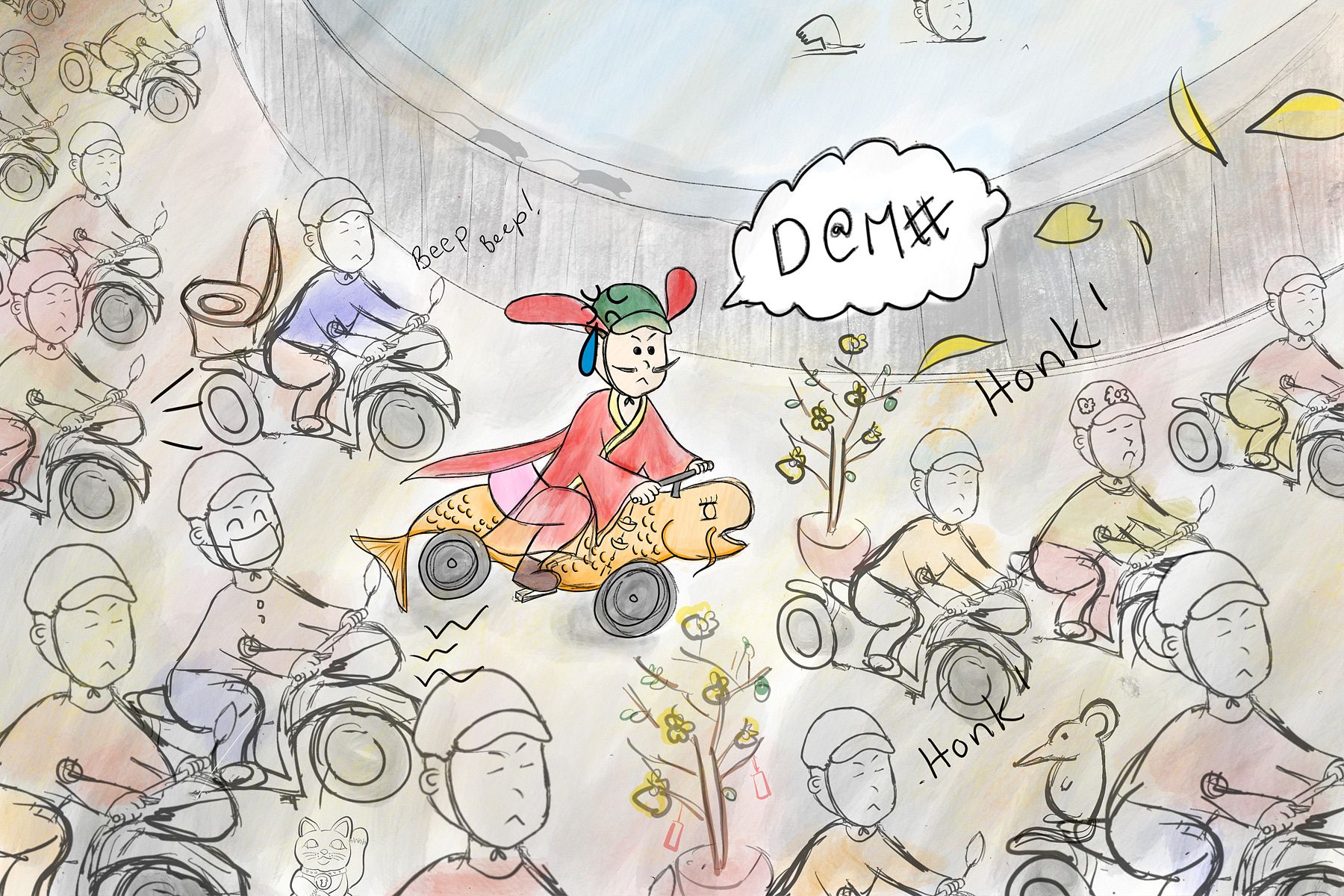
How do three Gods get from a kitchen in Hanoi to the gates of Heaven? They don’t take a plane; they take a fish, of course!
Legend says that the carp is the only animal capable of transforming into a dragon and flying to heaven. Therefore, the carp is the chosen vehicle for the Kitchen Gods.
On the morning of the 23rd, every traditional family buys three live golden carp. After the prayers are finished, the family takes the fish to the nearest body of water (river, lake, or pond) and releases them. This act sets the “vehicle” free so the Gods can begin their journey.
This isn’t just transport; it is an act of compassion. Releasing a living creature back into nature generates good karma. It symbolizes the family’s respect for nature and their hope that the fish will carry their prayers safely to the sky.
It is believed that once the fish hits the water and the Gods mount them, the carp transform into dragons. This is why you will see dragon imagery everywhere during Tet—it represents success, power, and the connection between earth and sky.
For the motorbike traveler, the spiritual meaning is fascinating, but the physical reality is traffic.
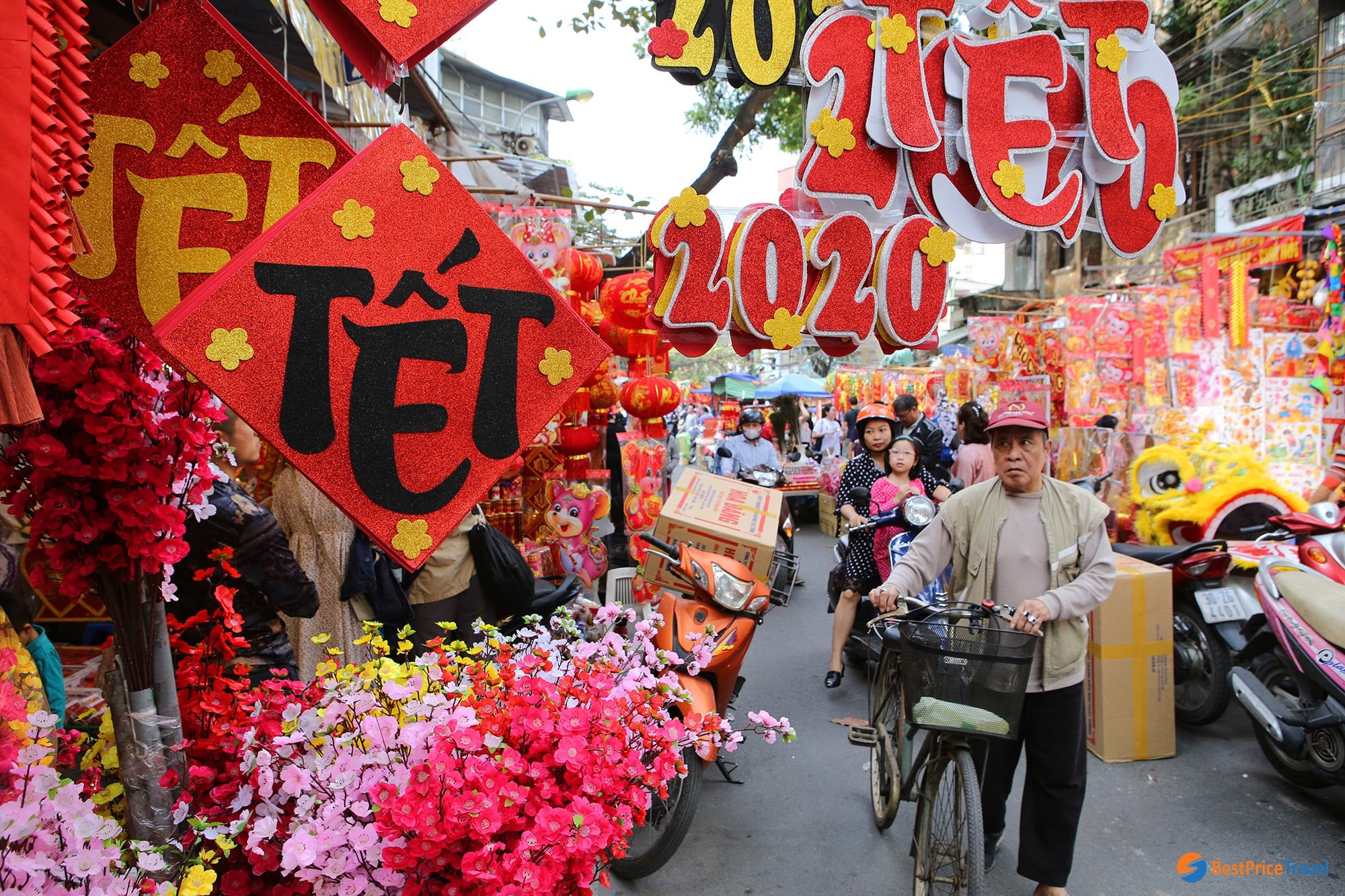
Tradition dictates that the Gods must leave before noon (12:00 PM) to arrive in Heaven on time. This creates a massive, condensed rush hour. Between 9:00 AM and 11:00 AM on this specific day, millions of people are rushing to markets to buy fish, rushing home to pray, and rushing to lakes to release them.
If you are riding across major bridges (like Long Bien or Chuong Duong in Hanoi), be careful. People often stop their motorbikes right on the edge of the bridge to drop fish (and ashes) into the river below. This creates sudden, dangerous bottlenecks on highways.
Families also burn “votive paper”—paper replicas of clothes, hats, boots, and even motorbikes—for the Gods to use in the afterlife. On this day, the air quality in cities drops significantly as thousands of fires burn on the sidewalks. Ride with your visor down and a good mask.
Ong Tao day is the starting gun. Once the Gods are gone, the “restraint” is lifted. People begin cleaning their houses, buying trees, and shopping frantically. From this day until Tet Eve (7 days later), the traffic will intensify daily.
Travelers often notice a darker side to this ritual: the plastic problem.
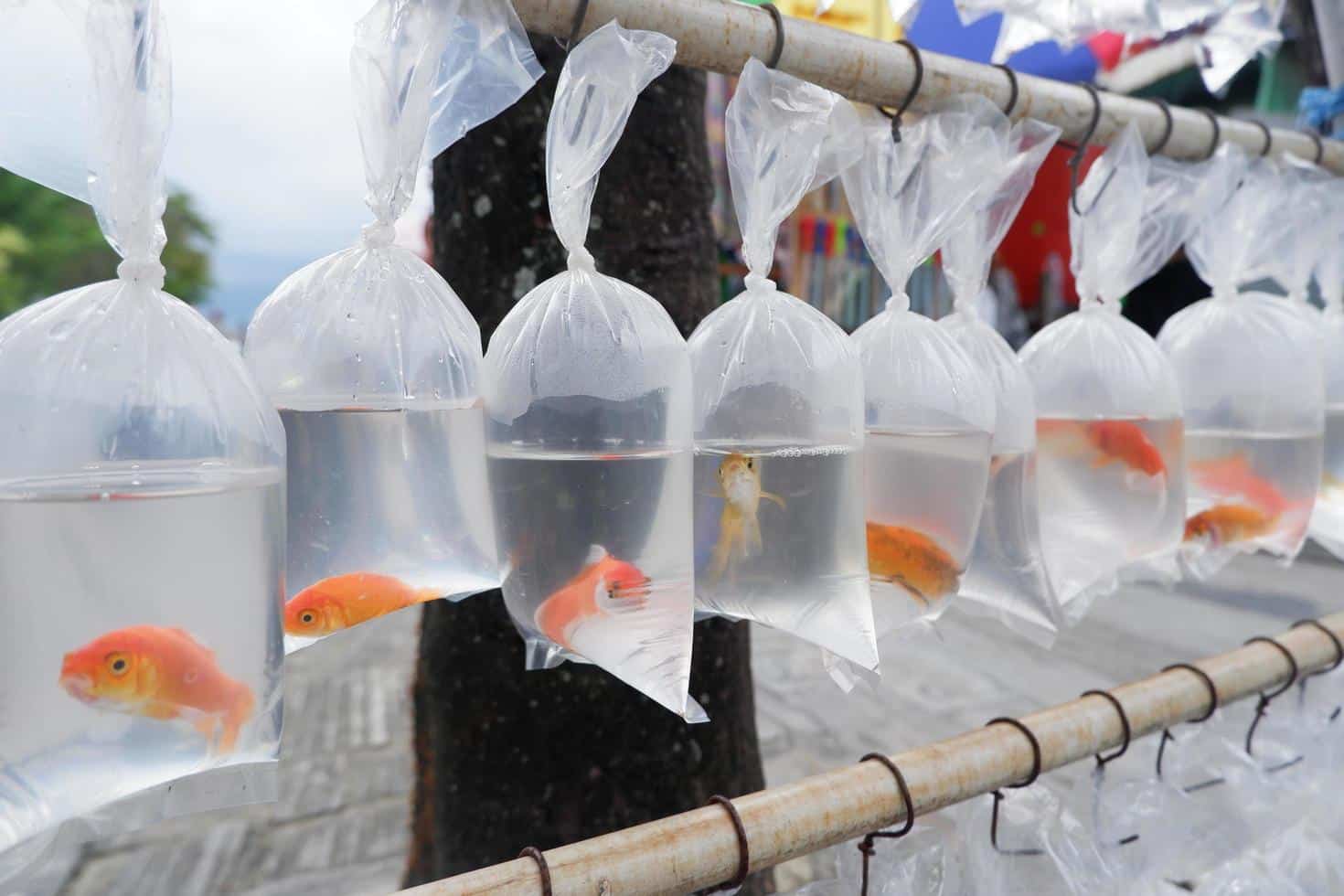
In the past, people carried fish in buckets. Today, they use plastic bags. Unfortunately, many people drop the fish and the bag into the water. In recent years, environmental groups and the government have launched massive campaigns: “Tha Ca Dung Tha Tui” (Release the fish, don’t release the bag).
You might see a cynical sight: electric fishermen waiting just downstream to shock and catch the carp moments after they are released to sell them back to the market. It is a sad reality of the modern economy clashing with tradition.
If you want to participate, buy a fish! But carry it in a reusable container or a water bottle. Find a quiet spot on the lake away from the fishermen, and release it gently. It is a beautiful way to join the local culture, provided you do it responsibly.
If your itinerary puts you in Vietnam on this specific lunar date, here is how to handle it.
The date changes every year on the Gregorian (Western) calendar. Google “Tet Kitchen God Date [Year]” to find the exact day. It is always 7 days before Tet.
The roads ringing West Lake (Hanoi) or the canals in Saigon will be gridlocked with families releasing fish. If you are planning a scenic ride around the lake, do it in the early morning or late afternoon. Avoid the 10:00 AM – 12:00 PM window.
Be careful riding near the edges of bridges or rivers. There may be piles of ash, plastic bags, or slippery spots where water has been spilled.
In 2026, the 23rd day of the 12th Lunar Month falls on Wednesday, February 11th, 2026. (Note: Double-check this with a Lunar Calendar converter as it shifts annually).
Yes! Locals love it when foreigners respect their traditions. Buy a small carp at the market (they are cheap), take it to a lake, make a wish for safe travels, and let it go. Just remember: take the plastic bag with you!
The specific species is the Golden Carp (Ca Chep). The gold color represents wealth and royalty. It is also the specific species associated with the “Dragon Gate” legend of transformation.
Yes, but expect erratic driving. People are rushing to beat the noon deadline. Ride defensively, especially near water bodies and temples.
The Gods are gone for 7 days. They return on New Year’s Eve (Giao Thua). During this 7-day window, the house is technically “unguarded,” which is why people spend this time cleaning and scrubbing the house to prepare a fresh space for the Gods’ return.
The Kitchen Gods ritual is the prologue to the main event. It signals that the year is ending, the audit is complete, and it is time to prepare for renewal.
For the rider, it is a reminder that you are moving through a living culture. The traffic jam you are stuck in isn’t just bad urban planning; it’s a million people trying to get their spiritual passports stamped before the deadline. Patience is your best asset.
Want to experience the real Vietnam?

Engine Type
air-cooled, single cylinder, SOHC
Displacement
411 cc
Bore X Stroke
78 mm x 86 mm
Ignition
TCI
Fuel System
fuel injection
Compression Ratio
9.5:1
Starter
electric
Gearbox
5-speed
Front Suspension
telescopic forks; stanchion diameter 41 mm
Rear Suspension
linkage-type monoshock
Front Brakes
single disc brake, diameter 300 mm, 2-piston floating caliper
Rear Brakes
single disc brake, diameter 240 mm, single-piston floating caliper
Front Tyres
90/90 – 21
Rear Tyres
120/90 – 17
Wheelbase
1465 mm
Seat Height
800 mm
Ground Clearance
220 mm
Kerb Weight
199 kg
Fuel Capacity
15 litres
Dimensions
2190 mm (L) x 840 mm (W) x 1360 mm (H)
Daily
Total
Rider (CRF 300)
$220
Pillion
$120
Damage Waiver
$20
Private Room
$40
Support Vehicle*
$150
* All prices given are in USD and apply per rider except for the support vehicle. The support vehicle is free for groups of 7 or more, otherwise the cost is shared across the group.
Daily
Total
Rider (XR 150)
Rider (CRF 300)
Rider (CB 500X)
Rider (Himalayan 400)
$220
Rider (GS 1250)
Pillion
$120
Damage Waiver
$20
Private Room
$40
Support Vehicle*
$150
* All prices given are in USD and apply per rider except for the support vehicle. The support vehicle is free for groups of 7 or more, otherwise the cost is shared across the group.
Daily
Total
Jeep (1 PAX)
$210
Jeep (2 PAX)
$120
Jeep (3 PAX)
$90
Jeep (4+ PAX)
$80
Rider (Easy Rider)
$115
Rider (Self-Drive)
$105
Private Room
$15
* Our jeep tour prices operate on a sliding scale. The larger your group, the less each person pays—each member of your group will pay the lowest daily rate shown. For example, if you have a group of 4 or more, you will each only pay $80/day. All prices are given in USD.
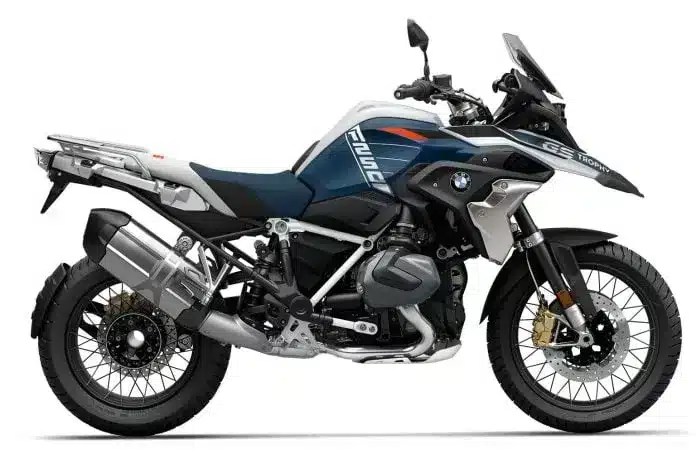
Engine Type
air-liquid cooled, twin cylinder, DOHC, boxer engine
Displacement
1255 cc
Bore X Stroke
102.5 mm x 76 mm
Ignition
FI
Fuel System
fuel injection
Compression Ratio
12.5:1
Starter
electric
Gearbox
6-speed
Front Suspension
BMW Motorrad Telelever; stanchion diameter 37 mm
Rear Suspension
single-sided swing arm with BMW Motorrad Paralever
Front Brakes
dual disc brake, floating brake discs, diameter 305 mm, 4-piston radial calipers
Rear Brakes
single disc brake, diameter 276 mm, double-piston floating caliper
Front Tyres
120/70 R19
Rear Tyres
170/60 R17
Wheelbase
1514 mm
Seat Height
850 mm
Ground Clearance
790 mm
Kerb Weight
249 kg
Fuel Capacity
20 litres
Dimensions
2207 mm (L) x 952.5mm (W) x 1430 mm (H)
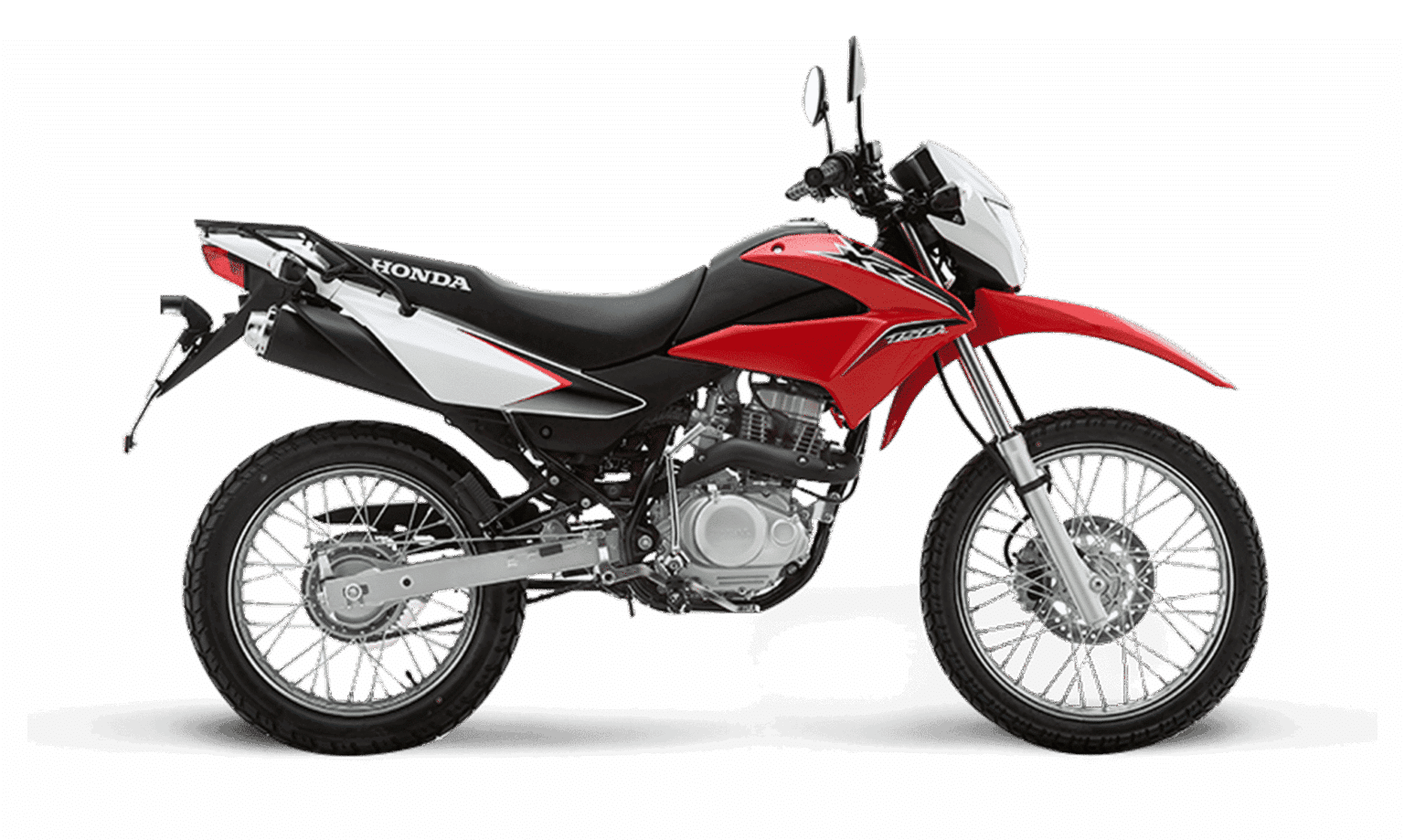
Engine Type
air cooled, OHC, single cylinder
Displacement
149 cc
Bore X Stroke
57.3 mm x 57.8 mm
Ignition
CDI
Fuel System
20 mm piston valve carburettor
Compression Ratio
9.5:1
Starter
electric with kick starter backup
Gearbox
5-speed
Front Suspension
telescopic fork, 180 mm axle travel
Rear Suspension
single shock swing arm, 150 mm axle travel
Front Brakes
dual piston caliper, 240 mm disc
Rear Brakes
mechanical drum
Front Tyres
90/90 19
Rear Tyres
110/90 17
Wheelbase
1362 mm
Seat Height
825 mm
Ground Clearance
243 mm
Kerb Weight
129 kg
Fuel Capacity
12 litres
Dimensions
2091 mm (L) x 811 mm (W) x 1125 mm (H)
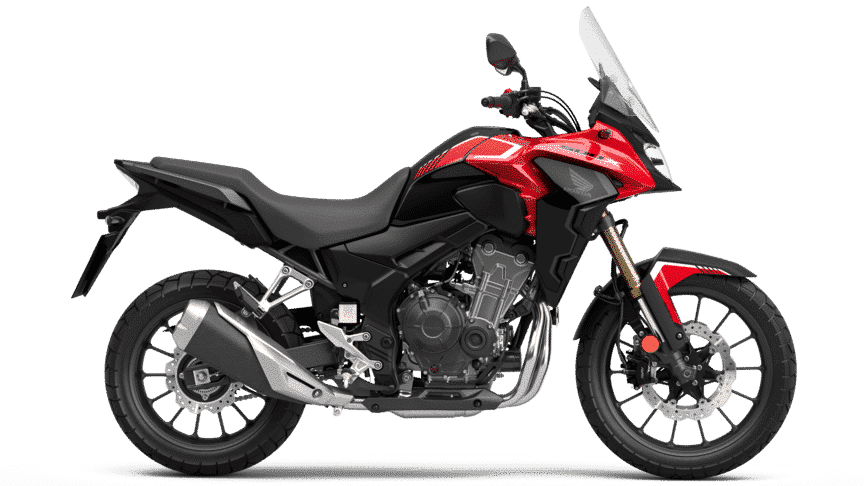
Engine Type
liquid cooled parallel-twin four stroke
Displacement
470 cc
Bore X Stroke
67 mm x 66.8 mm
Ignition
PGMI – FI
Fuel System
fuel injection
Compression Ratio
10.7:1
Starter
electric
Gearbox
6-speed
Front Suspension
41 mm SFF-BP USD Forks
Rear Suspension
Prolink Mono with 5 stage pre load adjuster
Front Brakes
dual 296 mm discs with 4 piston calipers; ABS
Rear Brakes
240 mm disc; ABS
Front Tyres
110/80R19M/C (59H)
Rear Tyres
160/60R17M/C
Wheelbase
1445 mm
Seat Height
830 mm
Ground Clearance
180 mm
Kerb Weight
199 kg
Fuel Capacity
17.7 litres
Dimensions
2,155 mm (L) x 830 mm (W) x 1,410 mm (H)
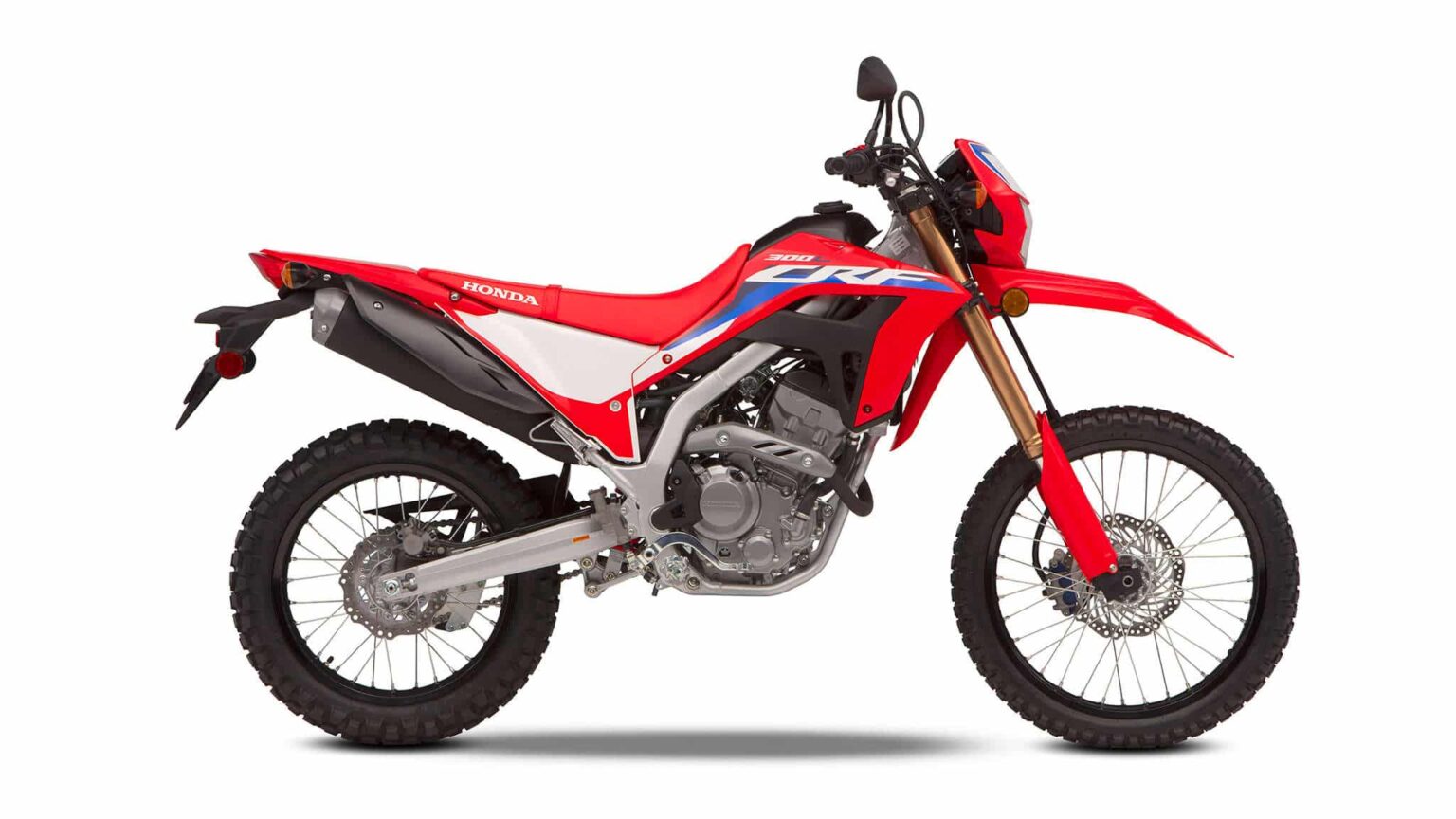
Engine Type
single cylinder, DOHC, liquid cooled
Displacement
286 cc
Bore X Stroke
76 mm x 63 mm
Ignition
Full Transistor Digital
Fuel System
PGM-FI electronic fuel injection
Compression Ratio
10.7:1
Starter
electric
Gearbox
5-speed
Front Suspension
43 mm telescopic upside down
Rear Suspension
Prolink Mono with 5 stage pre load adjuster
Front Brakes
Rear Brakes
220 mm disc, single piston caliper
Front Tyres
80/100 21
Rear Tyres
120/80 18
Wheelbase
1455 mm
Seat Height
880 mm
Ground Clearance
285 mm
Kerb Weight
142 kg
Fuel Capacity
7.8 litres
Dimensions
2230 mm (L) x 820 mm (W) x 1200 mm (H)